Analog Relax EX700 MC cartridge
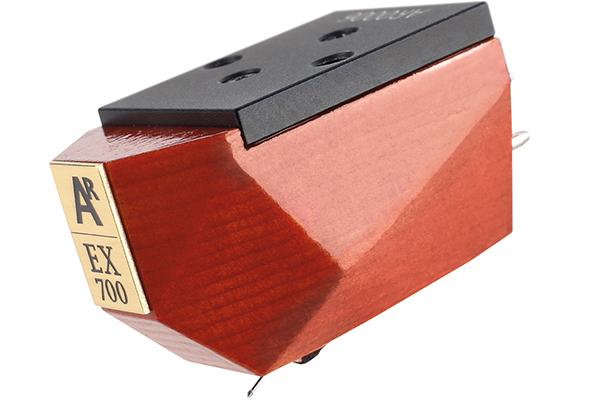

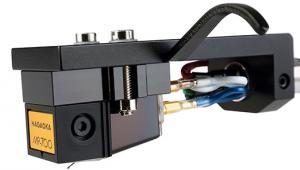
Perhaps hoping to replace the much-loved but-now-in-limbo Koetsu, fellow Japanese brand Analog Relax has developed into a range of five ‘artisan’ moving-coil cartridges. The EX700 sits exactly in the middle, above the EX500 and below the EX1000, at a no longer shocking £7288. Stop here if you find the pricing of cartridges (and cables) has no bearing on reality, but that’s now mid-priced for the high-end, whether we like it or not.
Sibling rivalry
What £7288 gets you in a cartridge is exclusivity, a sense of the hand-built in terms of construction and presentation, and – all things being equal – exceptional performance. To position the EX700 above the EX500 and imbue it with next-level desirability, Analog Relax has followed the formulae employed by every cartridge manufacturer with a family of models established in ascending order. The modifications or upgrades from cartridge to cartridge have to account for a leap from the EX500’s £4998 asking price, and the company is making sure you get your money’s worth.
Yes, this includes the now de rigueur change of cantilever. We’ve been here before in that there are entire ranges based on changing either body material [see boxout], cantilever material, the metal for the coils, the stylus profile or a mix of the four while the motor remains essentially the same. If you have read this far then clearly you are one of those who accepts that cantilever material is a crucial consideration. Whether there’s an agreed hierarchy as to which is more important in changing the sound – body material, cantilever material, coil wire or stylus profile – I think the jury is still out, but for me it’s the stylus shape.
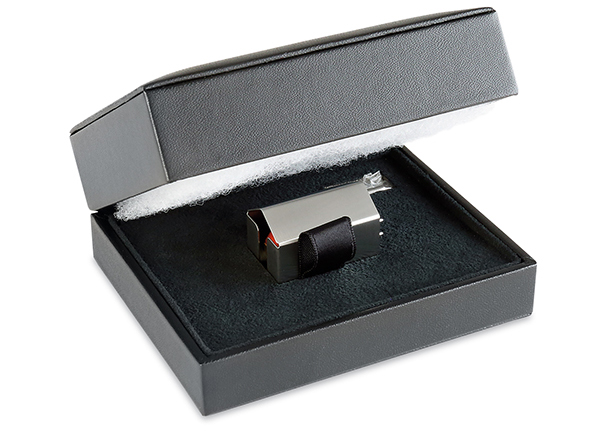
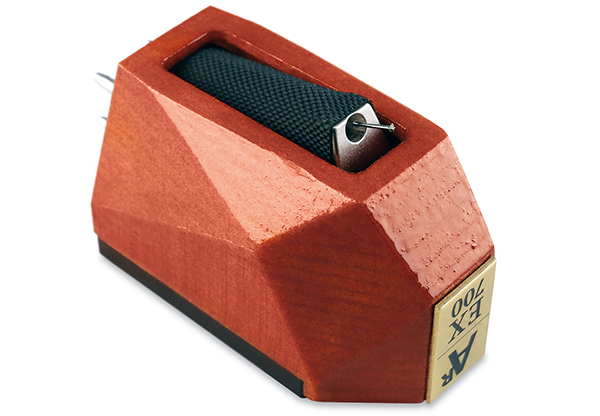
In the move up to the EX700, the cantilever has been changed from aluminium to solid boron, the wooden body from hard maple to the ‘finest spruce’ from northern Italy, the coils from high purity silver to ‘pure copper’ and the elliptical stylus to a line contact profile. In changing all four parameters, Analog Relax has ensured that the customer is undertaking a major, rather than merely incremental, leap.
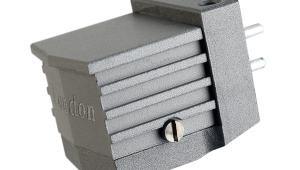
All the Analog Relax models employ the same faceted body shape. PM has pointed out that this does not make more difficult the task of installing the cartridge compared with, say, a Koetsu or Denon model with parallel sides, because the front is flat and it easily lines up in any protractor or setup gauge. What Analog Relax needs to rethink is the protective cloth covering underneath, at the back of the cantilever, because it can hit mildly warped records if you don’t set this cartridge up with surgical precision.
Low rider
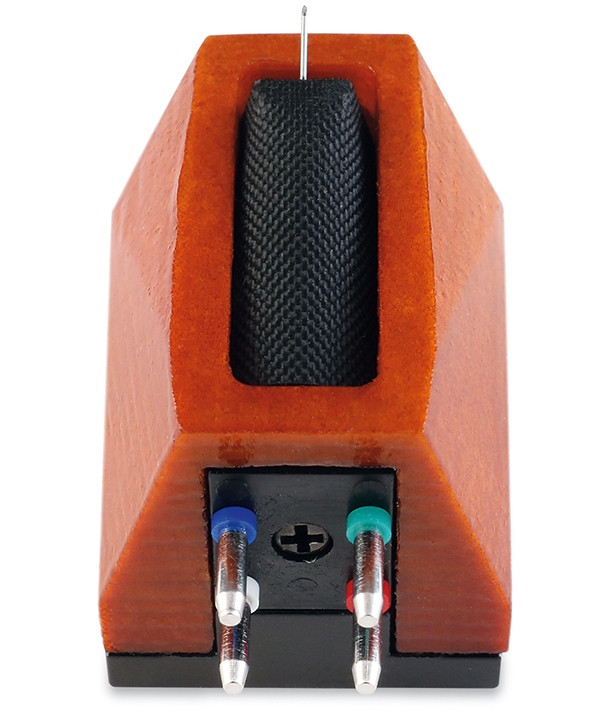
That is the only thing that upset an otherwise near-perfect setup regimen: four widely spaced, colour-coded pins, a flat metal top that accepts bolts with confidence to inspire a sense of security, and a visible cantilever. All of that was a doddle, but the problem is the high compliance-vs-recommended tracking force-vs-VTA [see PM's Lab Report].
With the EX700 set at Analog Relax’s recommended 2.2g tracking force, I could see the cartridge bottoming out because that cloth cover over the underside is simply too thick. Indeed, even though I didn’t see it lift off any of my LPs, after three or four had been played it picked up dust like the old Shure V-15 brush.
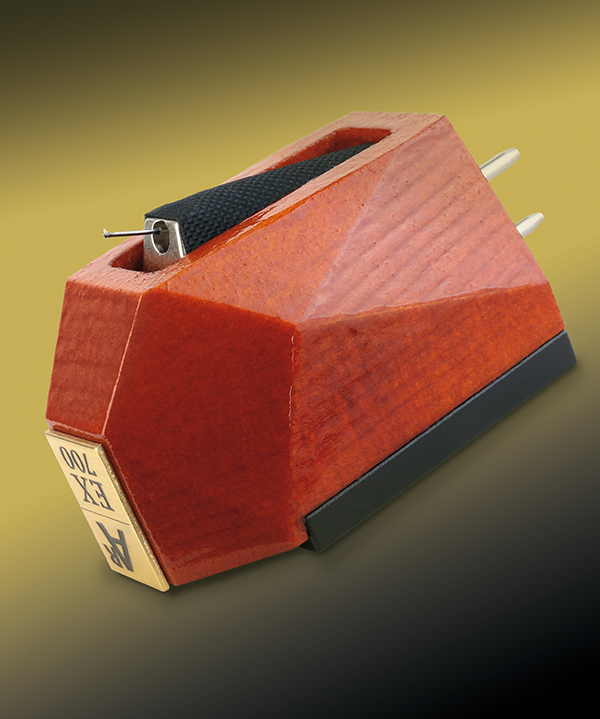
I ended up backing off the downforce to 2g while raising the rear of the arm slightly – this afforded just enough clearance to avoid the dust gathering and without any detriment to the EX700’s tracking performance. Lifting the arm also tweaks the VTA, providing a boost to the MC’s treble ‘brilliance’.
 All that jazz
We’re a half-century away from the era where hi-fi equipment was described according to musical genre, where you had ‘rock’ speakers, ‘jazz’ speakers or ‘classical’ speakers. Back in the day that was a perfect selling tool because it worked. The dealer sold JBL horns to a head banger, Quad electrostatics to an opera lover and Spendors to a jazz fan. The EX700 cart so suited my repertoire of jazz albums that I gave up on the rock titles and settled in with Miles Davis, Thelonious Monk, John McLaughlin and others of that ilk.
That’s not to say that it cannot ‘rock’ when called upon, as I found out with a Nick Lowe album, just as it certainly suited the blues when I dug out some superbly recorded Dinah Washington. But this cartridge has a distinct personality, not unlike artisan pick-ups of the past – led by Koetsu – which defined the MC genre for a whole generation of high-end consumers.
I’ll admit to being concerned about the EX700 bottoming out at 2.2g so, by way of experiment, I ran it in two different turntables and three different tonearms at this recommended downforce. It did encounter some of the difficulties pointed out by PM so, as already mentioned, I reduced downforce by 0.2g and it changed everything. As for the partnering phono stage, I employed three – one solid-state, two valve – and in every case 100ohm proved the ideal loading.
Although I had started out with the quasi-country/rockabilly/Latina of Nick Lowe’s mini-album Love Starvation [Yep Roc Records YEP-2646], it swiftly dawned on me that the track ‘Trombone’ was the one that was repeatedly impressing me. The instrument features throughout and, although in a rock milieu, it remains as much a part of the jazz repertoire as trumpet or anything else with a bell at the end. In the context of the Nick Lowe songs, the trombone had a resonance, body and richness that positively screamed ‘vintage moving-coil pick-up’. I loved it.
This, however, was misleading because Analog Relax cartridges are not voiced to replicate the fatness or the overly warm sound that made Koetsus so moreish and ear-friendly. The EX700 is a decidedly modern moving-coil despite the wooden body, the artisan hype, or the business about well-being, as if the cartridge is related to hot stone therapy or yoga.
Pick-up with presence
Before leaving rock music for other pastures, I noted that the guitar work was particularly crisp but – best of all – that Lowe’s distinctively warm voice came through with a presence that reminded me of the time I heard him ‘solo unplugged’ at Ronnie Scott’s during a promo tour. As much as I’ve suggested this is a jazz-lover’s cartridge, it’s also a vocalist’s cartridge. This was rendered even more vividly by Dinah Washington in one of her forays away from jazz, Back To The Blues [Pure Pleasure PPAN SR25189].
Unlike the more purist Chicago blues or gutbucket Delta blues, Dinah’s take was far more uptown and included orchestral backing which did not diminish the ‘bluesiness’ of her vocals. If anything, it reminded me of late-1950s B.B. King albums when he was working with big bands and brass. The EX700 had so much life and (again) warmth that, as much as I didn’t want to liken it too much to its 1980s Japanese antecedents, I kept drifting back to the sound of classic carts like the Goldbug Brier [HFN May ’83] and Koetsu Rosewood [HFN Jun ’90].
Beck and call
Prior to succumbing entirely to the lure of vintage jazz, I put on John McLaughlin’s Music For Abandoned Heights [Impex IMP6065]. Although paying homage to a soundtrack by Miles Davis from the 1950s, the album was composed for a new film coming out this year. The playing is less of the jazz which the guitarist performed with Miles than of, say, late-period Jeff Beck. Here I had to modify my impressions of the EX700 as a romantic performer and acknowledge that it had both speed and attack on Mclaughlin’s fiery picking. And this reassured me that backing off to 2g did not unduly compromise its tracking ability.
Next up came Thelonious Monk’s Straight No Chaser [Impex IMP6020] and here I was focusing primarily on the piano. Again, I have one to my elbow so that I can tinkle a few keys for reference, and no, I’m not saying that my aged Chappell & Co upright has a tonal relationship to Monk’s Baldwin baby grand, but it provides perspective. The Impex transfer is sensational, so I knew it was as fine a piano recording as I would find, and the entire four sides flew past before I knew it. As whoo-whoo/hippy-dippy/airy-fairy/kumbaya as the Analog Relax shtick may be, this cartridge certainly delivers involving, almost transcendent sound.
Between bouts of nostalgia for my long-lost youth and the pending centenary of Miles Davis, I couldn’t resist listening again to Miles’ Sorcerer recording [Mobile Fidelity MFSV 1-519] as it was the lineup I heard when I was 15. Obviously, the main draw is the peerless trumpet playing, but Ron Carter’s double bass and Tony Williams’ drumming were the focus for me here.
Seal of approval
Forget the pace-rhythm-timing (aka PRAT) which now-discredited Flat Earthers used to bellow about. If your system affects that, check your turntable speed. No, this was about mass, weight, slam – but with authenticity. It was this album even more than Monk’s that had me thinking ‘jazz cartridge’. Feed the EX700 through some 300B triode amps into sensitive DeVore loudspeakers [HFN Apr ’21, Mar ’23, Aug ’23 & Mar ’26], and you’d think the album was a month old. It was released in October 1967.
Hi-Fi News Verdict
The Analog Relax EX700 isn’t just a reminder of genre-focused hi-fi or vintage gear, it’s also an example of a precision component that demands carefully considered matching and installation. But then doesn’t being an audiophile mean surmounting challenges in the quest for superlative sound? Set-up an EX700 with due deference and you just might be able to retire your Koetsu Rosewood.Sound Quality: 86%
 | |||||||||||

|
|
| |||||||||








 SPONSORED VIDEO






| Equipment Reviews | |
Music Reviews Awards | |
Latest News Features | |
Resources Newsletters | |
Subscriptions |
WHERE TECHNOLOGY BECOMES ENTERTAINMENT
 © 2026 Hi-Fi News
AVTech Media Ltd
All rights reserved