Sumiko Oriole MC cartridge
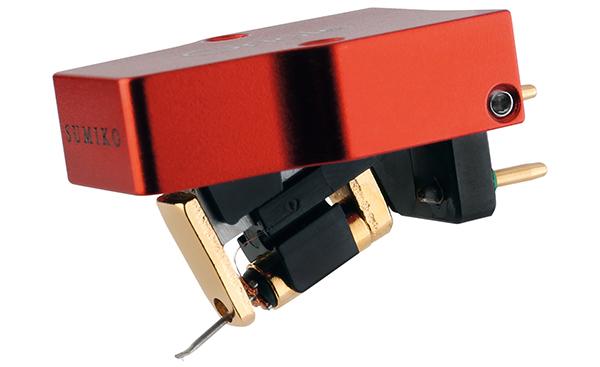

What goes around comes around: if it wasn’t for Sumiko, we would probably still be listening solely to moving-magnet cartridges. As recounted in our review of the Sumiko Celebration 40 [HFN Apr ’22], company founder Dave Fletcher helped introduce to the West Japanese audiophiles’ passion for moving-coils in 1972. Sumiko’s latest, the Oriole, is entirely representative of 21st century MCs, a half-century on since Sumiko made us aware of Supex, Grace and the rest.
Body talk
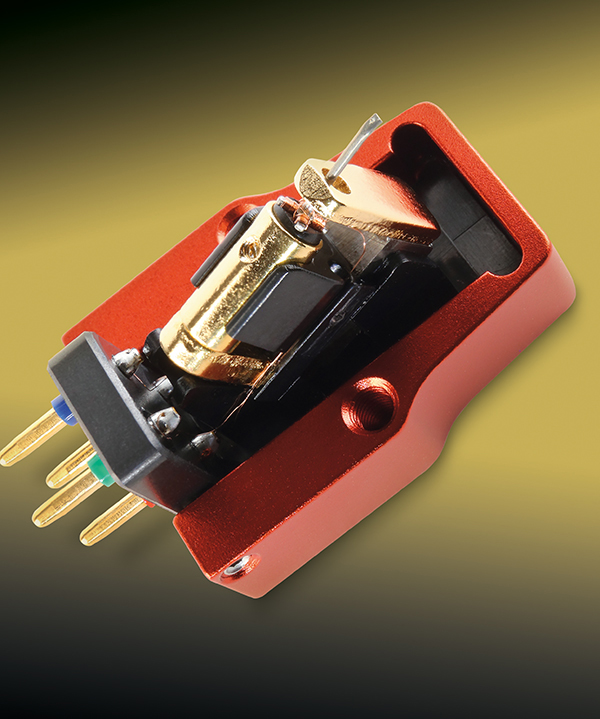
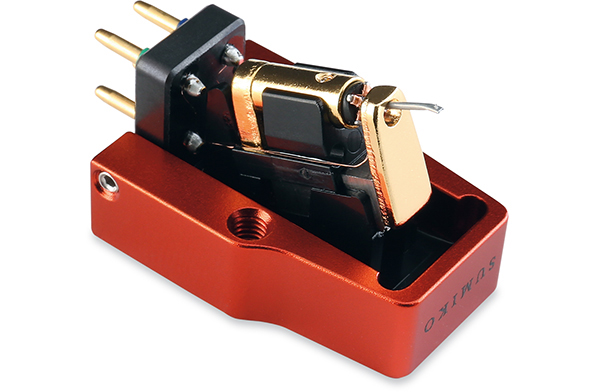
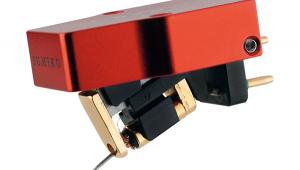
Part of its Reference Series, the Oriole is not exactly ‘low cost’ at £1499 but it seems a bargain compared to today’s high-end norm of around £3000-£5000. It looks the part too, being of immaculate construction and of the school that eschews body shells. For those who value looks, the view of cantilever, magnets, coils, etc, can be as enticing as a precious stone, wood or machined alloy body.
There is but one negative to the form. Arguably, the delicate, hair-thin wire workings of a cartridge demand protection from the outside elements – a body shell affords both environmental and acoustic shielding. The same argument is posited for removing the shell as a source of resonance, a major issue in cartridge design and behaviour. Instead of opting for solid mineral or metal bodies which should suffer minimal resonance, or wooden bodies which artisan cartridge designers posit can be tuned, none can match the complete absence of the body.
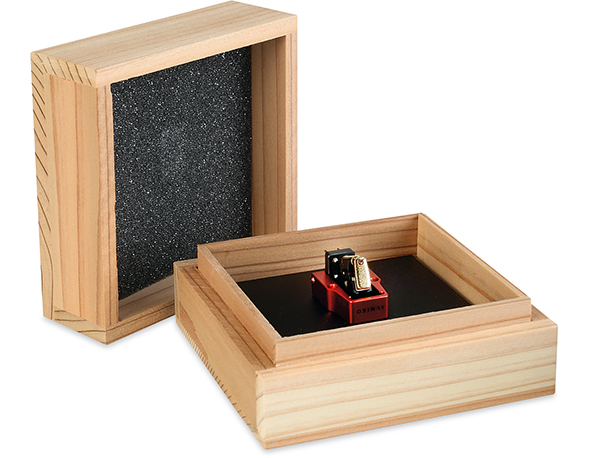
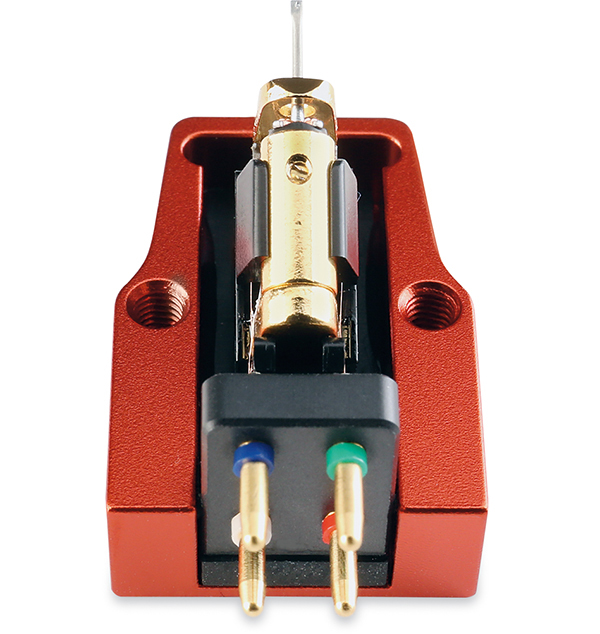
Sumiko further channels any remaining, unwanted vibration away from the mechanism via its hefty alloy top plate. All of the Oriole’s components are held together in a PEEK polymer shell, the black plastic frame that carries everything from the four colour-coded pins to the moving parts, magnet, and coils, etc. This is bonded to the chunky alloy ‘vibration energy sink’. PM’s photography allows us to study this in greater detail than would holding the actual cartridge... unless, that is, you have a jeweller’s x20 loupe.
Though probably not a reason why cartridge designers have made these al fresco models, or ‘open architecture’ in Sumiko parlance, is the inescapable fact that there’s no easier type of cartridge to setup and cue. Because of this, the Oriole is so simple to mount and align on a gauge that it’s almost embarrassing. That solid metal top, too, invites the kind of screw tightening that destroys head shells for those so inclined to overcompensate.
Surgical spirit
As for the rest of the recipe, it includes an aluminium tube cantilever and a superb nude Shibata line contact stylus, beautifully fitted. The cartridge tracks superbly at 2g [see PM's Lab Report] while the 0.3mV output puts it in the middle of medium-to-low output cartridges. I ran this into 50 and 100ohm noting that the Oriole responds in terms of level and overall tone with incremental adjustments in loading.
Where one needs to behave like a surgeon is in VTA setting because, with this stylus profile, it’s inherently a critical matter. To these well-seasoned ears, the Oriole can veer toward the bright segment of a Venn diagram. Getting the VTA absolutely spot-on – dipping the arm slightly at the rear – not only minimises the risk of edginess or sibilance, it also makes the soundstage snap into focus. There is a rewarding absence, too, of the ‘needle chatter’ many cartridges suffer, as noticed if you put your ear close to the tonearm.
 Singing like a bird
Mention of the stereo soundstage is deliberate here, as creating a convincing space for the music is one of the more immediately identifiable characteristics of the Oriole. It’s as if someone had turned a classic Denon
DL-103 [HFN Jul ’09] through 90o, the sound here rather deeper than it is wide.
This is categorically not a demerit but a constructive observation – if you have a massive room, it’s a boon because your loudspeakers will be far enough apart to ensure that the soundstage is as wide as you could want, while the depth is cavernous. It’s a perfect example of using both VTA and speaker toe-in to work with each other. Tweaky? Perhaps. But you’re reading Hi-Fi News after all…
Please place into context my earlier comments regarding the possible brightness of the Oriole. With Paul McCartney’s brand-new Man On The Run soundtrack [Capitol 602488235280], the sound was actually sweeter than I expected, while the bass was incredibly ‘melodic’ for lack of a more precise term. This should surprise no one as Paul is a legendary bassist and his albums have never sounded thin because bass always enjoys prominence in Macca mixes.
Here the Oriole addresses its Sumiko legacy because it was moving-coil cartridges that introduced to many Western ears a gentle, less-aggressive, warmer bass than was available with the MM cartridges of the pre-MC era. Sumiko’s latest offering ensures that the bass lopes along beautifully, notably in ‘That Would Be Something’ and ‘Let Me Roll It’. But where does that leave harder bass when it’s required?
Turning to an album where the bottom end isn’t gentle by design, and with the virtuoso hard funk of ‘Duck’ Dunn’s bass, is Sam & Dave’s Hold On I’m Comin’ [Rhino Reserve RHI 780921]. The Oriole displayed incredible mass and substance down below. This was particularly desirable as this is a mono version of the album, so it not only added heft to the overall sound, it presented another virtue of the Oriole.
Fat track
It wasn’t just the rock-solid central imaging, even without the preamp’s mono button activated. It might have been the recording or maybe wishful thinking on my part, but the mono image was wider, deeper and ‘fatter’ than anticipated. Indeed, there were flashes of sound where I thought Rhino had made a mistake and let some stereo creep in.
While the McCartney album featured Paul’s and Linda’s easy-on-the-ears voices, Sam and Dave allowed me to hear the interplay between the rasp of Dave and the soaring gospel tenor of Sam. The Oriole dealt with their disparate but complementary textures with the ease that identified a dearer, wooden-bodied but now defunct moving-coil of near-mythical status. Yes, you do get a whiff of the old non-stone-bodied Koetsu pick-ups, but perhaps this should not surprise as Sumiko was that cartridge’s first US importer.
As much as I feel shame whenever I resort to that easy, lazy method of classifying components, that of suggesting a product works best with a specific genre, the Oriole really showed its mettle with metal. The terrific pressing of Bad Company’s near-eponymous debut Bad Co. [Swan Song R1 8410] facilitated this cartridge’s talent for the three crucial ingredients in any hard rock experience.
Slam jam
First and foremost, it handled the attack and range of Mick Ralph’s lead guitar work with such ease and such smoothness that any earlier concerns about a brittle top end were dispatched with vigour. Secondly, the bass had all the weight, mass and power needed to sustain a massive-sounding song like ‘Can’t Get Enough’. How it handled the energy and slam of the percussion showed this to be one of the cartridge’s fortes.
And the third requisite for convincing stadium filling? The forcefulness of the Oriole delivered Paul Rodgers’ lung-busting vocals as unconstrained as they should be. But Bad Co. wasn’t all about justifying a place on Led Zeppelin’s label. What prevented me from having to be apologetic and allowed me to not have to feel guilty about calling this a ‘rock’ cartridge was the way it respected the quieter moments.
Recalling the McCartney album’s softer vocals, Bad Company’s ‘Ready For Love’ and ‘The Way I Choose’ stand or fall on the emotional content of a ballad, even with moments demanding the mass of a hard rock song. Bad Co.’s piano interludes were suitably sweet and ringing, again belying the Oriole’s bias toward the bright, while the acoustic guitar on ‘Seagull’ had so much air I was reminded of the wooden-bodied Mr Brier [HFN May ’86] and EAT’s Jo No8 [HFN Dec ’19].
Certain albums are so well-recorded that they tend to make every system sound better than it ought to. I know that’s ridiculous as the system can only be defined by its limitations but The Incredible Jazz Guitar Of Wes Montgomery [Craft CR00850] is one of those lush-sounding albums that cosset as much as they reveal. But what would the upper frequencies of the Oriole do to the star instrument?
Speed king
First, I had to get past speed, having forgotten Montgomery predates Eddie Van Halen as a peerless shredder. My goodness, could this guy pile on the notes! The Oriole definitely kept up with him, with speed and attack. Arrayed behind him were piano, acoustic bass, and drums, all treated with the kind of refinement I would normally attribute to something like an old Ortofon SPU [HFN Jan ’84].
What I thought was a rock cartridge was metamorphosing into a jazz cartridge, or to be more precise, a universal cartridge. Which is as it should be. Then again, how could I not love a cartridge named after one of the pioneering doo-wop groups of the 1940s?
Hi-Fi News Verdict
So solid and reassuring is the Sumiko Oriole, from its sound to its construction, that the only caveat is obvious: this MC won’t likely appeal to those who fear fully-exposed cantilevers. Get past that, and this cartridge is an exemplar of modern MC performance, without the price tag of, say, a new La Cornue-equipped kitchen. Spend time on the setup, especially VTA, and you’ll think this cost £3000.Sound Quality: 86%
 | |||||||||||

|
|
| |||||||||










 SPONSORED VIDEO






| Equipment Reviews | |
Music Reviews Awards | |
Latest News Features | |
Resources Newsletters | |
Subscriptions |
WHERE TECHNOLOGY BECOMES ENTERTAINMENT
 © 2026 Hi-Fi News
AVTech Media Ltd
All rights reserved