Nagra PREAMP II-S preamplifier

So prolific is Nagra of late that the catalogue now has five families. I realise that sounds like I’ve just described the New York mafia. They consist of Compact, Classic, HD and Reference in ascending order of price, with the brand-new PREAMP II-S reviewed here introducing the new Series II. At present this is positioned between Classic and HD, but further housekeeping is pending [see boxout].
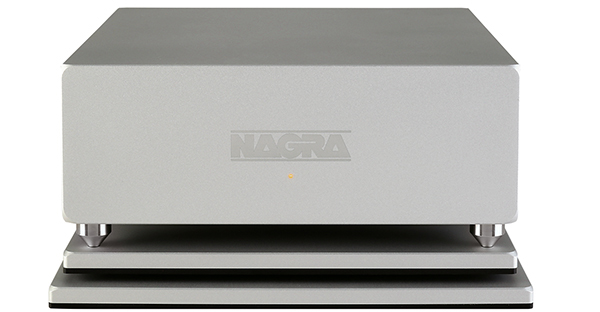
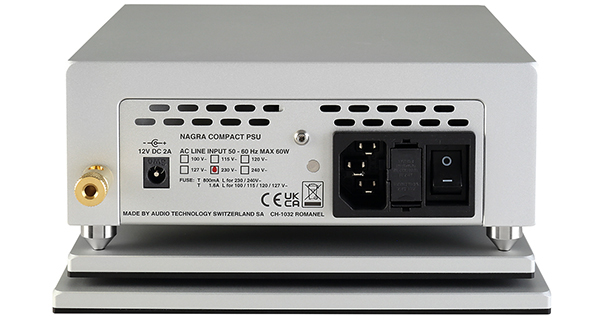
Smack in the middle, then, is the line-level, all-tube PREAMP II-S reviewed here, which comes with Nagra’s external Compact PSU for a total of £21,998. But the options list reads like the window sticker on a 1968 Cadillac… For openers, there’s a decent saving if you already own the £15,798 Nagra Classic PSU, which is able to feed up to three products. The PREAMP II-S on its own is priced £18,348, meaning the Compact PSU accounts for £3650 of the package here.
Finishing touches
With that out of the way, you have to deal with the remaining options. For example, the PREAMP II-S’s XLR sockets are eligible for transformer-coupled options called ‘Symmetrical Transformers Kits’, at £3150 for the output and £3998 for the input. Then there are Nagra’s VFS bases – highly recommended for added isolation and not just for the looks – at £1350 for the Compact PSU and £2298 for the larger footprint PREAMP II-S. While that might seem a lot for slabs of custom-cushioned aluminium, they do add the final touch, and at this price level, who’s counting?
Owners of the Classic Preamp will be instantly familiar with the PREAMP II-S, which is almost identical in both size and layout. It requires only 280x76x380mm (whd) shelf-space while the Compact PSU needs but 191x61x160mm (whd). Indeed, the raison d’être of this Series II, like the Compact line, is to maintain dimensions which better suit modern dwellings, especially space-poor urban settings.
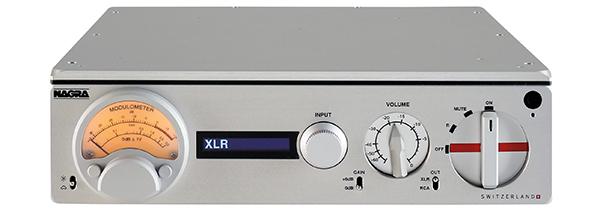
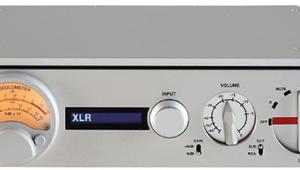
I did a double take when I looked at the front panel, so recognisable is the Nagra style after 28 years [see boxout]. To the left is a tiny toggle which selects five levels of illumination for the signature Modulometer to its right, an item without which a Nagra preamp would seem naked. Next comes an OLED display which shows the chosen input, mute mode and balance settings, followed by a rotary for selecting the inputs if you’re not using the remote.
Taking control
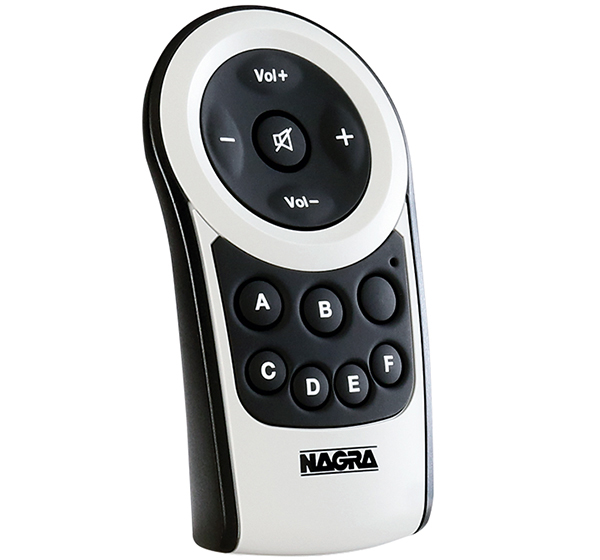
You gotta love the machined knob for the traditional Nagra volume control, which is a way of reminding you that the chassis is machined from solid aluminium, damped with phenolic sheets. It is a joy to operate, but the PREAMP II-S’s cute little remote control [see p47], which has a flat bottom so it can stand upright, is too much of a pleasure not to use. I suspect few owners will access the controls on the preamp itself when the remote is so tactile and form-friendly, similar to a computer mouse or joystick.
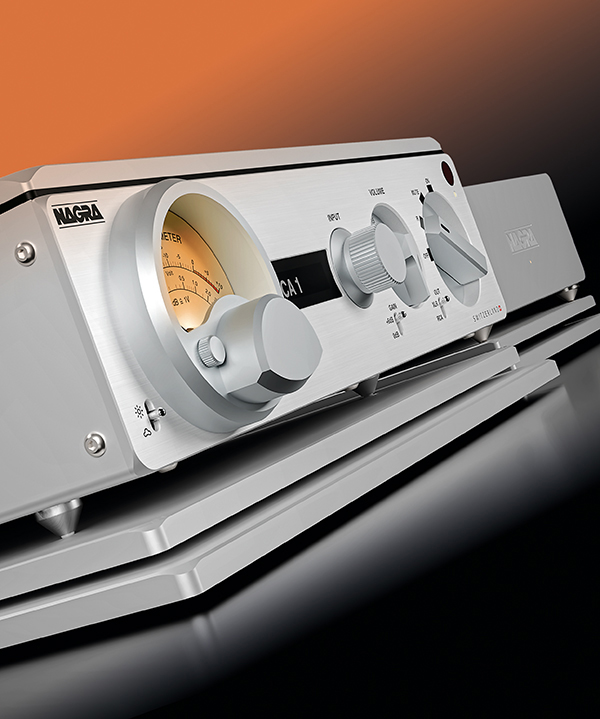
Left of and below the volume control is another toggle switch that selects the unit gain of 0dB or +6dB. Another switch to the right chooses the PREAMP II-S’s XLR or RCA output. A final control is the large four-position rotary selector for power on/off from standby (the main on/off switch is located on the back of the Compact PSU). The ‘R’ setting is selected to enable the remote control to choose on/off. Next is mute mode, and then the ‘On’ position for playback. In the upper righthand corner are the IR receptor window and the remote control’s LED, which flickers to show signal received.
Snug ’n’ stylish
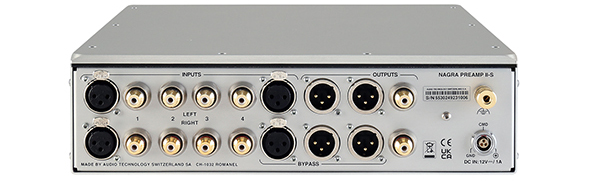
At the back – and with nary a millimetre of real estate wasted – the PREAMP II-S provides (from left-to-right as viewed from behind, p47) one XLR input, four RCA single-ended inputs, a second XLR for bypass mode as required in multiroom or AV set-ups, and both RCA and balanced (x2) XLR outputs. Rounding out the connections is a LEMO socket to take the feed from the chosen Nagra power supply, and an earthing tag should you add an external phono stage which might need it. As much as the front of this new Series II model oozes Nagra’s high-end hi-fi style, the back is redolent of its legendary IV-S tape recorder and professional products, so Nagra-lovers will sigh with nostalgia.
Although most seasoned audiophiles will find the PREAMP II-S pretty much self-explanatory, there are little quirks which would suggest that you sit down with the owner’s manual. For example, source selection from the front-panel rotary requires scrolling through the various inputs, whereas the buttons on the remote allow you to jump to the input of your choice. As these are labelled A through E, you will have to learn what they control. Hint: A is the balanced XLR input.
Five buttons in the circular segment of Nagra’s remote govern volume up-and-down, left-right balance and mute. The unmarked button on the remote is for power on/off should the PREAMP II-S be placed in the aforementioned R position, while the F key is not assigned for this unit. A red LED blinks on the remote when a key is pressed.
 Swiss timing
From ice-cold – and I do mean February frigid – the PREAMP II-S took exactly 60 seconds, as timed appropriately by a Swiss chronograph, to enter ‘operate mode’. I wondered if Nagra consulted one of its horological neighbours when it timed the warm-up period. When switched on, the OLED display reads ‘Heating…’ with the ellipsis moving to show that something’s happening.
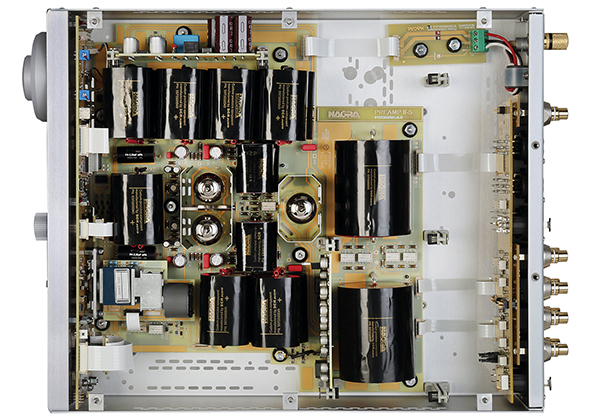
Over this minute the two 12AX7/ECC83 and single 12AT7/ECC81 (output) tubes undergo the gentle pre-heating sequence which probably contributes to the claimed valve life of 5000-10,000 hours.
As age brings patience, I didn’t enter serious listening mode until nearly an hour had passed, leaving the room after a quick burst just to see if the PREAMP II-S benefits from more than the one-minute warm-up. I was pleasantly surprised to learn that you don’t have to leave this thing cooking before you hear all that it can deliver. I would assume that stability comes from the solid-state biasing of the tubes.
Being on a heavy metal jag for some unknown reason, mid-way through my listening I found myself spinning up the eponymous New York Dolls [Mercury SRM1675] and The Stooges [Mobile Fidelity MFSL 2-605] albums, followed by a respite in the form of Nicolette Larson’s Look In My Direction [Second Disc QCDLEM4BX263] and Julie London’s Julie Is Her Name Vol II [Analogue Productions CAPP7100SA]. The latter SACD was chosen because I had just been immersed in recordings from 1956 for our upcoming anniversary issue [HFN Jun ’26].
Family traits
If ever a product dismissed the hoary notion that hi-fi components are or should be genre-biased, it’s this beauty. The very first word that came into my mind was ‘neutrality’, and the second was ‘quietness’. I was reminded of the sonic resemblance to the HD Preamp [HFN Nov ’18] and thus had to marvel at how close the PREAMP II-S is to its dearer siblings. While it’s true that you get more sophisticated circuitry and possibly other features by moving up a level, the main sonic benefits I could recall were slightly more slam down below, perhaps thanks to the HD’s and Reference’s massive power supplies, and a whiff of grandeur. Otherwise, this is clearly related to its hugely expensive stablemates.
That, of course, mattered most when listening to the loud and angry punk of The Stooges, or the glam punk of the New York Dolls, but for both the most telling element was how Nagra’s PREAMP II-S dealt with Iggy Pop and David Johansen’s snarls. Their textures and tics came through with such detail and clarity that I’m obliged to add a third word to this Swiss brand’s lexicon: ‘transparency’. This tube preamp is so open sounding – again, it’s that quietness and the huge dynamic swings which both contribute – that I could swear I was hearing a deeper soundstage as well. This even carried over to the lean Julie London recordings, where space mattered more.
The PREAMP II-S may be the baby sister of HD and Reference, but it certainly knows how to punch above its weight. Which begs a reality check: I do not want, for a moment, to portray the Nagra PREAMP II-S as somehow an ‘economy’ purchase, even though its mission is to enable music lovers to acquire a Nagra preamp at a lower price (and at a smaller size). This is still ‘high-end’ in the pecuniary sense, but it will prove a standout model in its price category of £15,000-£25,000. The fun is in comparing the PREAMP II-S to tube and transistor rivals.
The inbetweener
It was the female vocalists who enabled me to explore its true nature. Strictly, while there are no transistors in the PREAMP II-S’s signal path, I was still drawn to the notion that its sound inhabited a space somewhere between the warm, occasionally plump signature of a low-feedback tube design and the sometimes sterile and hygienic nature of solid-state equipment. The magic occurs when a ‘hybrid’ unit takes only the best of both and leaves the worst of both. Whoever voiced the PREAMP II-S managed to extract enough valve warmth to ensure its humanising of the vocals, alongside sufficient forensic ability to make sure every minute detail comes through.
Larson’s voice was crystal clear in a country-and-western way (though she sang more West Coast rock than pure C&W) while London was known for a bit of huskiness, both vocals in direct contrast to the rasps of the punks. The preamp presented these with such character, clarity and emotion that I had to dig out a pair of LS3/5As – the voice champs – to check I wasn’t imagining it.
As often happens, one instrument or one set of licks provided that frisson of reality in which the listener is fooled into thinking that the performer is right in the room. It was the slithery guitar on London’s ‘Blue Moon’ which had such vivacity that I did a double take, one of those moments where you forget you’re listening to a sound system and think that you’re at the actual event. And that’s beyond a price tag.
Hi-Fi News Verdict
Even for an audio veteran of 50-odd years’ standing, surprises still occur. The PREAMP II-S emerges as one of the most ideally balanced exemplars of transistor-biased tube technology that I can recall, certainly at its price. Were I well-heeled and in need of a control unit, unwilling to forsake my full-on valve leanings, this would force a rethink. It’s warm, open and as silent as needs be. It just may be Nagra’s new ‘sweet spot’.Sound Quality: 88%
 | |||||||||||

|
|
| |||||||||










 SPONSORED VIDEO






| Equipment Reviews | |
Music Reviews Awards | |
Latest News Features | |
Resources Newsletters | |
Subscriptions |
WHERE TECHNOLOGY BECOMES ENTERTAINMENT
 © 2026 Hi-Fi News
AVTech Media Ltd
All rights reserved