dCS Varèse Transport CD/SACD transport
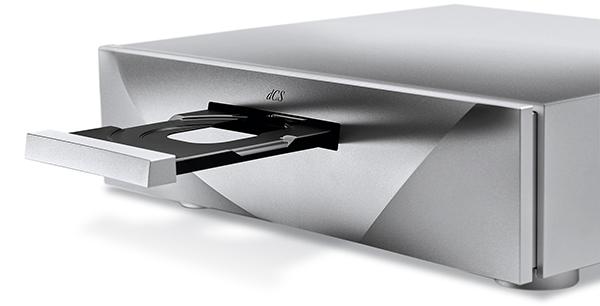

It’s tempting to imagine a Frankenstein-like cry of ‘At last our creature is complete!’ emanating from the Cambridge HQ of dCS. The arrival of the company’s Varèse CD/SACD transport, retailing for £32,500, should come as no surprise to followers of the company’s flagship digital solution [HFN Feb ’25]. Bringing the complete Varèse ‘stack’ to a total of six units – the User Interface, Core, Master Clock and dual Mono DACs – the eagerly anticipated Transport also lifts the all-up price just north of £260,000.
Now it’s here, what exactly is the Varèse Transport? And does it have a place in the brave not-so-new world of streaming music? To answer the second part first, the answer must be a resounding yes. There’ll be many buyers – ‘many’ being relative in the context of a digital player solution costing over a quarter of a million quid – with extensive collections of CDs, and quite possibly more than a few SACDs.
Prized possessions
Agreed, those collectors could have ripped their discs to network storage by now, even if doing so with SACDs is something of a faff, typically involving an elderly Sony PlayStation. Yet there are still those who relish the ritual of finding and prizing open a jewel case, and popping a disc into a physical player. Moreover, given the total price of the complete Varèse front-end, the add-on cost of the Transport may not be a stretch for those who want the complete experience.
So, back to the ‘what is it?’ question, and while the name is self-explanatory, there’s a lot going on inside what dCS calls its ‘quietest, lowest-vibration’ disc transport to date. Playing 44.1kHz/16-bit CDs and SACDs in their native formats, the Transport interfaces with the Varèse Core using the company’s ACTUS link. It’s controlled from the touchscreen of the Varèse User Interface module, the Varèse remote control [pictured below], or the dCS Mosaic ACTUS app [see boxout], where it simply appears as another input option, from which tracks can be selected for playback.
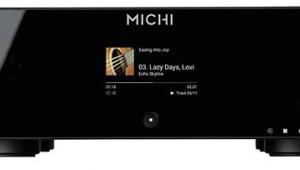
Here one hits a foible of the new unit – the disc mechanism, sourced from Marantz/Denon parent Sound United, and also used in the dCS Rossini and Vivaldi Mark II transports, does not read metadata. As a result, the only information you get via the Transport and Mosaic ACTUS app is a list of track numbers, with no artist/album/track title information, and not a sniff of any artwork. It is a little surprising, given that the Varèse system will be network-connected, that dCS hasn’t included an element of online metadata look-up to add this information to the listening experience. After all, the likes of Rotel’s Michi Q5 CD player [HFN Apr ’25], at ‘only’ £5499, manages this trick in some style via its Ethernet port.
Keep it clean
The Varèse Transport’s mechanism was chosen for its ability to offer ‘bit-perfect disc-reading and output’, and is controlled here by dCS’s own VCXO clock circuitry, reducing jitter [see PM's Lab Report]. Additionally, great care has been taken in the mounting of the mechanism to mitigate against vibration and get the cleanest possible read of the disc – especially critical with the higher rotational speed and finer data pit structure of SACDs.


The Transport uses massive two-part casework milled from solid aluminium. One part comprises the top, front and side panels, and mounts the transport using a solid alloy subchassis, while the section forming the base and rear panels carries the unit’s electronics.
dCS says the Transport’s solid mounting was determined after measuring the vibration caused by spinning discs, during which the use of various bushings was discounted in favour of mass to damp the transport. Hung using mounting plates from pillars extending down from the top-plate, the mechanism in the Varèse Transport is said to generate substantially less vibration than the more conventional mounting in other dCS transports.
The electronics here are combined on a single circuitboard, with only the ACTUS connector and front-panel LED being separate. The VCXOs, running at 22.5792MHz and 27MHz, control the audio and mechanism, respectively, with the former synchronised to the Varèse Core or optional Clock through a Tomix clock signal fed via the ACTUS link.
With all that, it’s impressive that dCS has made setting up the Varèse Transport so simple. By contrast, installation of the Rossini Transport requires five connections to its matching DAC – three AES, one RS232 and one clock – while the Varèse system does it all with a single ACTUS link [see p65]. The Transport outputs data from discs in its native form, with any upsampling or format conversion the user requires carried out in the Varèse Core. Similarly, operation of the Transport’s functions – play/pause/stop, track skip and eject – is carried out via the Varèse system’s various interfaces because there are no physical controls on the unit itself.
 All systems go
The quick and easy answer to ‘how does the Varèse Transport sound?’ is that it doesn’t. Comparing CDs to streams at the same resolution from Qobuz and Tidal showed any differences to be so vanishingly small, if even there, as to be entirely irrelevant, leading to the conclusion that the main influence here was the digital capability of the full Varèse ensemble. The Transport, just like the Varèse’s streaming implementation, simply offers a clean datastream to the Core and DAC(s), and they just get on with the job of delivering a world class musical performance.

Playing Brahms’ First Symphony from the Danish Chamber Orchestra/Adam Fischer boxset of the complete symphonies [Naxos 8.574465-67] saw the Varèse, feeding Constellation Revelation 2 amps [HFN Jan ’25] and Wilson Audio Alexx Vfx loudspeakers, revealing the clean, bright and detailed performance and recording. There were fine dynamics, punch and lyricism in the playing of the chamber orchestra – smaller forces than are usually deployed for these works.
At the time of writing, the three-disc box set was less than £20, which is a real bargain for an account of the works so insightful and involving. Nevertheless, switching to Tidal’s lossless stream showed the presentation lost nothing in translation to streaming over wired Ethernet.
SACD leads the way
A more intimate piece, pianist Jan Gunnar Hoff’s take on The Beach Boys’ ‘God Only Knows’, showed the quality of the recording, with both a close focus on the instrument and obvious ambience on a CD-quality stream, just the same as the CD layer on the hybrid SACD release from 2L [Stories; 2L-131-SABD]. However, switching to the SACD layer delivered both additional warmth and space in the piano and a more organic sound overall. There was a greater feeling for the ambient acoustic as notes decayed, and simply more body in the piano. The SACD gave more of that ‘instrument in the room’ impression.

Salif Keita’s rendition of Cole Porter’s ‘Begin The Beguine’, on the 1990 Red Hot + Blue compilation [Chrysalis CCD 1799] sounded joyous and vibrant streaming from Qobuz, with crisp driving percussion. The same track played from CD proved just the same, with nothing added or taken away. Similarly, U2’s cover of Porter’s ‘Night And Day’ failed to elicit any repeatable differences between disc and stream, despite its powerful, droning bass, Bono’s recessed vocal and The Edge’s guitar interjections.
Vital organ
With the 2015 Michael Stern/Kansas City Symphony recording of the Saint-Saëns ‘Organ’ Symphony [Reference Recordings RR-136], the Varèse stack, fed from the new Transport, delivered fine attack in the orchestra allied to excellent scale and warmth. Big bass chords erupted beneath skittering strings and woodwind. Then there was that momentary pause before the organ crashed forward in magnificent style, along with the radiant piano contributions in the final movement. I didn’t have the SACD release [RR-136 SACD] for comparison, but the Qobuz stream at 176.4kHz/24-bit just about edged the CD sound from the Varèse Transport. The organ was bigger and more characterful, and emanated from a greater space.
The sound was also tight and clean, with abundant detail, on Joe Stilgoe’s Theatre [Westway Music WWMCD005], despite the overall lushness of the balance in songs like ‘Does Anybody Have A Map?’ from the musical Dear Evan Hansen. There was also a lovely sense of scale and drama on Stilgoe’s medley from Stephen Sondheim’s ‘Into The Woods’, with his rich voice sweetly set against the Metropole Orkest.

This performance was matched by the better streaming services, as was the sound of the all-star AngelHeaded Hipster tribute to Marc Bolan [BMG 538605850]. Joan Jett’s ‘Jeepster’ lacked the impetus of the original but had a brief, killer, guitar stab, while Lucinda Williams’ take on ‘Life’s A Gas’ was bonkers, but superbly focused. One possible advantage of the disc? Streaming services don’t have the set’s overblown version of ‘Get It On’ by U2 and Elton John – although on reflection that’s perhaps a mercy.
The Transport fought back with its rendition of Vivaldi’s ‘Violin Concerto in A major’ [The Trondheim Concertos; 2L 2L-172-SABD]. The stream via Tidal matched the CD playback, but the SACD layer opened up the sound, making even more of the reverberant church acoustic in this exemplary recording by label founder Morten Lindberg.
Hi-Fi News Verdict
A fine performance, but it’s hard not to form the impression that the rest of the Varèse ‘stack’ is doing the heavy lifting here, so close are streamed files to the sound available from CDs. Nonetheless, the physical disc player shows its true abilities with SACDs, when it really shines, and so for a Varèse owner with a large disc collection, this really is a no-brainer. It’s the ganache icing for the Varèse cake!Sound Quality: 94%
 | |||||||||||

|
|
| |||||||||







 SPONSORED VIDEO






| Equipment Reviews | |
Music Reviews Awards | |
Latest News Features | |
Resources Newsletters | |
Subscriptions |
WHERE TECHNOLOGY BECOMES ENTERTAINMENT
 © 2026 Hi-Fi News
AVTech Media Ltd
All rights reserved