Unison Research Pre/DM v2 pre/power amplifiers
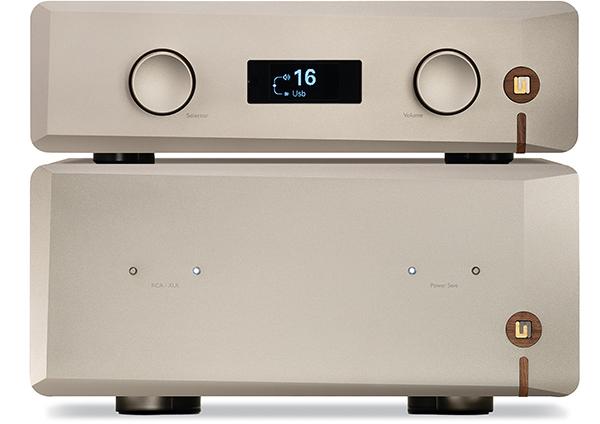

While the upgrades that Unison Research made to its Triode 25 integrated amp were sufficient to warrant a ‘Black Edition’ suffix [HFN Jul ’25], the Italian brand’s decision to label its new pre/power amplifiers as merely ‘v2’ is to underestimate the uptick in performance. The Pre v2 (£5500) and DM v2 (£7750) are not only the flagship separates of its Unico range but are markedly different from what has come before, both outside and in.
Even the basic functionality of the preamplifier has changed. The previous Unico Pre [HFN Jan ’07], first launched in 2002 and revised in 2010, was line-level and analogue-only. Its replacement adds a built-in phono stage for use with MM and MC carts, and a DAC stage fed by optical, coaxial and USB-B inputs. A little less purist, then, but a lot more flexible. Or, as the company’s product engineer Alessio Fusaro put it to me, ‘a more complete product’.
Golden touch
Some hyperbole is to be expected whenever a hi-fi brand launches a new model or range. Yet Unison Research can be cut a little slack when it says the Pre/DM v2 feature a ‘new stylistic language’ that is ‘both elegant and modern’. These amps really are rather striking in their appearance, particularly when compared to their more nondescript predecessors, plus other units still current in the Unico range, such as the CD Uno [HFN Oct ’25].
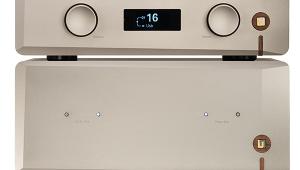
With the new look comes a new colourway, the Velvet Gold finish seen here replacing the silver option of the outgoing Pre and DM. If this is too flashy for your tastes (although the gold hue is subtle rather than ‘in your face’), there’s a Midnight Black alternative. Whichever you choose, the machined aluminium faceplates, with asymmetrical bevel details and the absence of obvious branding, result in a clean, modern look. You can expect to see it continued in new Unico integrated amplifiers later in 2026.
Design refined
Speaking of which, this strand of hardware is where Unison Research marries its passion for tubes with solid-state technologies. None of the glassware (2x ECC83s and 2x ECC82s in the Class A input stages of the Pre and DM v2, respectively) is on show, however. Nor does either amp run particularly warm in use.
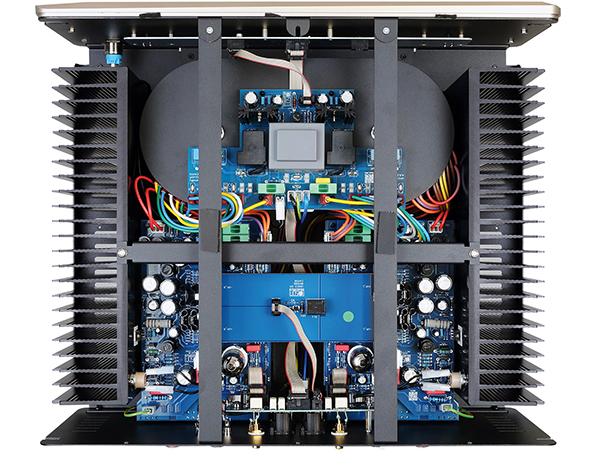
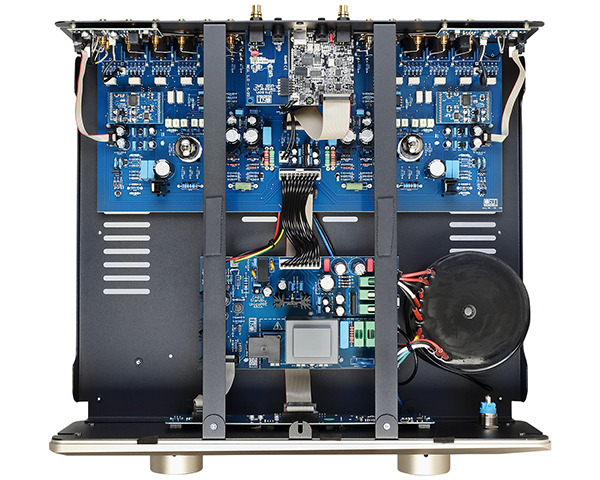
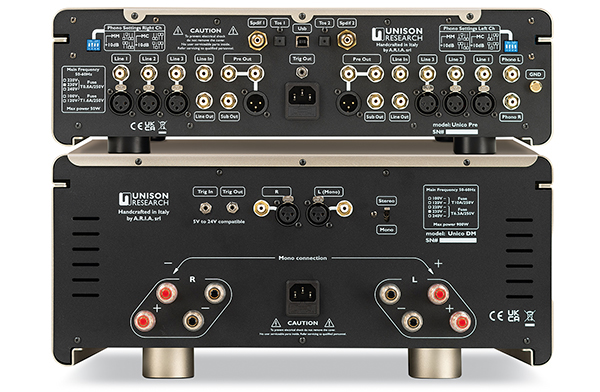
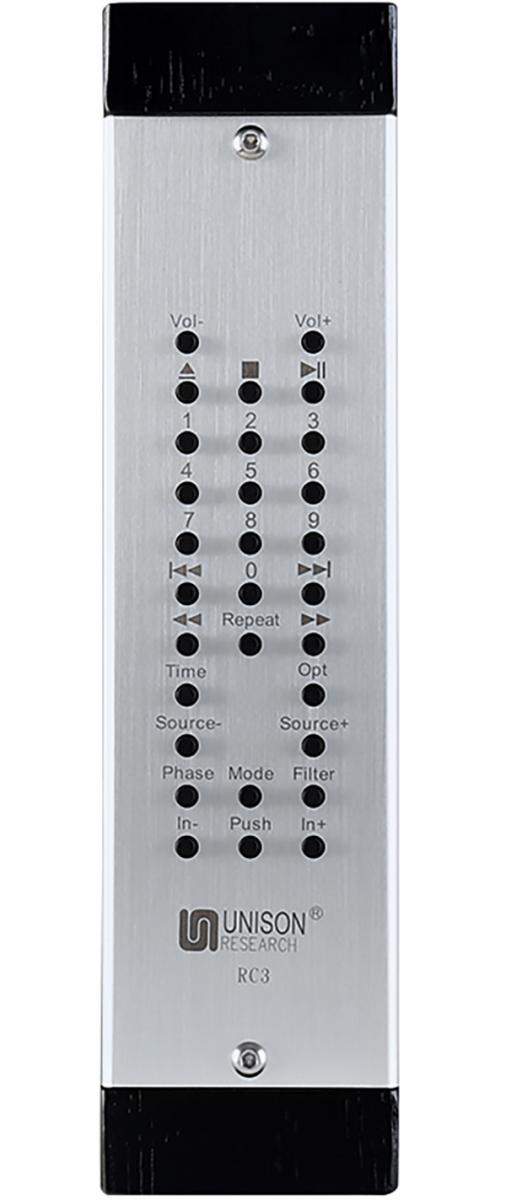
Inside the Pre v2, the dual mono tube/transistor architecture of its predecessor has been retained but upgraded, with attention focused on ‘delivering a more balanced, dynamic and engaging’ performance. Unison Research says most of the available gain (+20dB via its single-ended RCA in/outs and +15dB via its balanced XLRs) comes via its tube stage, while the solid-state buffer is designed to provide a low output impedance [see PM's Lab Report]. The digitally governed volume, set by a front panel rotary, covers 95dB in 0.5dB steps. A second rotary cycles through the digital and analogue inputs, the latter comprising four line ins (three on both XLR/RCA) in addition to MM/MC phono.
The last of these should satisfy casual vinyl users as adjustment – via rear-panel DIP switches – is limited to 40dB or 50dB gain with 100ohm loading for MCs, and just 33dB or 44dB gain with 47kohm loading for MM pick-ups.
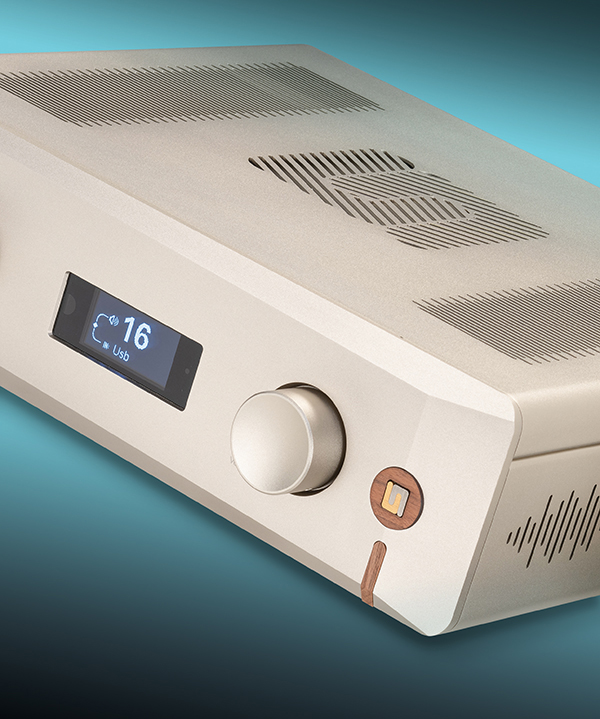
Between the rotaries is a new OLED display that shows volume and source but gives no indication of sampling rate with digital inputs (the USB-B connection handles PCM to 384kHz and DSD to DSD256). Menu options are also shown here, and include assigning preset volumes for the individual inputs, switching the line-level inputs between RCA or XLR, and instigating Unison Research’s ‘Line Loop’ feature (for use with an external DSP unit). There are no options (choice of digital filter, upsampling, etc) related to the DAC stage, nor any balance or tone controls.
On to the DM v2, which is a good deal chunkier and weightier than its preamp partner. But this is no surprise, as its dual-mono design includes separate 750VA transformers for each channel. Power output is a claimed 220W/8ohm [and 340W/4ohm, [see PM's Lab Report], delivered by a new three-stage amplification circuit culminating in three pairs of MOSFETs per side [see boxout]. A rear-panel switch combines the two transformers and bridges the output stages to create a mono amp rated at 650W into 8ohm/4ohm loads.
Once you accept the DM v2’s 33kg mass, installation of both amplifiers is straightforward. Connections are clearly labelled and sensibly arranged. Inputs and outputs are split between left and right channels, and the loudspeaker binding posts are robust, multi-way types.
On both units are front-panel power buttons, framed by natural wood. Once hit, the preamp’s display shows a progress bar as its valves warm up. The power amp, meanwhile, needs waking from a ‘power save mode’ by the touch of a small button. Another button switches between XLR and RCA inputs, your selection shown by a change of the status LED from blue to white.
 Power play
PM’s Lab Report [see here] demonstrates that Unison Research’s DM v2, despite its tube-based Class A input, is still a proverbial ‘big and beefy’ solid-state power amp. Used with the Pre v2, the sound is not as ‘tube-coloured’ as some may hope for, as this duo is more likely to raise eyebrows for its power and dynamics. It will do sweet and lush if the source material obliges, but otherwise doesn’t go out of its way to sugarcoat the music.
As an example, initial impressions of The Allman Brothers Band’s cover of ‘Hoochie Coochie Man’, from their 1970 sophomore album Idlewild South [Island Def Jam; 192kHz/24-bit], were of a warm presentation, particularly in the rhythm section – but this is a facet of the recording. Where the amps stamped their authority was with the chaotic mix and edge-of-your-seat drumming from Butch Trucks and Jai Johanny Johanson. The Pre/DM v2 coped superbly with the overload of information, displaying the fast feet needed to keep drum flurries and guitar licks coherent and distinct.
Solo spotlight
The more I listened, the more I appreciated this pre/power’s clarity and attack. Switching to Miles Davis’ ‘Miles Runs The Voodoo Down’ [Bitches Brew, Columbia; 96kHz/24-bit], the sound of the dual bass guitars was plump and soft, but the amplifiers did nothing to mask the sharp, angular thrusts of Davis’ trumpet. What’s more, attention was easily focused on his solos even as the rest of the 11-piece band cut loose around him.
But it’s the way the system digs into a rhythm section that feels most indicative of the DM v2’s inherent power. There was excellent groove and thrust to Aerosmith’s ‘Sight For Sore Eyes’ [Draw The Line; Capitol Records 060245524833], while the drummed introduction to Red Hot Chili Peppers’ ‘Dani California’ [Stadium Arcadium, Warner Bros.; 96kHz/24-bit] was almost frightening in its scale and slam.
As for the song the Chili Peppers were here accused of plagiarising, Tom Petty And The Heartbreakers’ ‘Mary Jane’s Last Dance’ [The Best Of Everything, Geffen; 96kHz/24-bit] was rendered crisp and bright via the Pre/DM v2, edgy guitar riffs and percussion slicing through the air. It’s a sound that you might find to be just the ticket for waking up any loudspeaker with a slightly sleepy demeanour.
Swapping the Matrix Audio Element X2 networked DAC [HFN Dec ’23] I’d been using into the Pre v2’s balanced XLR inputs for the preamp’s own ESS ES9018K2M-based DAC stage found it giving ground, but not much. There was a touch less definition to the percussion in the Tom Petty track, and a slightly ‘closer’ feel to the presentation, but nothing to make me consider the Pre v2’s digital inputs unworthy of their inclusion.
With well-recorded music these amps might leave your jaw dropping – something I experienced hearing the smooth, mellifluous ‘Mr Magic’ by Roberta Flack [Feel Like Makin’ Love, Rhino; 192kHz/24-bit], with its peerless bass guitar tone and soft keyboards. The same was true with the triumphant, multi-textured pop/prog of Toto’s ‘Rosanna’ [Toto IV, Columbia 450088 9].
Big reveal
On the other hand, the narrow staging of Robert Palmer’s new wave hit ‘Johnny And Mary’ [Clues, Island 842 353-2] was ruthlessly exposed, as was the rather flat production of Mitski’s ‘Where’s My Phone?’ [Nothing’s About To Happen To Me, Dead Oceans; 96kHz/24-bit], where the singer struggles to cut through a wall of cymbals and jangling guitars.
This is arguably what any hi-fi system should aspire to do – give an unfiltered view of the material – but I wouldn’t deny anyone seeking a softer sound, with more opulence in the bass. A counter to this is that the Pre/DM v2 bring their weight and drive to anything, making for a consistently thrilling, involving listen. Howard Shore’s ‘The Fighting Uruk-hai’, from the first film in the Lord Of The Rings trilogy [Rhino/Warner; 48kHz/24-bit], was rendered with astonishing power to the brass and percussion, giving this orchestral piece the scale and drama it demands. But even the smooth soul of Amy Winehouse’s ‘Love Is A Losing Game’ [Back To Black, Island; 96kHz/24-bit] benefitted from the amps’ dynamic flavour.
I listened to a lot of music through the Pre v2/DM v2 because I found them to be so much fun. Not fun to the point of being too eager or brash – there’s a well-balanced and finely detailed approach here that fits the none-too-shabby price tag and gorgeous styling. These are, however, distinctly powerful and energetic-sounding. Looking for a system to really get your foot tapping? Look here.
Hi-Fi News Verdict
Unison Research has given its ‘hybrid’ Unico range a superb new look with this pre/power pairing, while the addition of digital and phono inputs make its preamplifier a genuine all-rounder. The sonic signature, steered by the potent DM v2 power amp, takes a different path to its all-valve models, but that’s as it should be. We look forward to seeing where the range goes next with its integrated amps.Sound Quality: 88%
 | |||||||||||

|
|
| |||||||||











 SPONSORED VIDEO






| Equipment Reviews | |
Music Reviews Awards | |
Latest News Features | |
Resources Newsletters | |
Subscriptions |
WHERE TECHNOLOGY BECOMES ENTERTAINMENT
 © 2026 Hi-Fi News
AVTech Media Ltd
All rights reserved