Quad ESL 2912X loudspeaker
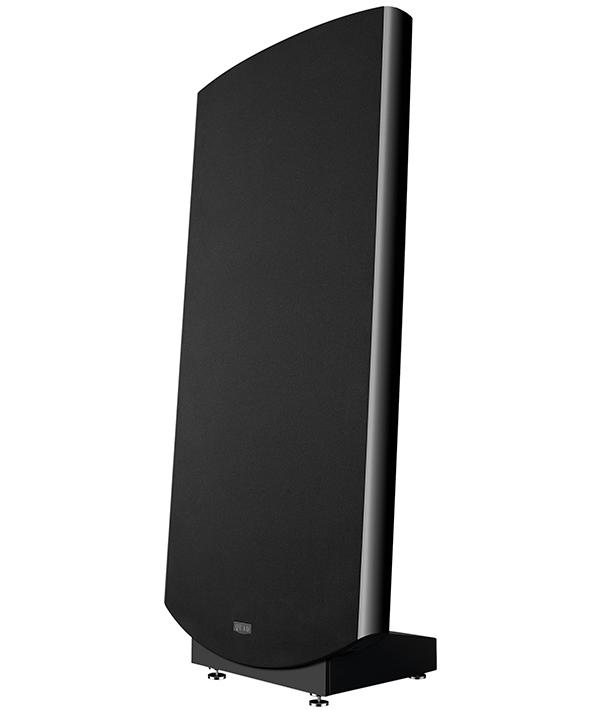

Apocryphal it may be, but one of the lingering mysteries about Quad was why MD and chief designer Peter Walker never went ‘high-end’ with bigger amps or speakers. His answer was always that his amplifiers and speakers were ‘adequate for most needs’. While that’s true, one cannot deny the efforts of others to make Quad’s inaugural ESL [see boxout] go louder and deeper. So while the ESL 2912X may not be the cost-no-object/size-no-object electrostatic that some devotees of the brand might dream of, I wonder what Peter Walker would have made of the not inconsiderable £12,999 asking price?
That said, Quad’s ESL 2912X is surely ‘big enough’. Ten seconds of listening to Ozzy Osbourne’s ‘Rocky Mountain Way’ from Under Cover [Epic 82876743142] assuaged any fears I might have harboured about its size. After all, this is the 1570mm model rather than the shorter, 1070mm sibling, the £10,999 ESL 2812X.
No rush
According to Quad, this speaker represents the sixth generation of its ESL, which is quite a display of model longevity when you consider that there were so few designs in 68 years. This model follows the ESL-57 (1957), the ESL-63 (1981), the ESL 988/ESL 989 (1999), which was the first occasion when a Quad electrostatic speaker was offered in two sizes, the ESL 2805/ESL 2905 (2006), and the ESL 2812/ESL 2912 in 2012. Thus Quad has waited 13 years to release this latest revision.
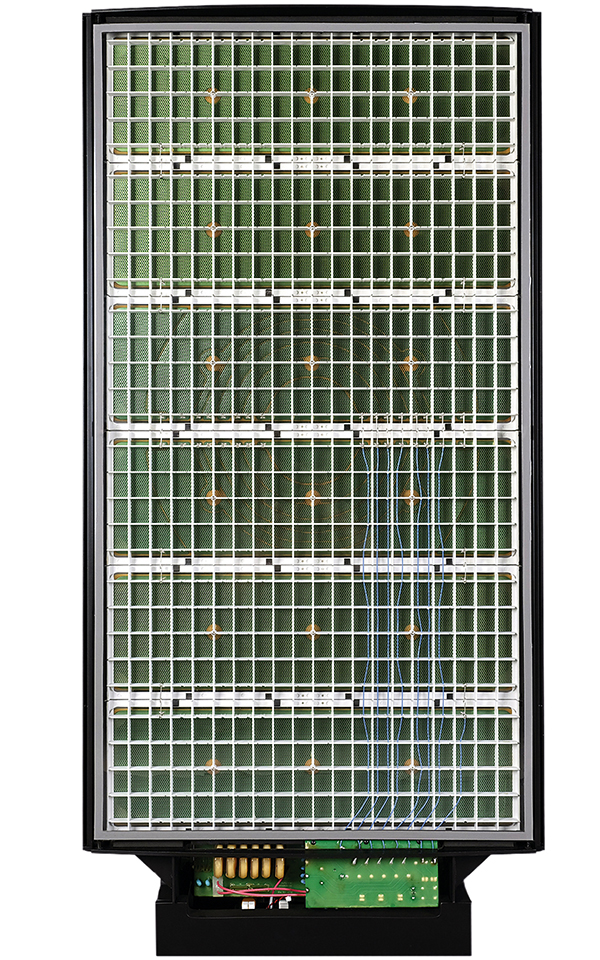
This ‘X’ iteration arrives after Quad’s five-year-long R&D exercise towards developing a superior and more consistent semi-conducting layer applied to the delicate film-like membrane. The thickness and density of this layer needs to be controlled accurately to maintain an even, and very high, electrostatic charge across the diaphragm even in regions of high humidity. Quad has also improved the ruggedness of the ‘egg crate’ mechanical construction holding the stators [see pic, p48] and the accuracy of hole punching through the copper conducting layer of the stators, thus reducing the possibility of arcing if overdriven.
Back in black
Quad points out that Paul McConville, whose history with the company goes back to the introduction of the ESL-63 in 1981, worked on the new models. He assisted the production team in creating new mixing and spraying techniques, as well as in the evaluation of quality control to ensure that the electrostatic panels would consistently maintain a charge of over 5kV.
To ensure the stability of the 5.25kV Extra High Tension (EHT) feed to the panels, Quad developed a new PCB design where the EHT section is now isolated from the input power supply, the audio, and protection PCBs. Cable dressing from the EHT section to the panels has also been optimised to eliminate the intrusion of humidity or dust.
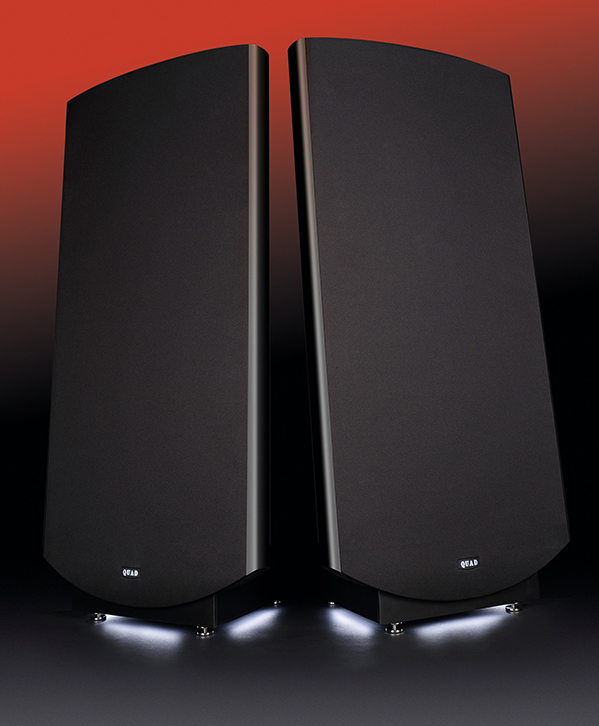
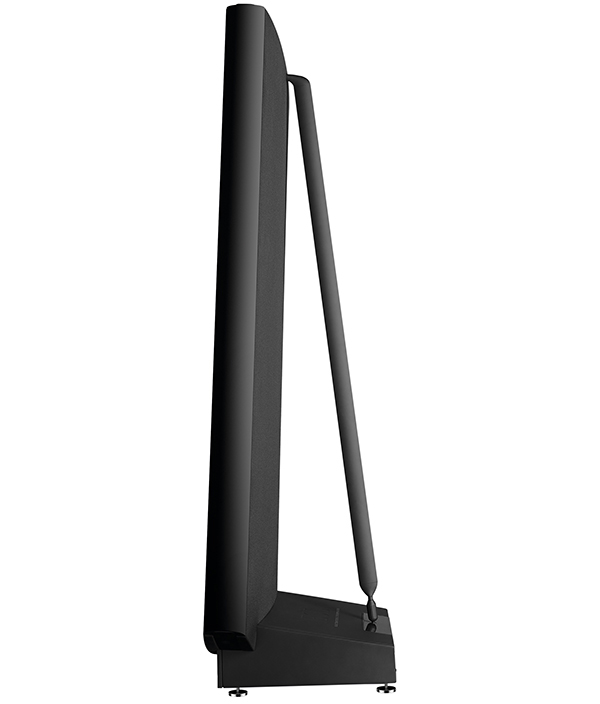
While the look is familiar, the all-black ‘stealth’ finish seems to have improved, and the speakers feature adjustable illumination of the logo along with down-lighting to give the impression of them floating. Dubbed the ‘LED Halo’, it is controlled by a small rotary at the back of the base [see p49]. Also around the back, under the plinth that hosts the necessary AC mains and speaker connections, is a separate lump of steel supplied for each speaker. This adds a further 10kg to the ESL 2912X’s 44kg bodyweight, lowering its centre of gravity and improving stability.
Quad also revised the audio transformers, with their long-term service manager Rob Flain collaborating with the original transformer manufacturers in the UK to produce windings to Peter Walker’s original specification. The goal was to achieve an improved high-frequency response beyond 18kHz [see PM's Lab Report], as well as ‘superior resolution of micro-dynamics’. Other upgrades include super-PP bypass capacitors, Murata audio-grade capacitors and Vishay resistors.
 X-citement!
As noted above, my immediate response to hearing the ESL 2912Xs in action was a mix of delight and relief. How so? Delight because they sounded like a ’57 on steroids (every ESL-57 owner’s fantasy) and relief because the performance was inarguably and categorically ‘high-end’ by any measure.
Those familiar with Quad’s ESLs would gasp at the mere notion of hooking up a pair to a stereo amplifier rated at 300W [the Constellation Revelation 2, HFN Feb ’25] in the HFN Reference Listening Room [Yearbook ’25]. Fear not. Put the fire extinguisher back on the shelf. Quad has ensured that the ESL 2912X will deliver levels previously unattainable from its loudspeakers before crying in pain, and I played them loud enough to flirt with the protection circuit. But it never triggered. It’s not about how loud they will go, but how they provide impact that has to be explained, and that is as much a concern according to musical genre and vintage as it is to the sound system being played.
Of course, the need for maximum SPLs is entirely subjective. I have an audiophile acquaintance whose room I will not enter when he’s bashing out 120dB levels at 3m, and neither can I comment on whether Quad’s ESL 2912X will satisfy someone who thinks, say, a JBL Everest [HFN Aug ’14] won’t go loud enough. But blasting Ozzy’s album at levels which even raised an eyebrow from PM, that is not the issue, especially going by the volume of bass on ‘Go Now’. Even more in-your-face and in-your-room was the utter realism of the cowbell opening on his version of Mountain’s ‘Mississippi Queen’. The late Leslie West would certainly approve.
A slam dunk?
Instead – and I must emphasise that this is what separates full-range dipoles from most dynamic loudspeakers, less so from horn types – the ESL 2912X can deliver the bass extension if not the slam of cone-woofered designs. Really, I suspect this aspect of its performance would only be of concern to those whose musical bias is toward heavily engineered synthesised bass, or the exaggerated low-end weight of much hip-hop and heavy metal.
It therefore begs the question about priorities. Would you sacrifice that kind of kick, especially on percussion, which you can feel in your chest for what you might gain? Here the gain is a loudspeaker which performs one of the best disappearing acts imaginable, thanks to its airiness, finesse and grace. I’m sure all these attributes co-exist in some high-end speakers, but a £13k electrostatic panel so open that you feel you could walk amid the performers? And which causes no fatigue after three hours of playback without interruption? I’m still processing the sheer listenability of the ESL 2912X, forensic assessment aside.
There’s a quirky caveat I should mention, illustrated by ‘Whipping Post’ from the Allman Brothers Band’s self-titled debut [Capricorn Records 531 257-2]. This is not a demerit, merely a fact. As that song features two drummers beating the hell out of full kits, the recording yields a vast spread, as well as astonishing stage depth. This alerted me to an intriguing element of the ESL 2912X’s delivery. Despite the way these disappear, there is little information beyond their outer edges.
It turns out to be a benefit of sorts during setup because it allows you to define the width of the soundstage, which is simply as far apart as you place them before creating a hole in the middle. Everything between those physical borders benefits from clearly defined positioning, with exemplary dynamic range, matchless openness and transparency. Listen with your eyes closed and the borders vanish.
You can see where this is leading. As with the original ESL-57, slightly less so with the ESL-63 and its progeny, the ESL 2912X is not ideal for incurable headbangers. My friend would certainly find a way to fry them, having blown out midband drivers in big Wilson Audio models. As powerful and massive as was the sound of the Allman Brothers Band track, the brilliance of this speaker shone through in the vocals, especially as regards the portrayal of the textures. Every element of gruffness which rendered Willy DeVille’s voice so distinctive made my thousandth playing of ‘Assassin Of Love’ from the Polydor CD single [887 312-2] sound as if being heard for the first time.
What had me wanting them more than any other tracks were ‘Piece Of My Heart’ and ‘Take It To The Limit’ from Etta James’ Deep In the Night [Bullseye Blues CDBB9579]. The power of her vocals, from a whisper to a shout, showed the dynamic swings of the speakers, their ability to exhibit speed, consistency and clarity. The backing singers on the latter track exemplified three-dimensionality. And the piano? Clean, fast and real.
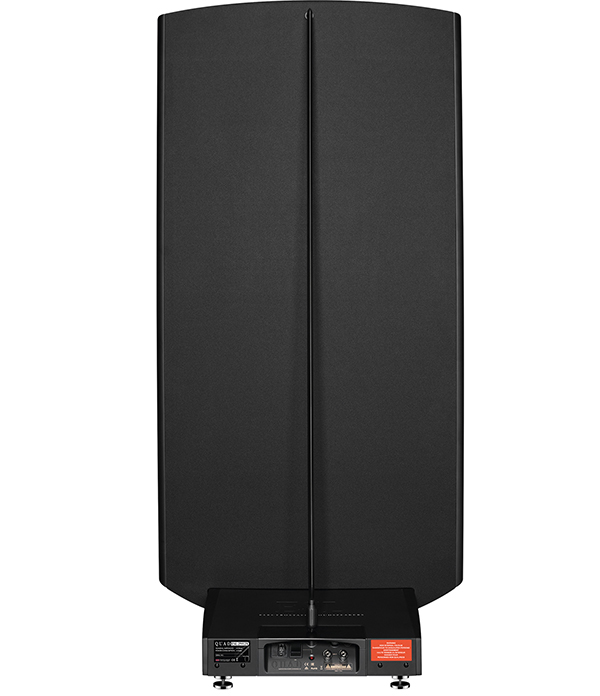
Before I forget, especially as mono cartridges are enjoying an upswing in interest, this Quad speaker delivered a rock-solid, globe-shaped mono image, with depth and height expanding its single-channel nature. I played Kyu Sakamoto’s ‘Ue O Muite Aruko’, aka ‘Sukiyaki’ from the Memorial Best album [EMI Toshiba TOCT25439], and the drums were placed wa-a-y back in the room. But the other revelatory delight which came from the recording was the sound of his whistling in the break, as real and sibilance-free as if he was standing there in front of me, complete with subtle tremolo adding to the thrill.
Make mine a large
Sadly for me, these need more room than I could ever provide, my lust for them all but pre-ordained as I had fired up my ESL-63s in anticipation. Quad’s ESL 2912X does everything which made the original ESL-57 a hi-fi classic, although be warned if you’ve been nursing ’57s since Harold Macmillan was in Downing Street, as it’s less forgiving at the frequency extremes thanks to greater extension.
This loudspeaker unconditionally deserves recognition for its performance at any price, a mandatory consideration for panel speakers above £10,000. It does everything you could possibly want from a Quad electrostatic with no debilitating flaws nor compromises of any real import. It sounds as heavenly as its great-great-great-grandfather, and it looks sensational, too.
But the deal maker? Like every product made during the Peter Walker era, Quad’s ESL 2912X is a bargain so honest that it’s an indictment of its rivals.
Hi-Fi News Verdict
I needn’t have wondered ‘what if?’ about Quad’s high-end cred. The ESL 2912X costs less than some audiophile cables, yet it delivers sound quality way beyond its price bracket. The usual caveats apply for dynamic speakers vs. horns vs. dipoles, but if you prize the unique transparency and openness of an electrostatic panel above all else, just buy this. Yet again, Quad has redefined value for money.Sound Quality: 88%
 | |||||||||||

|
|
| |||||||||













 SPONSORED VIDEO






| Equipment Reviews | |
Music Reviews Awards | |
Latest News Features | |
Resources Newsletters | |
Subscriptions |
WHERE TECHNOLOGY BECOMES ENTERTAINMENT
 © 2026 Hi-Fi News
AVTech Media Ltd
All rights reserved