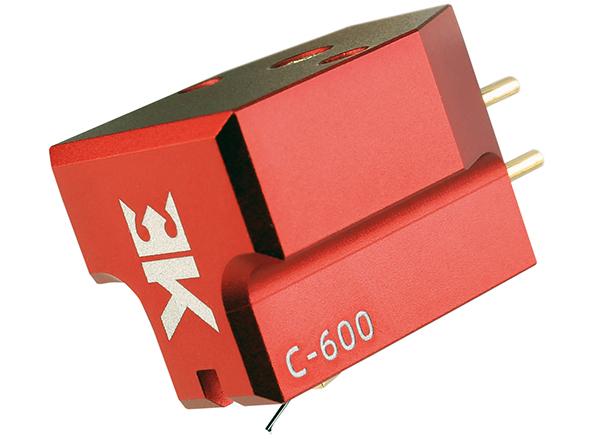
Kensington Audio C-600 MC cartridge

It never hurts to have a sibling manufacturer making phono stages when you’re also offering cartridges. Better still is having a range of tonearms and turntables in the family, too. In this case, the oh-so-Britishly-named Kensington Audio can boast being part of the Talk Electronics group, along with Edwards Audio and Kestrel Audio, so its quintet of cartridges is in good company.
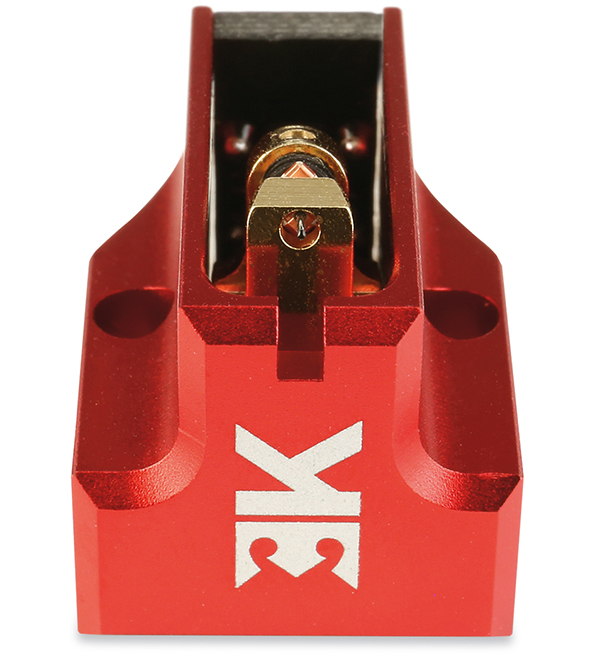
As is a long-established practice with families of cartridges, Kensington’s five models vary in stylus profile and cantilever material, all sharing the same alloy body but differentiated by colour. The C-600 (£850) reviewed this month, in fetching crimson, features an elliptical diamond and boron cantilever. Boron is usually a costly element to work with, so the entry-level C-500 (£600) uses a less rigid, less expensive aluminium cantilever. Above the C-600 are the C-700 (£1500), C-800 (£2000) and flagship C-900 (£3000).
Dexterity test
Because of the choice of cantilever material, also found in the next model up in Kensington’s range, the C-600 enjoys an innately upscale element which – while not unknown at this price point – is hardly what you would consider garden variety. When you reach the two dearest models in the group, the cantilever changes to ruby for the C-800 and sapphire for the C-900. As HFN has been covering high-end cartridges with exotic cantilevers in depth, regular readers will be aware that each has its own sonic signature, culminating in the recent trend for one-piece diamond constructs [HFN Oct ’23].
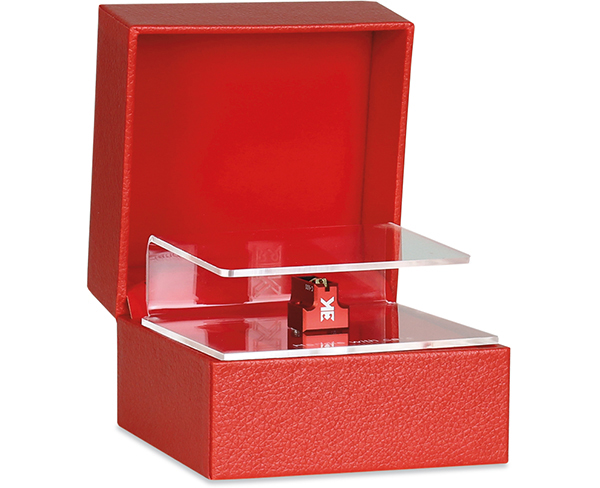
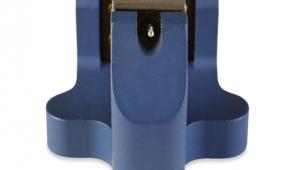
Seasoned cartridge devotees will recognise other aspirational details in every aspect of the C-600, but before getting to them I have only one criticism, wholly in practical terms. The lack of a clip-on stylus guard had me suffering the sweats when installing the C-600. The cartridge comes in a nice box reminiscent of wristwatch packaging, with detailed instructions printed in a trifold sheet, but the cartridge itself is mounted, with the stylus and cantilever unprotected, in a U-shaped, folded plastic frame. Take a gander at the photo [right] to see why it struck fear in my heart.
Removing the cartridge required agility, and I silently paid thanks to all those hours spent as a child building scale models which occasionally seemed to require three hands. The two bolts holding it in place also serve as the hardware for mounting the C-600 in a headshell, and the necessary hex key is supplied so you need no other tools.
Deep breath: the tricky – nay, perilous – bit involves holding the cartridge with two fingers, which requires reaching into the plastic fold, before loosening the two bolts and hoping that you’ve held the C-600 in such a way that when the cartridge is freed, the plastic frame doesn’t make contact with the stylus or vice versa. It was a balancing act I would rather not repeat. If I want to torment myself with tiny components, I’ll dig out some of my old LEGO.
Simple setup
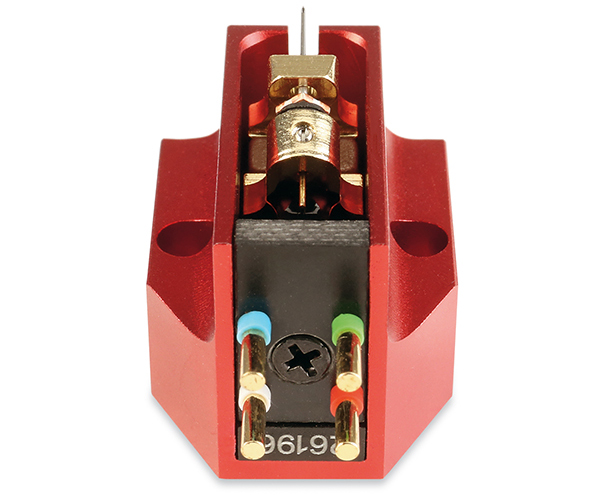
Once released, and gripped for dear life, the C-600 reveals itself as a beautifully made, easy-to-install moving-coil, its solid metal body offering a reassuring, tactile sensation. The parallel sides enable rapid visual alignment with the grid on a decent gauge, while the exposed cantilever/stylus assembly encourages precise positioning and cueing. The four colour-coded pins are well-spaced and the supplied bolts fixed the C-600 to the headshell with a feeling of utmost security. Aside from having to do all of this with the stylus al fresco, it was utterly straightforward.
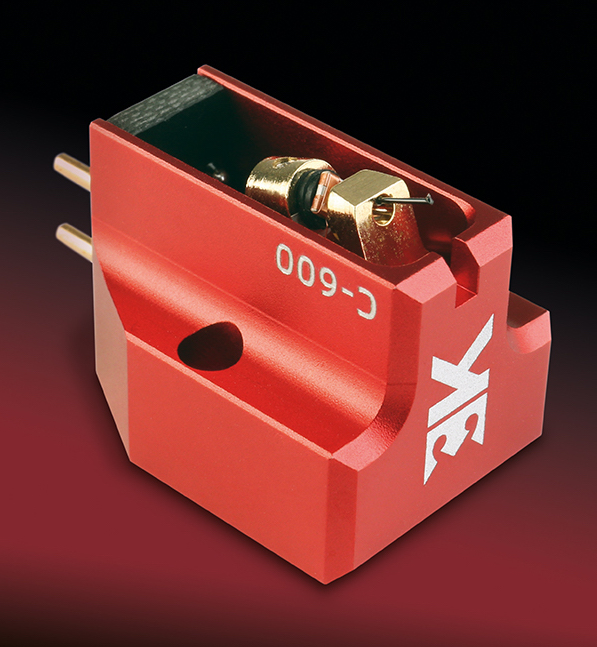
Once the cartridge was mounted in a medium mass, but rock-solid, headshell, I set the tracking force at 1.4g and the loading at 50ohm. My set-up eliminated much trial-and-error thanks to PM’s advice [see PM's Lab Report] warning me in advance that the C-600 does require a phono stage with ample gain. I first tried it with a favourite but non-adjustable phono amp fixed at 100ohm, which I thought had plenty of gain – but I found my (preamp) level settings a good 25% higher than normally required. So yes, this cartridge definitely qualifies as ‘low output’. Moving to another amp with fully variable settings and plenty of oomph, the 50ohm setting proved ideal; lowering or increasing the value offered no improvement.
 Crown properties
It occurred to me that I usually kick off listening sessions with something bombastic, perchance to wake me up. This time, however, I went for the ultimate in subtlety, perhaps because I had a gut feeling that the Kensington C-600 was going to be a smooth operator. My hunch paid off with a complete ‘sit-still-and-don’t-move’ album. I couldn’t be dragged away from hearing the complete, truly astonishing Bill Evans box set, Haunted Heart: The Legendary Riverside Studio Recordings [Craft CR00902].
This is the kind of recording which, in Kevin Gray-remastered form, shows off a system’s competence. With a perfectly recorded, unamplified trio, easily discernible player positioning is a given, and a lack of extraneous sonic clutter allows you to appreciate each instrument. With Evans’ piano in front, supported with gorgeous bass from Scott LaFaro and Paul Motian’s tasteful percussion, especially the brushwork, this is one for those who value naturalness and realism.
Poetry in motian
Admittedly, the entire 5LP set is of a soothing jazz, and the C-600 did nothing to upset the feel. The tonal qualities of the piano, referenced to the real one sitting three feet from my desk, were as palpable and realistic as you could require, especially in the system with LS3/5As. LaFaro’s bass was always seductive and fulsome, and even through those small monitors it possessed ample heft. But perhaps the most impressive aspect of hearing these circa-1960 sessions was the C-600’s way with low-level details, in particular Motian’s use of brushes.
Why my delight over something as seemingly secondary as brushes? Simple – low-output MCs need extra gain somewhere in the amplification, and that’s a bit like asking for increased background noise. Almost magically, with careful juggling of levels at PM’s 50ohm setting, the tiniest details were audible just before hum or noise from the rest of the chain could rear their ugly little heads. And the brushes certainly benefitted from the C-600’s slightly sparkly top-end, not enough to excite fatigue, but commanding you to take care when setting tracking force and VTA.
Another benefit of the box set was its numerous mono tracks. Here the C-600 created a dead-centre image without having to press the ‘mono’ button (indeed, switching to mono didn’t show any shift). This also confirmed my first impressions of the cartridge’s soundstaging, namely that it is of the wider-than-it-is-deep school. This is not to say that the front-to-back depth was lacking in mono, only that I’ve heard deeper. A minor issue, and a moot point for those who don’t accept that mono playback can have ‘front-to-back depth’ in the first place.
Magic act
Satisfied that the C-600 could demonstrate the kind of finesse needed for wholly acoustic material, next came a studio-generated, forgotten masterpiece of rock, Badfinger’s Magic Christian Music [Apple SAPCOR12]. Just as the jazz tracks provided the opportunity to hear three instruments coalesce, so did this album do the same for voices. All four band members sing, so the resolution of the C-600 was tested, and, yes, it succeeded.
When all joined in on ‘Fisherman’, following the lone voice intro, it was again one of those sit-up-and-pay-attention moments – sibilance-free, airy, and rich enough in detail to allow the listener to focus on specific voices. As you can guess, I am a fan of this ill-fated band, and Kensington’s C-600 reminded me of just how much I missed them.
As delicate as that was, the next track, ‘Midnight Sun’, is a crunchy rocker with fuzzy guitar work and punchy drums. The C-600 handled these with skill, but a touch more bass extension and slam would not go amiss. As it is the kind of track you want to play loud, it’s another case of balancing a low-output MC with the need for a ghostly quiet phono stage. It had me wishing I hadn’t relinquished Grimm Audio’s impressive PW1 [HFN Oct ’25].
For the sweetest vocals on the planet, I was delighted to find a bluegrass/country CD (later an SACD) I’ve been using as a reference for 30 years had finally reached vinyl. The transition to LP of Alison Krauss’s Now That I’ve Found You [Rounder Records 00888072693661] would be a test for the C-600 as there are enough twangy, potentially screechy instruments to make dentists wealthy by repairing audiophiles’ grinding teeth. Here are fiddle, banjo and mandolin galore.
Red letter day
Again, Kensington’s cart managed a deft balancing act, exploiting its lively treble with rather fine tracking ability, sailing through every track. When the band kicks in on ‘Oh, Atlanta’, the acoustic bass reminded me of Scott LaFaro’s sound, and the feel of the entire ensemble was, well, truly harmonious.
The percussive opening to ‘Theme From Shaft’ [The Best Of Isaac Hayes; Stax/Craft 00888072675919] was all it took to signify that here was a fast, composed, more-ish cartridge that, for once, gave a true high-end experience without demanding your pension pot, first-born or the services of a loan shark. If anything, Kensington’s C-600 is a bargain. Just be careful when you unbox it...
Hi-Fi News Verdict
How refreshing it is to find a cartridge of this calibre and sophistication at a price which doesn’t elicit dismay. For £850 – though hardly ‘chump change’ – Kensington’s C-600 imparts the kind of sonic atmosphere which distinguishes MCs from the majority of MMs. There’s warmth, openness, and more than enough bass, but above all super-clean upper registers. With the right step-up, it’s a mid-priced champ.Sound Quality: 87%
 | |||||||||||

|
|
| |||||||||











 SPONSORED VIDEO






| Equipment Reviews | |
Music Reviews Awards | |
Latest News Features | |
Resources Newsletters | |
Subscriptions |
WHERE TECHNOLOGY BECOMES ENTERTAINMENT
 © 2026 Hi-Fi News
AVTech Media Ltd
All rights reserved