Sir Roger Norrington Laughing cavalier of the baton
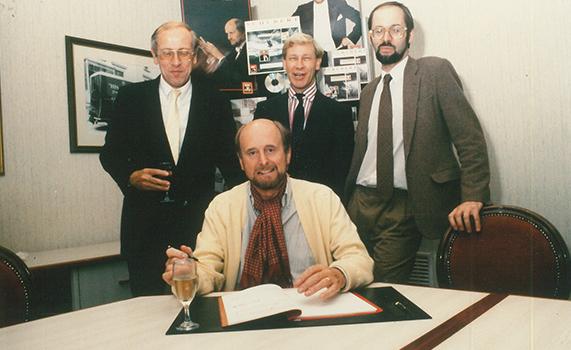
Peter Quantrill celebrates the work of a conductor whose crusade on behalf of ‘pure tone’ divided opinion but also changed the way we listen to music
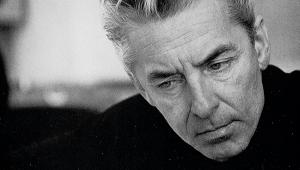
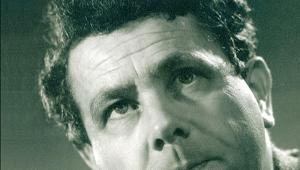
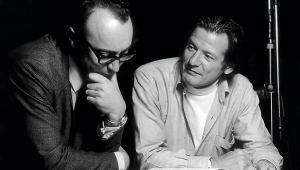
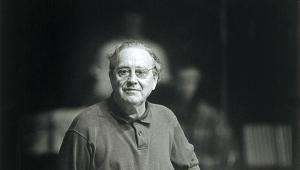
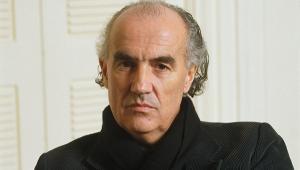
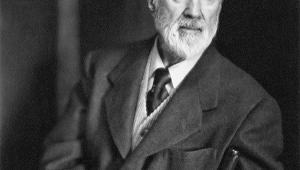
Sometimes in classical music, a musician seems to embody a work so fully that the line of identity separating them melts away. When I think of Schubert’s ‘Great’ C major Symphony, it’s the figure of conductor Sir Roger Norrington [pictured above centre] that springs to mind. As he would have been the first to acknowledge, the piece isn’t owned by anybody. This is music ‘that is greater than it can be performed’, in Artur Schnabel’s phrase. All the same, what is intrinsic to the nature of Schubert 9 – the purposeful drive, rhythmic momentum, sunshine and exhilaration – belonged also to Norrington’s music-making no matter the score in front of him.
Face the music
With the memory of two live performances at the BBC Proms, I can see him now, in the mind’s eye, coaxing the musicians on, using his face and eyes as much as his hands and arms to shape the phrasing, placing a good deal of trust in them through his own relaxed body language. Now and then, the throwaway gestures and nudge-nudge-wink-wink could get a bit much (when he conducted Mahler, for example), but they were part of him and not faked. Norrington fully grasped and resolved the tension in the task of the performing musician, to become the servant of the score and at the same time the focal point of its realisation.
‘I think the most important thing is to improve all the time,’ he remarked in a 1977 interview, ‘to get more imagination on to the map, and to know better how to work with people. I hate fighting an orchestra. If they’re not with you, you’re lost’. In this regard, as in the nuts and bolts of his music-making, he resisted tradition and orthodoxy, advancing a new and more collaborative model of leadership for conductors, at a time when top-down assertions of authority were becoming increasingly outmoded in other walks of life.
Norrington was hardly alone in doing so, and his Schubert 9 would not necessarily be a ‘library choice’ – but he practised what he preached as ‘his’ Schubert 9 evolved over the years as he did, responding and adapting to the character and capacity of the different ensembles in front of him. There is more ebb and flow to his later Stuttgart version, though the sheer vibrancy of colour and vitality to his London Classical Players account is still treasurable in its own right.
String theory
The hill on which Norrington chose to plant his flag was vibrato, or the elimination of it from string playing in particular. He contended that continuous vibrato was anachronistic and ugly, though his arguments were (I’d say) more persuasive with notes than words. His antipathy seemed more aesthetic than historical. He saw it as a kind of school gravy which muted and homogenised the flavours of everything underneath. Because there are fair grounds to contest him, critics have used his conviction to swipe at him as the epitome of ahistorical historicism, and worse than that – some kind of puritan/devil incarnate seeking to rob them of their joys.
It probably didn’t help that Norrington took such obvious pleasure in winding up such critics. Setting aside such passing silliness – the man himself is no longer with us to fight his corner, having died in July 2025 – we’re left with his performances and his impact on performing culture, both of them considerable. Younger musicians found Norrington not nearly so doctrinaire as his reputation would suggest, but tirelessly full of ideas, generously shared, which would prompt them to address a score differently for themselves.
And then listen to the orchestras. From Los Angeles to Vienna, the major ensembles play with less vibrato than they did a generation ago: often a lot less, in Mozart and Beethoven. And, by and large, their performances do make a closer approximation to the soundworld which those composers had in their mind’s ear. Which doesn’t make them ‘better’ all by itself, but it has wrought a gradual revolution in the way we listen to this music.
Schütz to thrill
Norrington’s principal formation was as a singer, which underpinned his conducting. His performances always breathe and his tempi are never breathless (unlike those of some modern and idiosyncratic speed-merchants). The breadth of his repertoire, and his enthusiasms, tend to be overlooked. Not long out of Oxford in 1962, he founded a choir, and revived with them the music of the 17th century German composer Heinrich Schütz and his contemporaries. ‘The polyphonic era was familiar to us all, but from 1600 the “Seconda Prattica” came in: more personal, more dramatic, in some sense more secular.’
This fairly ad hoc choir became Schütz Choir of London in 1968, which Norrington led in a series of albums for Argo – not only Schütz but choral repertoire from Monteverdi to Richard Strauss, taking in Mendelssohn and Bruckner. For French Decca, he recorded Fauré and Liszt. In the 1970s, he conducted Verdi at the English National Opera and Spontini for French radio, as well as operas from Cavalli to Tippett for Kent Opera.
Nearly all of this work went unrecorded, and the Schütz Choir albums deserve reissue. The image of him as a period-instrument pioneer and luminary derives from the last 35 years of his life, initiated by the radical (for the time) Beethoven cycle he made with the London Classical Players for EMI. The tempi (mostly Beethoven’s own), the elegant phrasing and wind-led balances now sound entirely conventional, so much so that it can be hard to recall what a stir they caused at the time.
In his element
More personal, and more lasting as a mark of Norrington’s musical personality, is the relaxed mood, even in movements such as the Adagio of the Ninth. Some of us will always find this hard to assimilate, yearning as we do for a particular intensity which we might associate with Wagner, Mahler and Austro-German culture more generally.
But that kind of furrowed-brow, gritted-teeth music-making was anathema to Norrington.
There may be more deep-seated factors of national identity at play – but I am no shrink. Monteverdi, Mendelssohn and Vaughan Williams all find the conductor in his element, as well as the confident stride of late Schubert, and the opera buffa humour of Beethoven’s Second. ‘More personal, more dramatic… more secular’: Enlightenment values, and modern values, by which Norrington lived and worked.
Essential Recordings
Schubert: Symphony No. 9
SWR-Music SWR19506-2
Norrington’s second recording of the ‘Great’
C major, repeat-light but coursing with vitality and Schubertian lyricism.
Tippett: King Priam
Arthaus 109179 (Blu-ray)
A rare souvenir of Norrington’s Kent Opera days, the Homeric legend reverberating with a timeless power in this 1985 filmed staging.
‘The Romantics’: Berlioz, Wagner, et al
Hänssler 93901 (DVD)
Norrington the educator and provocateur, especially illuminating in Wagner’s Tristan and Tchaikovsky’s Pathétique Symphony.
Brahms: Sacred Choral Music
Carus CAR83332
A late revival for the Schütz Choir of London, and an emblematic fusion of 17th, 19th and 21st century performing styles.
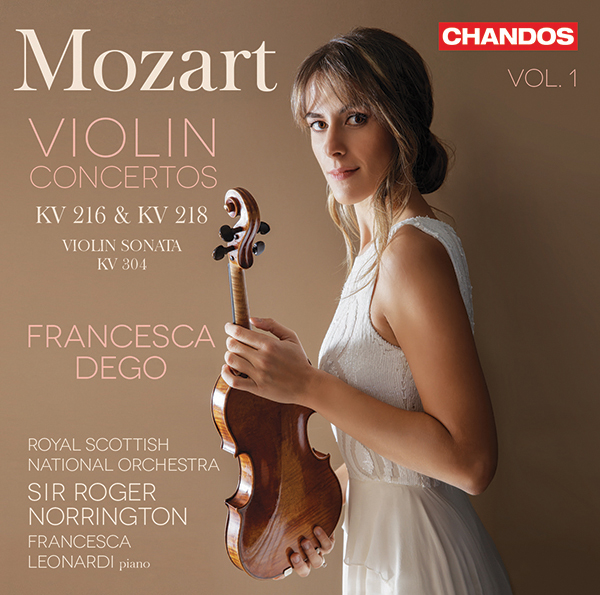
Mozart: Violin Concertos Nos. 3 & 4
Chandos CHAN20234
Ideas and energy undimmed in exploring teenage Mozart for his final recordings, with the Italian violinist Francesca Dego.
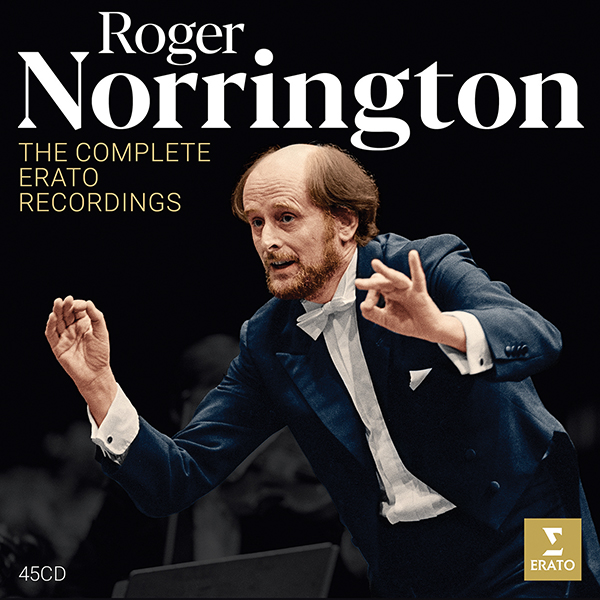
Complete Erato Recordings
Warner Classics 9029624527 (45CD)
The London Classical Players albums originally made for EMI Reflexe and Virgin, in repertoire from Purcell to Smetana.









 SPONSORED VIDEO






| Equipment Reviews |  |
Music Reviews Awards | |
Latest News Features | |
Resources Newsletters | |
Subscriptions |
WHERE TECHNOLOGY BECOMES ENTERTAINMENT
 © 2026 Hi-Fi News
AVTech Media Ltd
All rights reserved