Gerald Finzi Dies Natalis
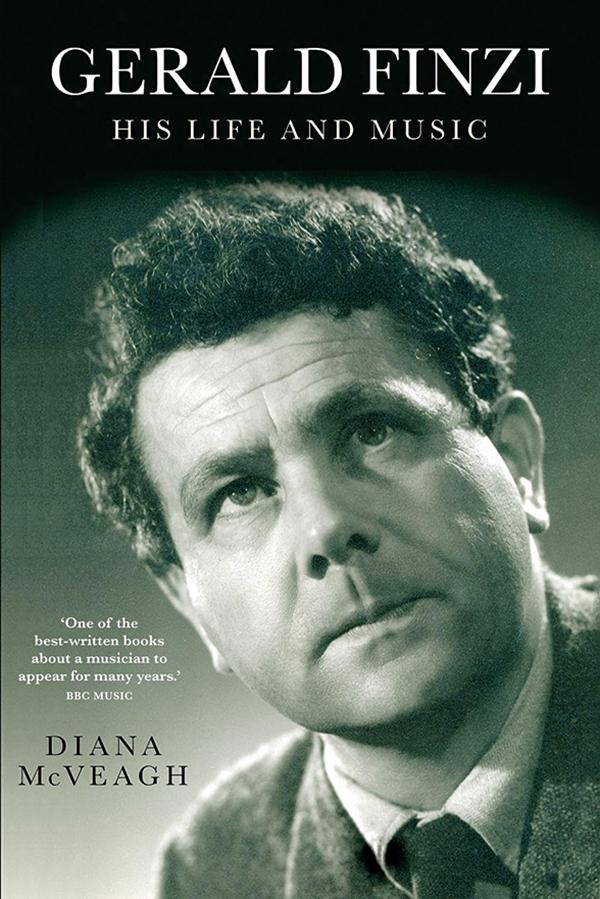
Cantata and song-cycle, idyll and lament, scored for tenor and/or soprano... Peter Quantrill explores the tensions in the English composer’s pivotal work on record
Born in London in July 1901, Gerald Finzi was too young to see active service in the First World War, but he came of age in a country and a society scarred by loss and grief.
It is noticeable how some years would elapse before many composers and artists could process their feelings, and sufferings, in their work. Ralph Vaughan Williams’ Pastoral Symphony (1922), Sancta Civitas (1923-5), and Flos Campi (1925) all form a de facto triptych in which he adopts a subdued mode of expression, often quiet and elegiac, using antique modal harmony and shot through with dissonance. The gaze and the ear are turned away from the carnage on earth towards a hopeful vision of the beyond.
Country music
The ‘Pastoral’ as an elegiac genre (of poetry, first of all, then painting and music) dates back at least to the Eclogues of Virgil. In these poems, lonely shepherds mourn lost love. They lament the depredation of their land and their ways, by the hand of unseen forces and by the inexorable creep of the city, full of dirt and smoke and noise. It was, in that sense, a genre waiting for its rebirth in English culture of the 1920s, and before that in the verse of Thomas Hardy.
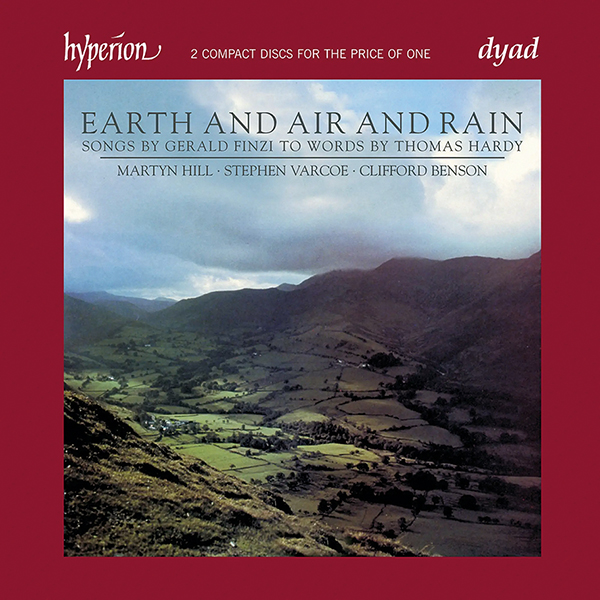
Above: Captured at the New Concert Hall in Cardiff, 1984, Hyperion’s 2CD set finds Finzi adapting poems by Thomas Hardy
Having spent his early childhood in London, Finzi was taken by his mother to Harrogate at the outbreak of war – his father having died shortly before his eighth birthday. In 1918, his brother Edgar and his first composition teacher, Ernest Farrar, were killed at the Front. In 1922, Finzi found his own home, spiritual as well as physical, in Painswick, in Gloucestershire.
Completed that year, By Footpath And Stile, Op.2, sets six poems by Hardy for baritone and string quartet. The cycle is the obvious forerunner to Dies Natalis, which Finzi began in 1925. By then he had been drawn to the writings of Thomas Traherne, an English mystic whose work had only been rediscovered at the end of the 19th century. From his chosen texts, Finzi then removed almost all references to religion and the glorification of God. The world is seen in retrospect but as if through the eyes of a newborn child. This evocation of Eden chimes with Vaughan Williams’ elusive ‘holy city’ in Sancta Civitas.
However, Dies Natalis as we now know it only took shape over the next 14 years, and the onset of war put paid to its scheduled premiere at the Three Choirs Festival in Hereford. Thus, being first performed in 1946, Dies Natalis accompanied Finzi through the centre of his career, becoming his emblematic work.
Wilfred’s wonder
The history of Dies Natalis on record got off to a wobbly start in 1946-7 with a Decca recording, sponsored by the British Council. Their choice of Joan Cross as soloist met with the composer’s disapproval. ‘Too operatic’, he thought, and the sessions were in any case compromised by the conductor, Boyd Neel, being stranded by a train strike and unable to get to the studio. Finzi therefore replaced him for two of the movements.
By contrast, the cantata’s second recording, from 1963, deservedly retains a definitive reputation. Finzi regarded the tenor Wilfred Brown as an ideal interpreter. Until his own early death in 1971, aged 49, Brown was renowned as an Evangelist in the Bach Passions. This idiom of lyrical reportage brings confiding simplicity to the opening phrase of ‘Wonder’ (‘How bright are all things here’) and leans into the neo-Handelian elements of Finzi’s writing. In turn, this patina of antiquity is burnished by the composer’s son, Christopher Finzi. His conducting is attentive to detail yet rounded in sonority and steady in pulse, a cousin to the kind of Bach and Handel recordings being made at the time by Neville Marriner and his then-new Academy.
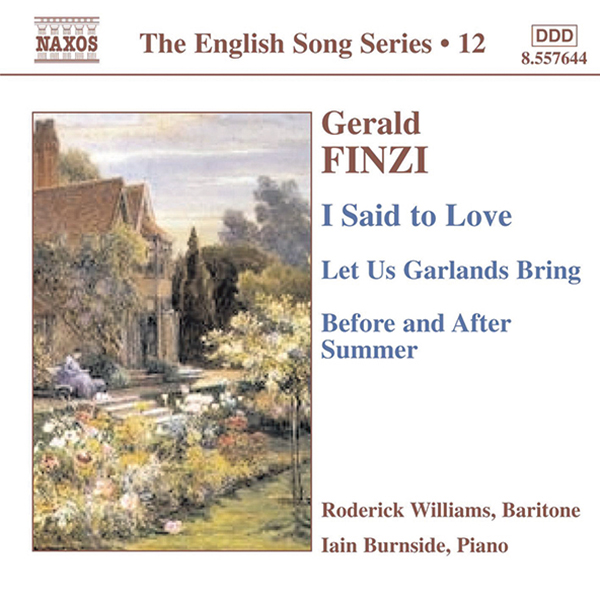
Above: Let Us Garlands Bring, Finzi’s Shakespeare cycle, is the highlight of Naxos’s 2005 recording, with Roderick Williams accompanied by Iain Burnside
Brown’s RP English, his flutey vowels and the warm analogue sound have become seductively synonymous with the sound of Dies Natalis itself. Yet the piece stands up to other approaches, and responds to new artists and new audiences of each generation. Since Brown, 11 singers have recorded Finzi’s cantata, and only one (Susanna Rigacci, for Brilliant Classics) is a dud – painfully lacking a pitch centre, a grasp of the English text or a competent orchestra.
On the record
Technical shortcomings compromise other versions. Martyn Hill [Virgin] is set too far back in too generous an acoustic, masking the words. The same goes for Rebecca Evans on Conifer, and, to a lesser degree Philip Langridge on Decca. Live at Wigmore Hall, Toby Spence is curiously muffled despite the necessarily reduced accompaniment of the Scottish Ensemble.
The expressive key struck by Wilfred Brown, of plain-spoken and wide-eyed wonder, does not come naturally to other singers. I find the enunciation of James Gilchrist [Naxos] self-conscious by comparison, and the accompaniment too distant. Pretty much ideal from a technical perspective is Ian Bostridge [Philips]. If his partnership with Neville Marriner strikes you as unlikely, you may find that Bostridge’s parlando delivery of the ‘Rhapsody’ is backed by playing which wraps around him like a Mozart recitative.
In fact it is Mark Padmore [Harmonia mundi], another in a string of distinguished English Bach evangelists, following Brown, whose inflection points and pauses for lyricism are more mannered. At this (later) stage of his career, his voice is also drier than both Bostridge and John Mark Ainsley [Hyperion – see ‘Essential Recordings’ below].
Soprano switch
Ainsley strikes the sweet spot between recitative and aria, which Finzi’s vocal writing and harmony invite in the manner of a chamber-music counterpart to Elgar’s setting of Newman in Gerontius. Hyperion’s recording also balances warmth with clarity in what amounts to the label’s ‘house sound’ from the 1990s for such pieces, captured at All Hallows, Gospel Oak. Matthew Best’s direction draws out all of the score’s neoclassical and Elgarian allusions.
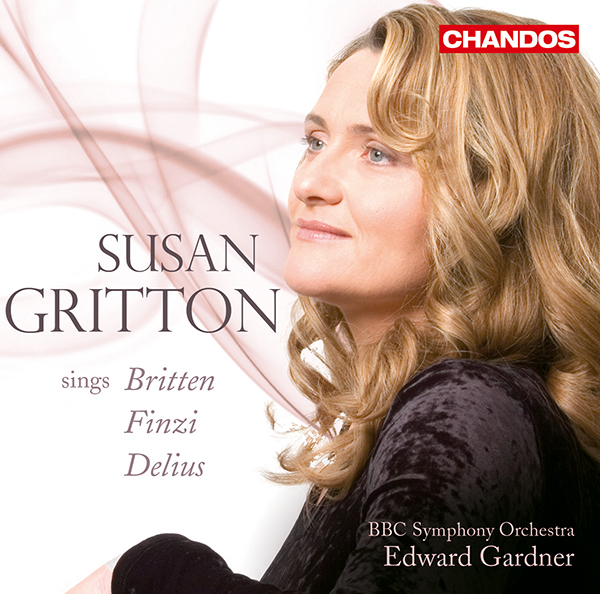
Above: Susan Gritton, with the BBC SO/Edward Gardner, pairs Finzi with Britten on this 2010 CD release from Chandos
Ainsley is my favourite modern tenor version, but Finzi headed the score of Dies Natalis ‘for soprano (or tenor)’. Curiously, Susan Gritton [Chandos, see below] is the only singer to have done the obvious thing and paired it with Britten’s Les Illuminations. At points, you might reflect that Finzi’s vocal lines lie more naturally for a male voice – but Gritton introduces an uncanny stillness to points of reflection, even in the quick central ‘Rapture’.
Essential Recordings
Wilfred Brown, English Chamber Orchestra
EMI 5384945 (3CDs)
The classic account, no longer easy to find on CD, but reissued on a 2004 collection of English song incl. Janet Baker’s Sea Pictures.
Susan Gritton, BBC Symphony Orchestra
Chandos CHAN10590
Britten’s settings of Rimbaud, Hugo and Verlaine serve to underline Finzi’s own timeliness as a songwriter.
John Mark Ainsley, Corydon Orchestra
Hyperion CDH55432
The valuable coupling here is Intimations Of Immortality, Finzi’s large-scale (and long-gestated) setting of Wordsworth.
Martyn Hill, Stephen Varcoe
Hyperion CDD22070 (2CDs)
Finzi’s settings of Hardy for male voice and piano, headlined by the Earth And Air And Rain cycle.
John Carol Case, Robert Tear, Neil Jenkins
Lyrita SRCD282 (2CDs)
More mid-period song-cycles, and more English singing of natural-sounding, articulate directness, with pianist Howard Ferguson.
Roderick Williams, Iain Burnside
Naxos 8557644
The most engaging English baritone of our times in Finzi’s Shakespeare cycle, Let Us Garlands Bring.
















 SPONSORED VIDEO






| Equipment Reviews |  |
Music Reviews Awards | |
Latest News Features | |
Resources Newsletters | |
Subscriptions |
WHERE TECHNOLOGY BECOMES ENTERTAINMENT
 © 2026 Hi-Fi News
AVTech Media Ltd
All rights reserved