Saving classical music?
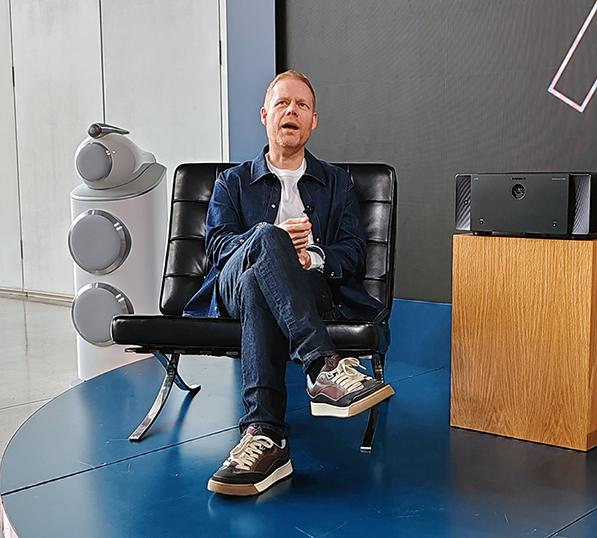
The bizarre idea that classical music needs ‘saving’ won’t go away, but Peter Quantrill argues that this long-standing form of music is doing just fine. Just ask the Sinfonia of London...
Barely a month goes by without a new story about someone or other being the new or unlikely saviour of classical music. I’d put all those terms in scare quotes – ‘saviour’ and so on – but I don’t want to scare you off. The culprit this time is The New Yorker – not hitherto renowned as a source of sensationalist cris de coeur – and the saviour in question is even more unlikely than usual, being a critic.
David Hurwitz attracts a devoted and (relatively) large viewership on YouTube for his colourful pieces to camera. They could be about new box sets, conductors he loves, pianists he hates. His style divides opinion. That’s not the point. Hopefully even Mr Hurwitz himself – who also founded the Classics Today website – doesn’t think he is a saviour, let alone ‘the’ saviour, of anything.
Survival instinct
And yet, the stories keep coming. People inside the world of classical music get on with making it, recording it, listening to it. Others on the fringes of that world seem perpetually exercised by its imminent demise. The language is curious. No one talks about ‘saving’ any other art form or genre.
Presumably the verb in question is intransitive. No one is stealing the music away. Sometimes stated out loud, mostly not, the implication is that classical music will die, of its own accord, from neglect and ignorance. And perhaps there are some out there who do look at the repertoire of music from Guillaume de Machaut onwards the way they would a frail and elderly uncle, or an endangered species of cormorant. Poor things. What can we do to help them?
Perhaps, if classical music really is like that, then we might as well let it fall asleep. But, of course, it isn’t. Not because of all the good-news stories out there: all the music being created, audiences developed and recordings made. Nor, on the other hand, because of the rapid evolution in music education (in the UK and US, but also further afield) which has seen a big decline in young students learning traditional instruments, and an even bigger drop-off in music courses teaching classical music.
Even if classical music did require saving – from itself, or for future generations – then individual saviours would be the last thing it needed. Lang Lang, the Kanneh-Masons, programming policies which favour female and non-white composers: all these have been recently put forward as means by which classical music might reach new audiences. All of them do so, probably more effectively than any record critic, however zeitgeisty they are.
But we can’t save music, any more than we can save time. They roll on, and change, whether we like it or not. The law of entropy applies here as it does everywhere else. The audience for a new box set of Alfred Cortot will have almost zero overlap with the audience for a sold-out tour by the Sinfonia of London orchestra or a new album from Max Richter [pictured above]. We look back and smile at the quaint idea that records or radio broadcasts would cannibalise audiences for live concerts. Or that listeners at home might not be wearing evening dress as they would to a concert.
Looking ahead
In 1937, the American composer John Cage, then only 25 years old, peered into his crystal ball with a short essay titled ‘The Future Of Music: Credo’. He predicted the use of technology to compose, perform and disseminate music, and its potential for an explosion in complexity and possibility. Even Cage, however, could not foresee the atomisation of musical traditions which had been passed down as relatively discrete and solid forms, from fugue to raga.
There is no moral or aesthetic imperative to save any kind of music. There is only the value we find in making it and listening to it, and that value will change as everything else does.




























 SPONSORED VIDEO






| Equipment Reviews |  |
Music Reviews Awards | |
Latest News Features | |
Resources Newsletters | |
Subscriptions |
WHERE TECHNOLOGY BECOMES ENTERTAINMENT
 © 2026 Hi-Fi News
AVTech Media Ltd
All rights reserved