Nothing to be afraid of

When modern art is big business and critically lauded, why does modern music upset and even enrage many listeners? Peter Quantrill discovers a book that promises an answer
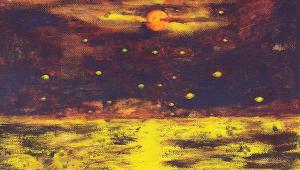
They tell you not to judge a book by its cover, but I couldn’t help it. Fear Of Music is the title of a 2009 book by David Stubbs, and I clicked ‘Buy’ almost without a second’s pause when I recently stumbled across it online. The subtitle promised an answer to a question which has been troubling me for years: ‘Why people get Rothko but don’t get Stockhausen’. You may not care for (or ‘get’) either the artist or the composer. Stubbs is attempting to address a broader phenomenon. Modern art, from the early 20th century and beyond, has a solid place in our culture. Two years ago, a major show of Mark Rothko’s work in Paris was sold out through the course of its six-month run. I went towards the end of those six months and still had to take my place in a two-hour queue to get in.
Art for art’s sake
In that sense, the specific comparison with Karlheinz Stockhausen falls down, because performances of his music also regularly sell out – such as Montag from his cycle of Licht operas, presented at the end of November 2025, also in Paris, with a waiting list so long that I gave up. Other landmark artists from the middle of the last century continue to perplex even the art-going public. Stubbs could have easily subtitled his book, ‘Why people don’t get Joseph Beuys or Stockhausen.’
Even so, his central point holds. Something about modern(ist) music rattles people, the way modern art doesn’t. Stubbs’ answer is to look for renewal in the fields of improvised and electronic music. He also issues a doleful and angry protest against music, of any style, becoming a commercial vehicle for ‘the glum, onward and upward propulsion of Western society’. Instead, he wants to celebrate music that goes nowhere in particular, that ‘radiates energy, wastefully, into the air’. Art for art’s sake, in other words – an admirable if peculiarly Romantic and 19th century ideal, I’d say, which would perplex the likes of Bach and Mozart. Nearer to our own time, Pablo Picasso didn’t paint Guernica and Alban Berg didn’t compose Wozzeck just for the sake of arranging paint on a canvas or notes on a page. They were making a mark, telling a story of their own time which would endure and say to future generations, ‘This is how the world was. This is how I saw and heard it’.
On a practical level, perhaps mischievously, I’d say that one reason why modern music affronts people is that it occupies time. Especially in concert, you can’t escape from it the way you can simply turn your head away from a picture. We’ve all had the experience of listening to something and either the music or the performance proves uncongenial, and we’d rather be anywhere else, but we’re trapped. But by the same token, this sense of immersion is what can make musical experiences so rewarding.
Time well spent
A fellow critic and friend of mine is inclined to blame composers for alienating audiences. He once remarked to me that he wished Pierre Boulez had died sooner – but then he was scarcely more generous to Rothko. Sometimes I wonder if we’re losing a distinction between what we like and what we value. Swathes of 19th century piano repertoire speak a foreign language to me, but I’d be a fool to dismiss Liszt’s Années De Pelèrinage as empty note-spinning, a landscape without a subject.
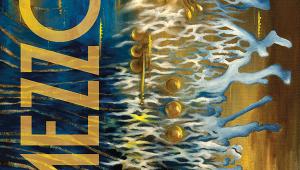
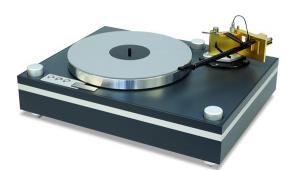
In a 2023 afterword to the latest edition of Fear Of Music, Stubbs despairs at the trend for ‘interactive’ but superficial encounters between art and music, and finds hope in the eclectic work of turntablists such as Gabriel Prokofiev and Mariam Rezaei [pictured top]. Well, maybe. I’d say that one answer lies in reminding ourselves that we can’t expect to ‘get’ anything first time around. Listening takes time, and rewards it in the end.





















 SPONSORED VIDEO






| Equipment Reviews |  |
Music Reviews Awards | |
Latest News Features | |
Resources Newsletters | |
Subscriptions |
WHERE TECHNOLOGY BECOMES ENTERTAINMENT
 © 2026 Hi-Fi News
AVTech Media Ltd
All rights reserved