Orlando Gibbons Beyond The Silver Swan
His 17th century English madrigal defines the genre, says Peter Quantrill, but Orlando Gibbons’ output is astonishingly diverse for a composer who died before turning 40
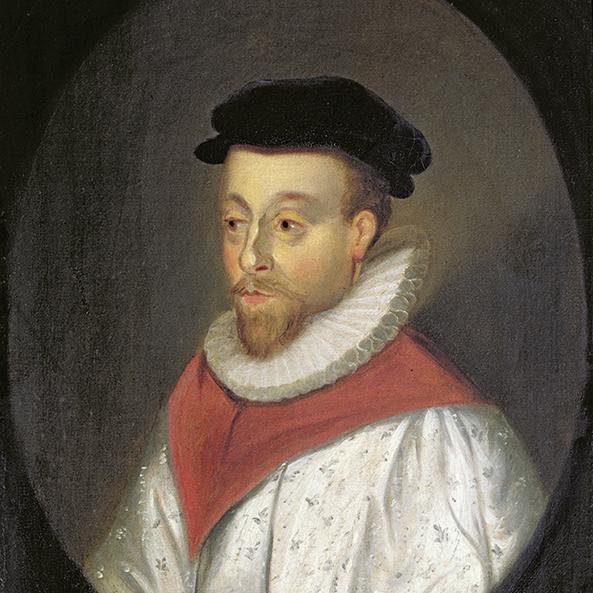
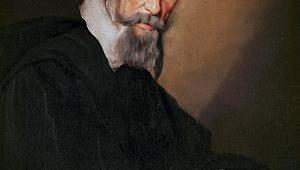
Orlando Gibbons [pictured above] holds a rarefied position among English composers of church music. He and Thomas Tomkins were among the first great composers to write solely for the reformed church. With his polished style and profound sincerity, Gibbons can be compared in this regard to Giovanni Pierluigi da Palestrina, who was 58 and choirmaster of St Peter’s Basilica in Rome when Gibbons was born in 1583 and christened in an Oxford church on Christmas Day.
A new era
Gibbons grew up in a period when England was (in terms of musical culture) half a century behind the times. His predecessors such as Thomas Tallis might have emulated Palestrina’s mastery of polyphony. Instead, they found that all their Masses and Latin motets had been rendered obsolete and indeed banned by a stroke of King Henry VIII’s pen, and their future was far from certain. Devout Catholic composers such as Peter Philips fled to the Continent; William Byrd had the diplomatic as well as musical talent to thrive under Elizabeth I.
With his family having moved to Cambridge, Gibbons became a choirboy at King’s College in 1596, under his brother Edward, who was Master of the Choristers at that time. He was then appointed organist of the Chapel Royal in 1604, and in 1623 he succeeded John Parsons as organist of Westminster Abbey. Two years later he died of a seizure while in Canterbury, on Pentecost Sunday, June 5, 1625.
National anthems
Two generations of English composers had prepared the way for a new and ‘reformed’ style of English music. Now the day had come for a master hand to take up the various threads at his disposal. This is Orlando Gibbons’ achievement, most of all through the verse anthems which make up two-thirds of his surviving vocal output.
The verse anthem is the single greatest musical innovation of the English Reformation, and Gibbons refined the form to a peak of perfection. If I had ten minutes to impress someone with the particular beauty and genius of Tudor church music, I would play them first of all Gibbons’ Sing Unto The Lord, from the 1970s recording made by the Clerkes of Oxenford. This has everything: the sweet, grainy viols, the grave opening duet for baritone and bass (‘Weeping may endure for a night; but joy comes in the morning’); the gentle dabs of false relations in the chorus; and those piercingly high sopranos at David Wulstan’s chosen pitch.
Some aspects of the style may be ‘authentic’, others less so, but the spirit of genius lives in the performance as it does in the Busch Quartet’s Beethoven Op.131 or Karl Böhm’s Bayreuth Ring cycle, and those comparisons are cited to underline what, for me, is the kind of universal genius which transcends context. When the alto and tenor take up ‘When I go down into the pit’, they illustrate the phrase with a restrained pictorialism worthy of Schubert’s Lieder.
Not to labour the comparison with Palestrina, but a motet such as Tu es Petrus belongs to the fabric of the church no less than the stonework of St Peter’s itself or the paintings which decorated it and served as objects of contemplation for the faithful. It was written as music to pray by, music to inspire prayerful contemplation analogous to a painting of St Peter, such as Michelangelo’s Crucifixion of St Peter in the Sistine Chapel.
By contrast, Gibbons’ verse anthems are almost conversationally informal. The most celebrated of them all, This Is The Record Of John, was not written to unfold in a distant gallery. There is the post-Cranmer directness of the triangular relationship between English words and music and listeners, compared with the Latin set by Palestrina. But that directness is underlined by Gibbons’ masterful operation of different techniques within the form of the verse anthem: the solo voice as story teller, to which the choir adds both echo and commentary in a manner anticipating the chorus of the Bach Passions.
Distant discs
Alas, the Clerkes of Oxenford have fallen down a digital hole. On streaming services, you will find some of their Gibbons recordings on an album headlined by the Cantate Mass of John Sheppard. The CD on the Calliope label is an expensive rarity, the original LP rarer still.
Once upon a time, in the early days of CD, it was a struggle to find much beyond a handy Naxos Records collection. The Oxford Camerata singing is sensitive in the lineage of mixed-voice English chamber choirs, but there’s little by way of atmosphere or imagination.
Before that, the Choir of King’s under firstly David Willcocks [Decca] and then Philip Ledger [ASV] had recorded Gibbons-only albums which bear revisiting. Chandos issued a happy meeting of old and new Cambridge styles in Tudor Music from the Choir of St John’s under Christopher Robinson.
Also only on streaming services, also ‘essential listening’ in its own way, is the DG Archiv collection recorded by the Deller Consort and August Wenzinger’s consort of viols. The solemnity of the enterprise is as touching and dated as the RP accents and vocal wobble (or is that vibrato? Sometimes hard to tell). With sincerity comes caution, and it’s striking how smooth and uninflected the viol playing sounds by modern standards, passing up one opportunity after another to lean into the rich harmonic suspensions which lend the Tudor composers their particular voice.
Lively listening
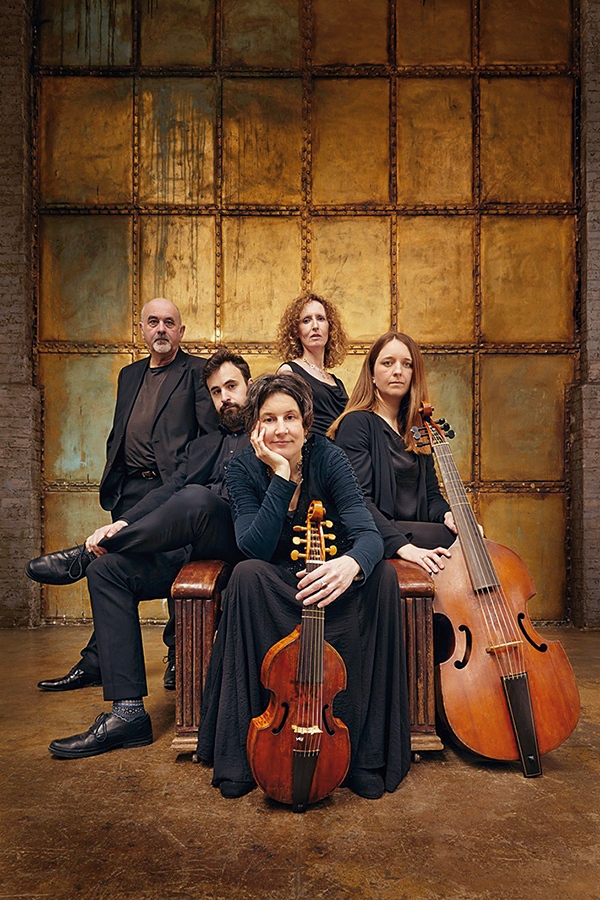
Fretwork are responsible for more Gibbons albums than any other single ensemble. Most recent of them is a modern take on 'Gibbons+' [Signum], pairing his fantasias and anthems with a haunting new commission by Nico Muhly. The pure, abstract contrapuntal writing of the fantasias entirely suited Gibbons’ style. Fretwork’s selection shows the scope possible in the form: lively, Italianate dancing, mournful discords and drooping suspensions, the hint of a popular tune weaving among the intricate lines.
Even so, the selection below is consciously ‘pure Gibbons’, offering an array of modern performing styles from male-only cathedral choirs which still have this music in their veins, to mixed vocal consorts and even a pianist. Daniel Ben-Pienaar is following the example of Glenn Gould, who played Gibbons on his US recital debut in 1955, and whom he cited as his favourite composer (not Bach). Gibbons is much too good to be left to the librarians, the academics and the purists.
Essential Recordings
Church Anthems
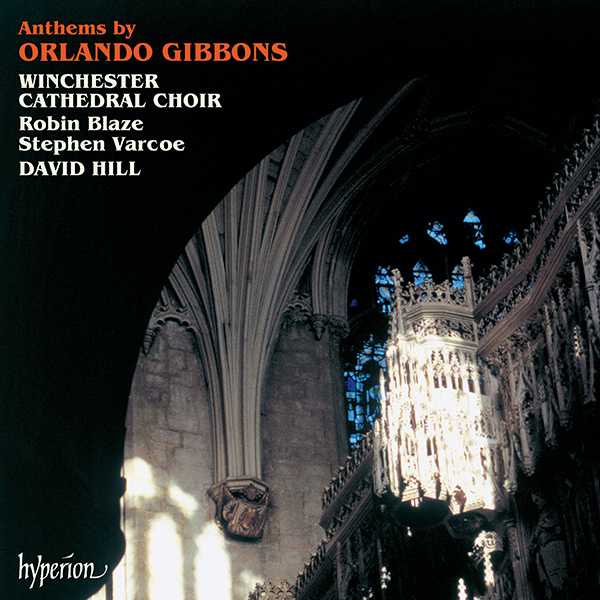
Hyperion CDH55228
Only a quarter-century old, Winchester Cathedral Choir under David Hill now sounds slightly antique, but none the worse for that.
Complete Consort Anthems
Signum SIGCD511
Fretwork and the Magdalena Consort make use of the best modern research into the original pitch and style of this music.
Viol Consorts
Linn BKD486
Phantasm’s approach is often more spacious than Fretwork, restrained but still acutely sensitive to the ‘modern’ dissonances.
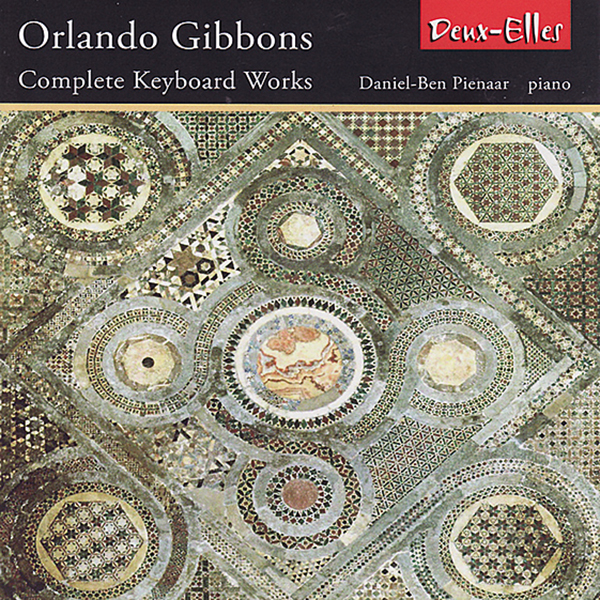
Complete Keyboard Music
Deux-Elles DXL1126
Daniel Ben-Pienaar brings character and charm to each dance and fantasy, showing that Gibbons could smile, too.
Hymns and Songs
Naxos 8557681
Gibbons as he is still known to Protestant congregations worldwide, uniquely catalogued by Tonus Peregrinus and Antony Pitts.
Madrigals and Motets
L’Oiseau-Lyre/Decca 4871009
Launched by Emma Kirkby singing ‘The Silver Swan’. A classic album from an ensemble uniquely experienced in this repertoire.









 SPONSORED VIDEO






| Equipment Reviews |  |
Music Reviews Awards | |
Latest News Features | |
Resources Newsletters | |
Subscriptions |
WHERE TECHNOLOGY BECOMES ENTERTAINMENT
 © 2026 Hi-Fi News
AVTech Media Ltd
All rights reserved