Nuts and bolts
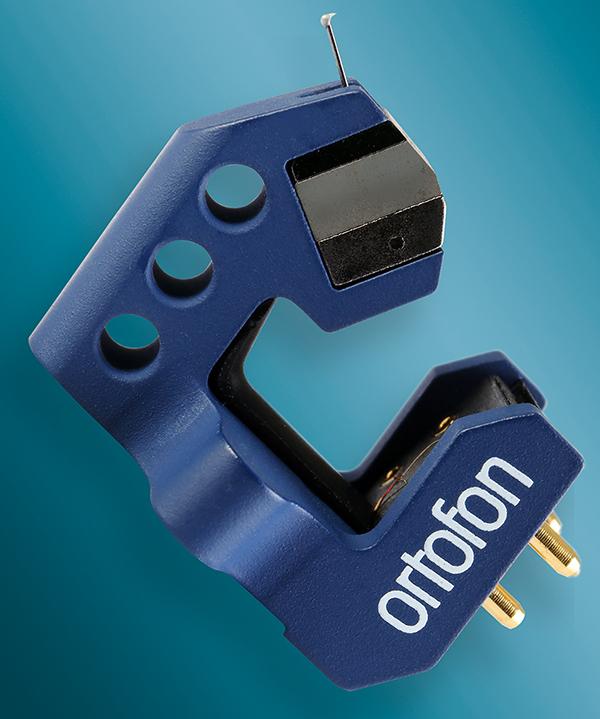
Jim Lesurf salutes the mechanical engineers who have made vinyl playback possible despite its inherent complexity – and stopped our LP collections falling prey to the ‘Dansette effect’
What passes for my career in science and engineering gave me a chance to explore a wide range of electronics, radio, computing and optics and took me to all kinds of fascinating places. It let me engineer systems ranging from ultra-low-noise preamps to be used with signal detectors cooled down to just a degree or two above absolute zero, to kit designed to detect tanks on a smoke-covered battlefield, or to observe volcanic eruptions that were obscured by tons of dust erupting into the atmosphere.
However, one topic I always avoided was mechanical engineering. Design a preamp for moving-coil cartridges? Fine. Write a computer program? Okay. But build even a simple box of wood or metal? Help! Even when sawing a length of plank I’d end up bodging it.
Art not science?
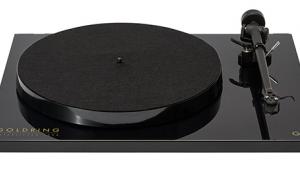
One reason why I find this so difficult is that, as far as I’m concerned, good mechanical design and manufacture is an art, not a science. And in audio reproduction a key example of this is the pick-up cartridges used to play LPs.
The evidence shows up when you see PM’s measurements of the frequency response and distortion levels of something like a moving-coil stereo cartridge. Note how the measured response curves for L-only or R-only, or stereo, mono (L+R) and antiphase (L-R) modulation are usually quite different.
Okay, in part, the response curves stem from the electronic impedance matching between the cartridge and the preamplifier. However, the complex behaviour is also influenced by the mechanical properties of the system being used to convert groove modulations into an electronic signal.
The mechanical requirements presented to the cartridge manufacturer seem to make their task almost diabolic. Things were simpler in ye olde days of mono-only LPs. The stylus and cartridge had to deal only with horizontal modulation for the music, with added vertical force simply to press the stylus into the groove. But to play a stereo LP the stylus has to cope with far more complex motions. Vertical variations alter the downforce needed to keep the stylus ‘in the groove’ as it reads complicated modulation in a complete vertical/horizontal plane.
Just for added spice, the vinyl tends to become distorted by these forces, altering its shape as the stylus surfs the walls to read out the audio. Record wear due to this can create a permanent deformation of the shapes of the groove walls – the old ‘Dansette effect’ where the stylus acted like a chisel to create a new groove pattern, effectively ‘re-cutting’ the disc and losing the details that were pressed onto the LP.
Having found its way through that minefield, the signals then encounter another obstacle course. Namely the electronic impedance interaction between the cartridge’s output impedance and the input impedance of the preamp’s LP input, plus the effect of cable capacitance. The good news is that the electronic engineering involved here is generally far easier to deal with than the virtually impossible demands of an LP system needing to get a stylus to waggle in the same pattern as the disc cutter head at the mastering plant.
Passion play
Despite all this, a decent LP played on a good system sounds superb. As if by magic, the best replay systems can still convey a convincing and enjoyable sound through what I regard as the ‘minefield’ of the mechanics involved. It’s a system that engineers assumed would become obsolete decades ago... but still brings passion to the listeners.























 SPONSORED VIDEO






| Equipment Reviews |  |
Music Reviews Awards | |
Latest News Features | |
Resources Newsletters | |
Subscriptions |
WHERE TECHNOLOGY BECOMES ENTERTAINMENT
 © 2026 Hi-Fi News
AVTech Media Ltd
All rights reserved