JBL Summit Ama loudspeaker


With its three new Summit series loudspeakers, JBL is continuing its journey through the Himalayas. The Makalu and Pumori floorstanders, plus the standmount Ama auditioned here, join its existing ‘Project’ Everest DD67000 [HFN Aug ’14] and K2 S9900 [HFN Aug ’10] flagships in taking their name from the world’s highest peaks. Like those two models, they also come with prices that demand a head for heights, even if the Summit Ama – at £14,998 – can be said to be relatively affordable when compared to the Everest at £79,998.
What we have here then, perhaps, is JBL and parent group Harman Luxury Audio realising there was something of a gap between its two existing top-line models and its more wallet-friendly Studio Monitor [HFN Jan ’22], Classic [HFN May ’19] and HDI ranges. There’s also the matter of size. The Everest, with its two 380mm bass drivers, measures nearly 1m wide, and the K2 is a 56cm-wide floorstander weighing nearly 83kg. Missing was a standmount design worthy of flagship status. Enter the Summit Ama.
Cone chemistry
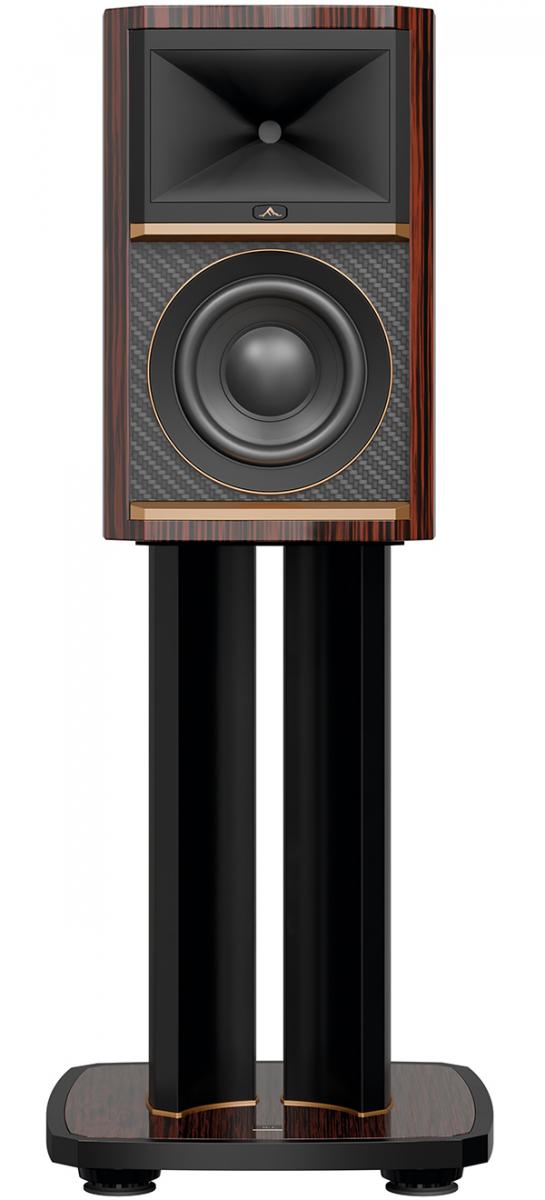
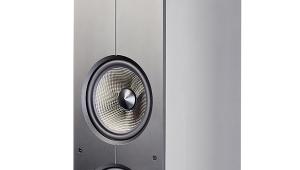
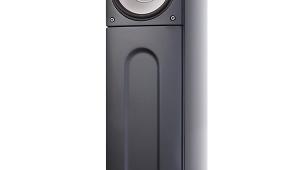
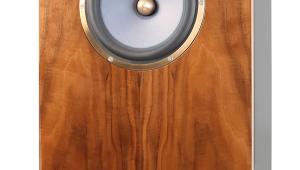
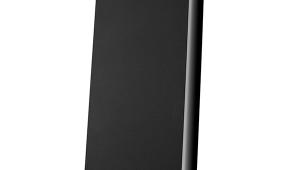
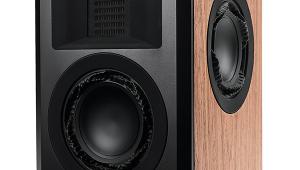
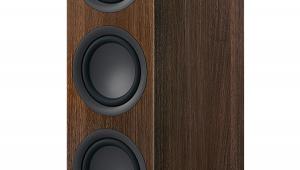
Okay, this speaker is not exactly compact either. Dimensions of 476x308x336mm (hwd) give it real in-the-room presence, and the supplied stands also have a chunky rather than svelte aesthetic. But in situ they look smart, either in the ebony wood veneer finish seen here with its ‘Summit gold accents’, or the high-gloss black (with ‘Summit platinum’ trim) alternative.
The Pumori and Ama speakers make use of the same bass/mid and HF driver pairing, but the Pumori adds a 250mm woofer, leaving the Ama as the range’s only two-way model. Both drive units are freshly engineered, although the technology behind the horn-loaded compression driver will be familiar to JBL aficionados.
Starting with the bass/mid driver, this uses a 200mm ‘Hybrid Carbon Cellulose Composite Cone’ (aka ‘HC4’) where outer layers combine a mix of carbon fibre with JBL’s traditional pulp fibre, sandwiching a closed cell foam inner core. The aim here is to create a cone possessing the required stiffness and excursion to marry high output and low distortion.
Cross talkAs for the motor assembly, this features a large, 60mm voice-coil, ferrite magnet and dual inverted spiders, the unit then being secured to the cabinet via a cast aluminium frame.
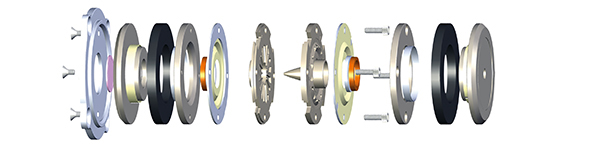
The Summit series’ new D2815K compression tweeter, meanwhile, integrates two 38mm Teonex (polyethylene naphthalate resin) domes and dual motors. It is mounted behind an HDI (High-Definition Imaging) horn, formed from Sonoglass (a fibreglass-based material) and shaped to optimise both horizontal and vertical dispersion.
Horn-loading improves efficiency, which is typically reflected in higher sensitivity, so JBL’s mere 84dB specification for the Ama simply reflects the capability of the 200mm bass/mid unit. Add in a low impedance [see Lab Report] and you’ll want to match the Summit Ama to a robust amp.
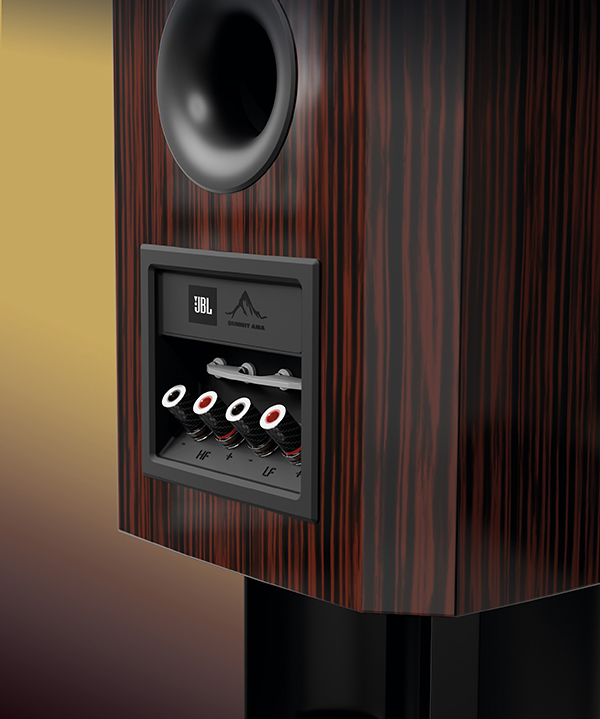
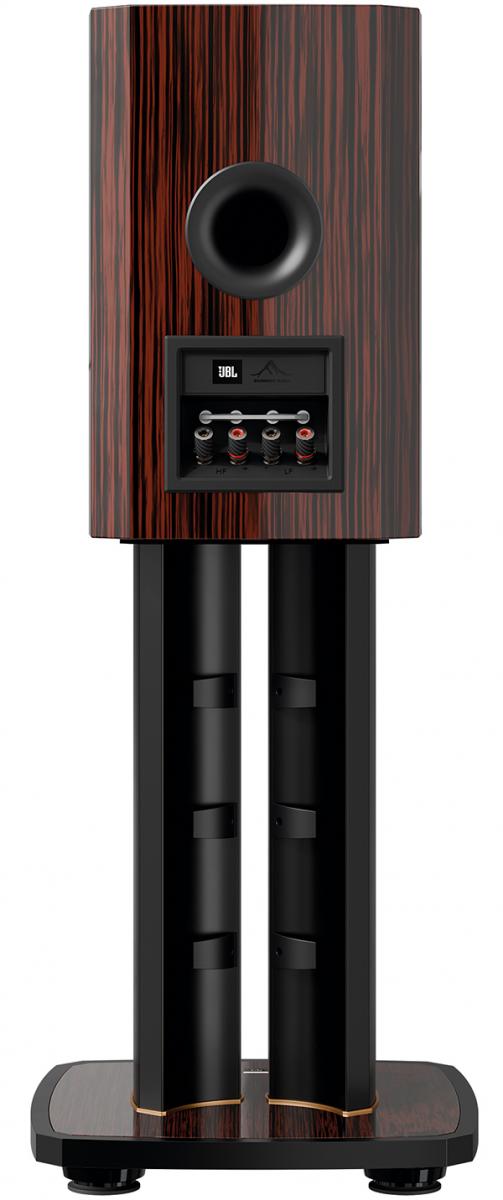
This bass/mid driver is framed by a half-roll surround and tuned via a large rear-facing port to deliver a claimed 34Hz (–6dB) bass extension. Handover to the treble is at 1.6kHz, which is relatively low but made possible by the extended reach of the D2815K compression driver (on the Pumori and Makalu models, the crossover is even lower). The network, a third-order type, is a low-ESR design that employs multiple, small capacitors. The low and high arms are split, accommodating bi-wire/amp set-ups through the Summit Ama’s twin sets of rhodium-plated, carbon fibre-wrapped binding posts.
Bad news for tweakers, perhaps, but of limited concern to anyone else, JBL no longer offers adjustment of HF, Presence or LF levels, as it does on the Everest and K2 speakers. Performance fine-tuning therefore comes down to positioning. The supplied manual offers little information here, but the outcome is to have the speakers angled so they cross over a little way behind the listening position. Or, in the words of a JBL engineer when we asked for more on preferred installation, ‘We have found the best balance between centre-image size and overall image height/width/depth is where the speakers are pointed to a spot about 2.6m behind the listener’s head’.
This slight off-axis toe-out improves uniformity at the listening position as does, unusually, using the Summit Ama with its magnetically affixed grille in place. But for once this is no bad thing, as the grilles don’t upset the visual appeal of this rather grand-looking speaker in any way.
There’s an appreciably ‘high-end’ feel to the Summit Ama, aided by clear attention to detail. The stands have been thoughtfully designed to include cable routing up the rear of each pillar and arrive pre-fitted with height-adjustable soft polymer feet produced in conjunction with specialist manufacturer IsoAcoustics. No alternative spikes are provided, as the foot’s bottom ‘isolator’ layer is said to offer both suction to stop movement on smooth surfaces and a ‘strong friction grip’ on carpets. As for the enclosures, their braced, layered, curved-wall construction contributes to a weight of around 26kg.

Altitude slickness
Horn speakers may never shake off their colourful reputation no matter how far removed we get from the time they were first used to literally shout movie dialogue all the way to the back row of the cinema. Still, the performance of JBL’s Summit Ama should go a long way in dispelling any such preconceived notions, as these are entirely musical-sounding speakers. Bass is a strong point, being deep and fast but brilliantly controlled, so as not to overpower a midrange that offers both superior resolution and presence.
There’s a cavernous, room-filling soundstage on offer too, which goes hand in hand with the Ama’s sense of being unbothered playing at loud volumes. The very top of the audio band may lack a little ‘zing’, but that doesn’t dampen the speaker’s listenability.
Slam Session
In the grand scheme of things, the use of a single 200mm bass driver doesn’t suggest this speaker will be particularly dazzling in the low-end department. But, au contraire, bass handling is nothing short of superb, and that’s whether adding a subtle current of low-frequency weight, or slamming hard into kick drums. The percussive elements on Fink’s live recording of ‘Trouble’s What You’re In’ [Wheels Turn Beneath My Feet; Ninja Tune ZEN189] benefited from a deep, gentle resonance, which helped reinforce the impression of artist and band playing in a large acoustic.
On the other hand, AC/DC’s ‘Thunderstruck’ [The Razors Edge, Columbia; 96kHz/24-bit] is a studio recording meant to sound ‘big’, and again the Summit Ama’s ample but controlled bass helped, initially with the pounding drums in the intro, and then the rampaging bassline.
Once up and running, the track bounced and bounded through JBL’s speakers with an energy that called to mind its legendary live performance at the 1991 Monsters Of Rock festival.
Shake it out
On the end of our regular Constellation Revelation 2 amplifiers [HFN Jan ’25], the Summit Ama’s bass seemed to seep into every nook of the HFN Listening Room [HFN Yearbook ’25]. Francine Thirteen’s ominous ‘Black Maria’ [Psalm Of Tiamat; FPE Records] throbbed with bottom octave effects, which came with no obvious cabinet colouration and contributed to the huge sound these speakers create. Neither does that bass driver appear overworked, seeming barely to move when generating the lowest notes in London Grammar’s ‘Hey Now’ [If You Wait (Deluxe Ed.); Ministry Of Sound].
The typical sensitivity benefits of a horn-loaded speaker might not be a feature here, but that compression driver still makes its presence felt. I wouldn’t call its treble delivery ‘smooth’ but while the overall tone is not overtly bright, neither is it particularly warm. The same directness of delivery I’ve heard on previous JBL horn designs is there, meaning these aren’t the kind of speakers to find you nodding off in front of a log fire on a winter’s evening.
Greater London
That said, having heard the Sinfonia of London orchestra, under conductor John Wilson, run amok through William Walton’s ‘Scapino’ overture [Chandos CHSA 5328; 96kHz/24-bit], it becomes hard to imagine it any other way. The percussion popped, brass notes arrived in a flash, and the whole piece fizzed with energy. JBL’s Ama puts nothing in between you and the music.
This vivid, clear performance proved just as appealing with the slow, delicate ‘Caruso’ from Antonio Forcione’s landmark Meet Me In London release [Naim Label NaimCD021]. Sabina Sciubba’s vocal hung in the air, while finely etched nylon acoustic guitar, and the occasional tight burst of electric bass, danced around behind her.
This is one of the most intimate tracks on Forcione’s 1998 album, and some might not be keen on the way the Summit Ama paints it almost larger than life. This, though, is baked into JBL’s wide-dispersion design – everything sounds big, not just in terms of soundstage width and depth, but height too. Even a track that’s straightforward pop/rock, Bonnie Raitt’s ‘Have A Heart’ [Nick Of Time; Capitol Records CDEST 2095], gained in stature when heard through the Summit Ama, its synth sounds ringing out wide, and Raitt and her backing singers almost choir-like in their scale.
Water music
On this track the brilliant clarity of the performance was noteworthy, in particular the precise location of various instruments. But it’s not a complex, dense piece, unlike Opeth’s ‘Blackwater Park’, the closing track from the Swedish band’s 2001 album of the same name [Sony Music 19439876312]. This posed the Summit Ama a different challenge of thick, distorted guitar riffs and crashing cymbals, but the speakers responded with a superb display of lower midrange strength and drive. Sticking with European prog/metal, Riverside’s epic nine-minute ‘The Struggle For Survival’ [Wasteland, InsideOutMusic; 44.1kHz/24-bit] was delivered with real speed and clarity right across the frequency range.
Punch line
Simply put, there’s nothing about the Summit Ama’s performance I didn’t enjoy. Yes, the sound favours openness and dynamism over richness and warmth, and the speakers are quite demanding of your amplifier(s), but I challenge anyone to hear them digging into Jeff Beck’s ‘Scared For The Children’ [Loud Hailer; Rhino 44.1kHz/24-bit] and not be bowled over. This showed everything they can do, from the heavenly, reverbed guitar tone and Rosie Bones’ crisply defined vocals, to the punch and snarl of the band when Beck’s solo goes flying.
Hi-Fi News Verdict
JBL’s huge, varied range of loudspeakers can make it hard to work out what belongs where, but one look at the oh-so-stylish Summit Ama will tell you it’s a flagship model. It has all the attributes of one too, from the quality of its craftsmanship (including the partnering stands) to a pristine performance that brings out all the life and energy of your recordings. A peaky blinder, if you’ll pardon the pun…Sound Quality: 88%
 | |||||||||||

|
|
| |||||||||










 SPONSORED VIDEO






| Equipment Reviews | |
Music Reviews Awards | |
Latest News Features | |
Resources Newsletters | |
Subscriptions |
WHERE TECHNOLOGY BECOMES ENTERTAINMENT
 © 2026 Hi-Fi News
AVTech Media Ltd
All rights reserved