HiFi Rose RS451 streamer
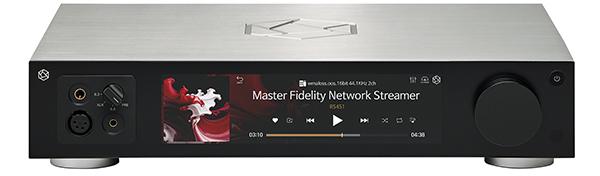

To misquote those old M&S adverts, this isn’t just a network streamer, this is the HiFi Rose RS451 Master Fidelity Network Streamer. The latest addition to the Korean company’s ever-expanding digital audio offering, it features second-generation technology trickled down from the high-end RS151 [HFN Jul ’25] launched earlier this year. This makes it, in HiFi Rose’s terms, ‘a semi-reference level network streamer’.
True, the RS451 isn’t exactly a budget model, especially in the face of bargains from brands including Eversolo and WiiM, but at £2699 it offers a £1600 saving over the flagship model. That difference might fund a partnering power amp or – for a really minimalist set-up – a pair of active speakers, because in common with many network-connected devices these days, the RS451 has both fixed and preamp outputs.
Nothing to see here
Thinking along those lines I did much of the listening with a pair of relatively ancient Marantz Music Link monoblock power amplifiers driving compact PMC prodigy5 floorstanders. This gave me a system with just the HiFi Rose ‘control centre’ and the slender black loudspeakers on display – the next best thing to invisible hi-fi.
The RS451 has much to offer in this role of system hub. Not only can it play music from online services, network stores and USB devices, it can easily be fitted with internal SSD storage. A screwdriver is provided to undo a hatch in the base of the unit, revealing a bay into which any standard 7mm-thick SSD of up to 4TB capacity can be inserted.
Close it up again and format the drive using the player’s menu, and you can then copy music to it via the home network or from a USB drive. You can also attach a USB CD drive to one of the RS451’s three USB-A ports, and rip music directly to the internal store. The drive could also be used to play CDs, and prices start from about £25, which isn’t much to add extra flexibility to the player. Or, if you want an audiophile-approved CD drive, styled to match the RS451, HiFi Rose will sell you one for £349. You pays yer money...
This expansion facility is not unique to the RS451, or even HiFi Rose, but it makes the unit a comprehensive player/library. A 2TB drive, at around £150, will store over 40,000 average-length tracks at CD-quality, amounting to almost 3500 hours of listening. Even if your files are 192kHz/24-bit it will hold over 1000 hours of music, which should be more than enough for most users.
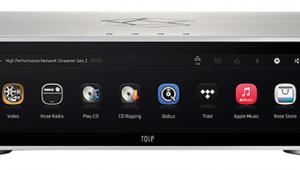
Apple Music, Qobuz, Spotify and Tidal are among the usual suspects when it comes to the RS451’s online services, in addition to Internet radio access and Roon Ready capability. The player has comprehensive physical connectivity too, with its single stereo line analogue input joined by digital ins on optical and coaxial, the three USB-A ports already mentioned, and USB-C for computer audio.
There’s also an HDMI eARC port for TV sound, and – given the ability of the RS451 to play video content at up to 4K – an HDMI output to feed a TV or AV processor. Bluetooth is also built-in, with an antenna inset into the rear panel, but while wired Ethernet is onboard, connection via Wi-Fi requires the use of a supplied plug-in USB dongle. Given the slickness of the rest of the design, that seems a little cludgy, but it works well enough.
Flower power
HiFi Rose makes great play of the enhanced processing and audio technology offered here. The RS451 runs the company’s Android-based Rose OS on quad core Cortex-A76 and A55 CPUs, and runs its latest Rose Audio engine to offer upsampling all the way to DSD512, plus wide-ranging file format handling. The main audio output (single-ended on RCAs and balanced on XLRs) and the headphone section are completely separated.

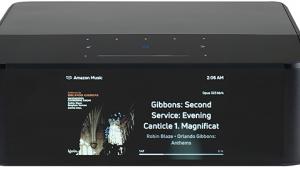
Control is possible using the large (8.8in) and colourful 1920x480-pixel touchscreen panel on the unit’s fascia. In addition, you have the option of a supplied remote handset [pictured below], plus the Rose Connect Premium app for Android and iOS devices. The app is by far the smoothest and most user-friendly way to ‘drive’ the RS451 – unless, perhaps, you are operating the unit via Roon. That display panel is very pretty, and offers all kinds of visual tricks, but controlling the player that way does mean sitting right next to it.
 Stick or twist?
I started listening with awareness of PM’s somewhat concerning discoveries regarding the massive array of digital manipulation within the RS451’s menu system [see boxout]. This, combined with my general dislike of all the faffery of multiple digital filters, prompted me to stick with the default fast roll-off minimum phase filter for my time with the player. Although I’ve said it many times, it’s worth reiterating here: just because the chosen DAC chip offers multiple digital filter options, or your technology allows you
to implement lots of choices, I’d much rather the designers of digital equipment chose a setting and stuck to it, locking out all the other options.
That would show a commitment to how a brand feels music should sound. Instead, consumers are left to drive themselves to distraction trying to decide what effect, if any, a change of filter might bring, and – if any is discerned – selecting the one best suited to their needs. I’ve spent far too much time in the past playing with digital filter settings, and can only conclude that way madness lies.
With my rant mode now reset to its default bypass position, it’s nevertheless hard not to conclude that the RS451 is really rather good, whether used into conventional amplification or a pair of high-resolution headphones. I played music from an SSD inserted into the unit, external USB and NAS storage, and streaming services, and in each case was rewarded with a sound offering both fine definition of detail and plenty of impact. It opened up recordings as diverse as Kylie Minogue’s Abbey Road Sessions [Parlophone P015 0222], to the orchestral transcriptions of Bach organ works on the BBC Philharmonic/Sir Andrew Davis King Of Kings album [Chandos CHAN20400].
Brass master
The shaping of Minogue’s instantly recognisable voice on her solo set was lush yet insightful, and the Bach settings by Davis (and the recordings completed after his death by conductor Martyn Brabbins), were rich and wonderfully detailed. The RS451, driving the aforementioned Marantz power amps, delivered both weight and ambience in equal measure, really drawing the listener into the performances. The rasp of brass in the arrangement of the ‘Toccata and Fugue in D Minor’ was nothing short of spectacular!

On a completely different level, the complexities and ethereal atmosphere of Lanterns On The Lake’s Other Versions Of Us [48kHz/24-bit Bandcamp download], the band’s reimagining of its 2023 Versions Of Us release, were suitably spacey and captivating. The almost 3D effect of the mix was well realised by the detailed sound of the HiFi Rose RS451 as it washed over this listener in all its oddness. Hazel Wilde’s vocals were at times submerged in the complex mix, at others rising above the instrumental layers in this dreamy presentation.
Rich pickings
Much more direct and focused was the rendition of Chrissie Hynde’s powerful voice on her recent Duets Special album [Parlophone 44.1kHz/24-bit download]. Whether on the sultry opening ‘Me & Mrs Jones’ duet with k.d. lang, the version of ‘Sway’ with Lucinda Williams, or the delicate handling of ‘Always On My Mind’ with Rufus Wainwright, the intimate feel of these recordings was presented in convincing fashion. There was solid imaging and soundstaging, and always bags of ambience.

That sense of focus also served well Saskia Giorgini’s refined performance of Mozart’s ‘Piano Concerto No.12’ with the Trondheim Soloists [Mozart & Shostakovich...; Pentatone PTC 5187476]. Here there was an effortless flow to the playing, coupled to the rich tones of Giorgini’s piano and the small string ensemble in an intimate soundstage. It was a perfect contrast to the spikiness of Shostakovich’s ‘Concerto For Piano, Trumpet And String Orchestra’, although both pieces sounded dramatic and faintly unsettling.
Flexible friend
An even more revealing player, including HiFi Rose’s own RS151, will bring out even more of the air in these recordings. For a reduced price, however, the RS451 is both appealing and very listenable. And when you add in all the ease of operation and the flexibility on offer – more than most of us will ever use – there’s much to commend this ‘semi-reference level’ player.
Load it up with a comprehensive library on an inserted SSD, and connect up a USB drive to rip your CDs, and it will probably cater for just about your every need. The RS451 also has that network access and ability to play, or copy, content from local and network storage, Internet radio and more – even if you never connect it over HDMI to your TV to play back YouTube content, etc. Steer clear of all those in-depth settings in the menus, unless you really wish to while away the odd wet afternoon, and you won’t go far wrong.
Hi-Fi News Verdict
This stripped-down version of HiFi Rose’s RS151 network player shows little sign of being stripped of facilities or down on performance, despite some doubts about what’s going on under the digital hood. Flexible and supremely easy to use, even if you only scratch the surface of what it offers, the basics are sufficiently impressive to have you exploring, and enjoying, all facets of streamed music.Sound Quality: 84%
 | |||||||||||

|
|
| |||||||||












 SPONSORED VIDEO






| Equipment Reviews | |
Music Reviews Awards | |
Latest News Features | |
Resources Newsletters | |
Subscriptions |
WHERE TECHNOLOGY BECOMES ENTERTAINMENT
 © 2026 Hi-Fi News
AVTech Media Ltd
All rights reserved