DALI Epikore 7 loudspeaker
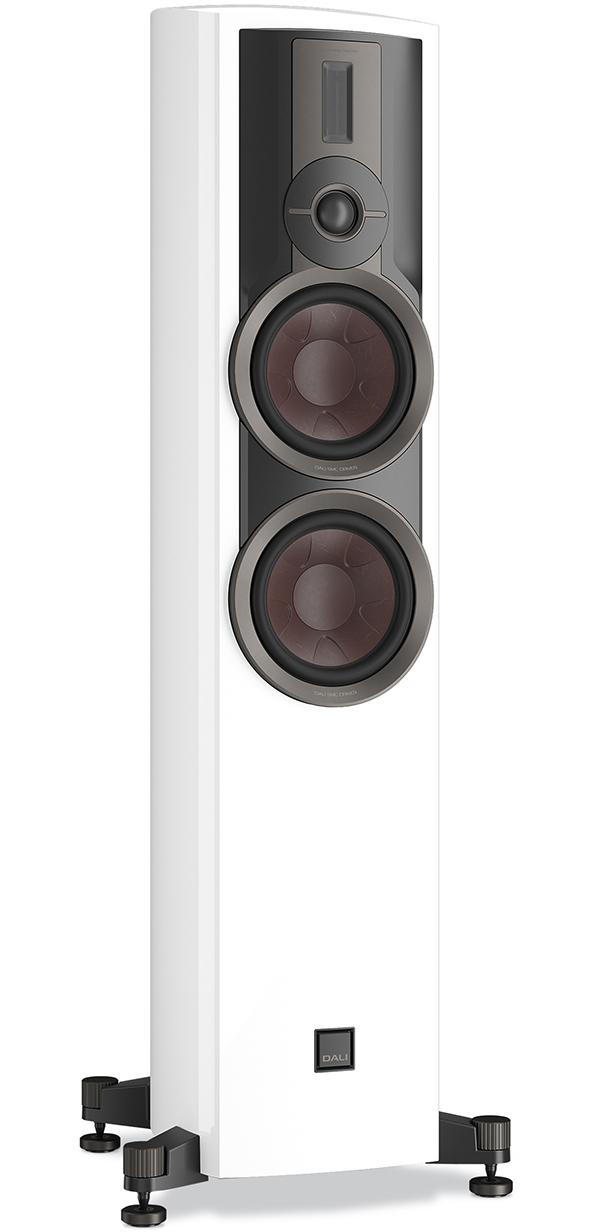

When DALI launched its flagship KORE speaker [HFN Dec ’22], followed by the Epikore 11 [HFN Feb ’25], the Danish company clearly wanted to turn heads in a higher-end segment. Which worked out fine, but both speakers have a ‘downside’: they are colossal. Applying trickle-down technologies from the £85k KORE and £40k Epikore 11, the smaller £20k Epikore 7 floorstander might just be the more sensible choice for typical living rooms.
The Epikore range is the follow-up to the top-tier Epicon series launched in 2012, and there’s no doubt these latest loudspeakers are a premium offering, the three-and-a-half-way Epikore 7 being significantly pricier than the Epicon 6 model it replaces. Considering the time elapsed between both ranges, a price hike was perhaps inevitable. DALI also points to improvements carried over from the KORE flagship, including its Clarity Cone drivers and hybrid EVO-K tweeter array.
Let it slide
This model is the smallest of three Epikore floorstanders, but that hardly means tiny. It’s an ample speaker measuring 112cm tall, and with a sizeable footprint once DALI’s sturdy metal outriggers are installed. These can be fitted with adjustable spikes, and discs are provided to protect a soft floor. Cleverly, these are magnetic, allowing you to move the speaker around with the discs remaining in place. Then again, playing around with toe-in in this case is not required. Like most DALI speakers, the Epikore 7 is explicitly designed to be placed parallel to the side walls, where they sound their smoothest [see PM's Lab Report].
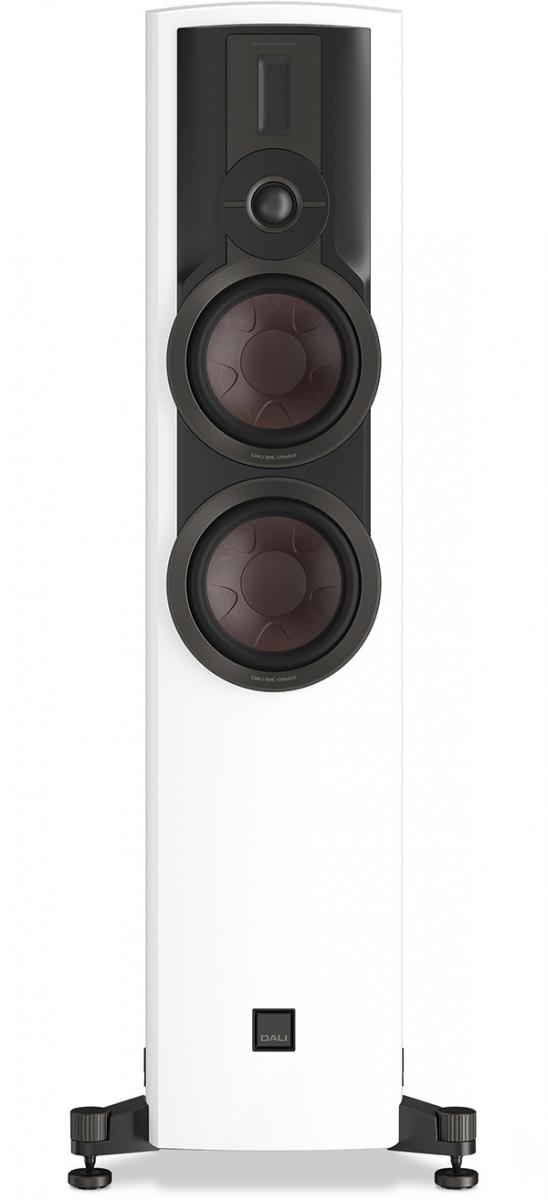
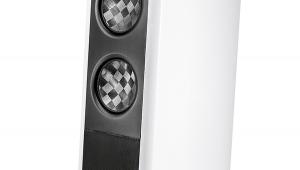
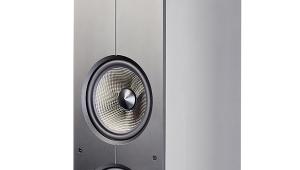
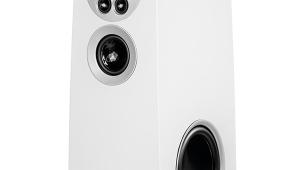
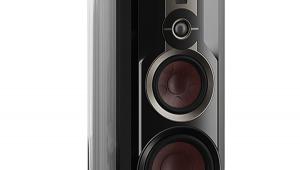
Thanks to its curvy cabinet design, the Epikore 7 is an elegant-looking floorstander – albeit a heavyweight courtesy of its 18mm-thick MDF panels, internal bracing and alloy baffle plate. Still, as the rear is slightly taller than the front, the appearance remains nicely streamlined. Indeed, with the black or white high gloss versions, in particular, it’s hard to spot the edges, with all attention drawn to the die-cast aluminium baffle in which DALI’s trademark hybrid tweeter and two large 180mm bass/mid drivers are mounted.
Made in Denmark
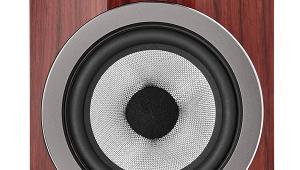
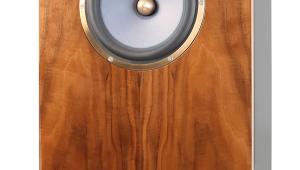
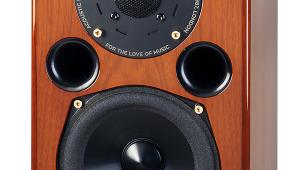
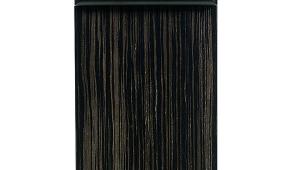
All DALI’s speakers from its Opticon series and up are built in its factory in Nørager [see boxout]. This includes the Epikore 7, with its cabinet dressed in multiple layers of paint and varnish by a sophisticated robotic set-up installed as part of recent production upgrades. The resulting high gloss finish – at first available in colourways of black, walnut and maroon, the latter with very nice wood veneers [see pic, opposite] – is stunning. The gloss white option is a more recent arrival.
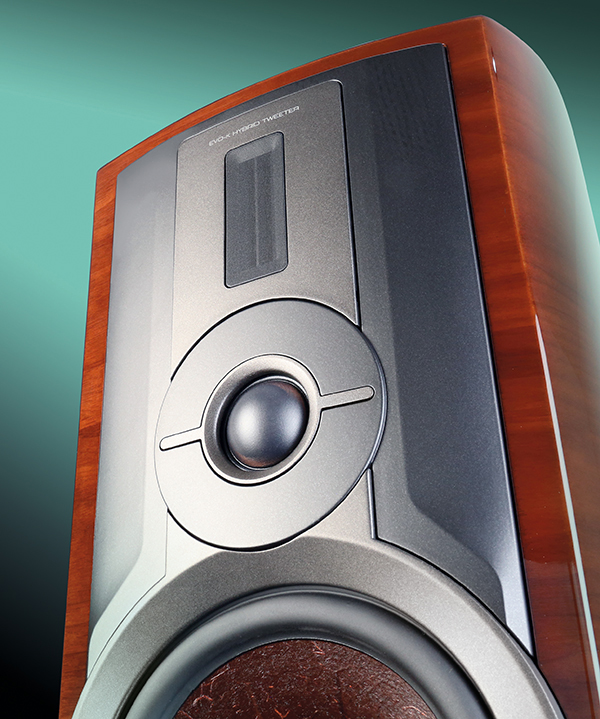
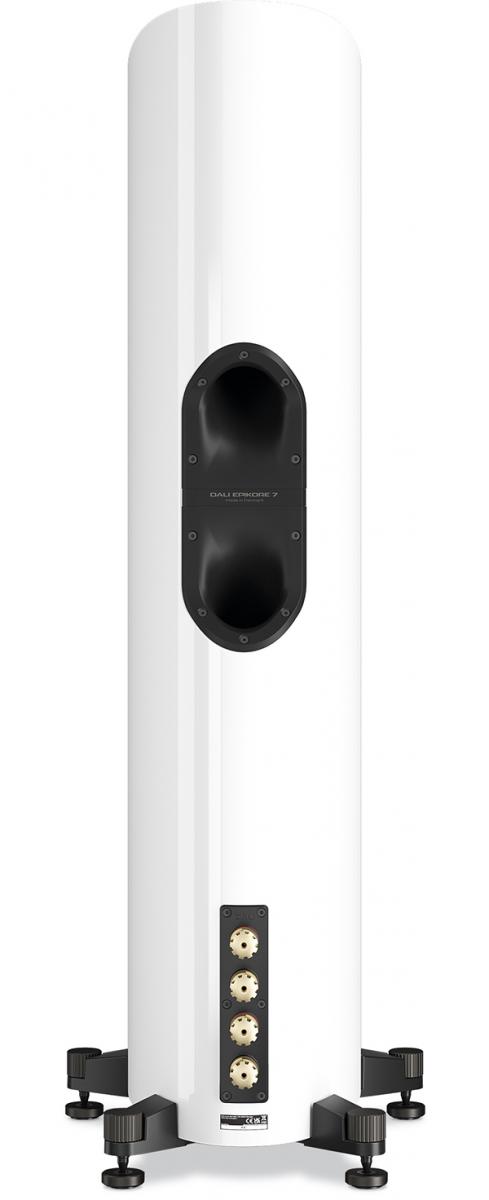
Taking a cue from the KORE, the Epikore 7’s curved cabinet is both stiffened and designed to minimise internal standing waves. This ties into DALI’s design goal of providing ‘outstanding bass’, made possible by those dual 180mm drivers working into separate cabinet volumes and supported by two large and internally angled reflex ports at the rear. The paper and wood pulp cones are illustrative of DALI’s typically conservative approach, shying away from high-tech materials others have embraced. In practice, the Clarity Cone technology marries the excellent damping properties of this natural composite with calculated depressions stamped onto the cone surface to enhance its stiffness.
The motor system also incorporates the latest version of DALI’s favoured Soft Magnetic Compound (SMC-2 in this instance), the non-conductive magnet limiting both heat build-up and hysteresis. Also, for the first time, DALI is using a version of its SMC in the crossover inductors. The dual tweeter set-up is another DALI fixture, albeit in updated EVO-K guise here, combining a 35mm soft dome tweeter with a 55x10mm planar-magnetic driver operating above 12.5kHz.
 Magnificent 7
PM’s Lab report [see Lab Report] indicates that the Epikore 7s are not the most demanding loudspeakers to drive, which is refreshing for a model at this price level. In any case, a Primare A35.8 power amp [HFN May ’22], configured in bridged mode and fed from a PRE35 preamp [HFN Dec ’19], provided ample power for DALI’s floorstanders, allowing them to fully reveal their talents.
There should be no beating Tom Waits’ original rendition of ‘Train Song’ from his 1987 album Franks Wild Years [Island CDITW 3], which the Epikore 7s delivered with a lovely warm presence to his trademark gnarly vocals, and smooth accordion tones. However, it was Holly Cole’s cover [Temptation; Metro Blue 72438 3434824] that really shone through these DALI speakers, being a slightly cleaner-sounding recording with a very prominent role for the acoustic bass of David Piltch. The rich, weighty portrayal of the latter immediately caught the attention, but careful listening found the Epikore 7s also unearthing plenty of little ‘twangs’ and rustling textures.
On occasion a bass note would appear overemphasised, but not in a way that detracted from the listening experience. Low-frequency performance is a highlight of these speakers, and a delightful one at that – a lot of tracks I played sounded fuller and carried more emotional impact.
Such powerful, well-extended bass does open the door to prominent room modes and interactions, even with the speakers installed more than a metre from rear and side walls. Yes, there are foam bungs to be inserted into the Epikore 7’s reflex ports. But, in my room, I preferred the occasional overexuberant note to dampening this speaker’s low-frequency fervour – it’s just so much fun.
DALI’s hybrid tweeter approach has its merits too. While the vocal range of Holly Cole on ‘Falling Down’ impressed, I was equally enthralled by the character of the harmonica. This is not an instrument high on my list of favourites, regardless of countryman Toots Thielemans’ hero status, but its nimble, crisp portrayal here nearly changed my mind.
Putting in a shift
Many Portishead songs hold their own decades after release, including ‘The Rip’ from the Brit group’s aptly named Third album [Island 1766400]. This melancholy track sounded spectacular through the Epikore 7s, the speakers shifting from the delicate opening passages to a dense climax built around a thick, analogue synth melody. Likewise, with Daft Punk’s ‘Get Lucky’ [Random Access Memories, Columbia; 88.2kHz/24-bit], the speakers filled the room but didn’t stuff it – excellent separation and a relatively airy portrayal (including effects positioned far left and right) led to near-complete immersion. ‘Relatively’? Yes, because even with that planar unit dedicated to ‘top-end’ treble, the subjective impression is that DALI has prioritised driver integration over blasting out ethereal details. To my mind this is a sensible choice, one which makes the speaker distinct from rival models that explicitly chase rarified audiophile objectives.
Not that the Epikore 7 is unsuited to said audiophiles. Au contraire, it deftly handled Dvořák’s boisterous Slavonic Dances, recorded by the Czech Philharmonic/Simon Rattle for Pentatone [96kHz/24-bit]. Dynamic orchestral moments were handled without sign of compression, which amounted to a figurative ‘more, more’ call to turn up the volume. The gentler parts of ‘Series I, B. 83: No.2’ were not lacking in fine detail either, proving these speakers are not only about overwhelming the listener with dynamics and bass.
Glass act
During my period with the Epikore 7s, I swapped the slightly colourful Primare pre/power amps for NAD’s Purifi Eigentakt-based M33 V2 integrated. The result was a slightly more even-handed performance, with the bass tightened up through the amp’s Dirac room correction tool, but it was no less enjoyable.
The ‘Metamorphosis’ pieces on Philip Glass: Solo Piano [Sony SMK87976] are the ultimate expression of repetition and minimalism, with a swirly, almost waterlike feeling to the production. The Epikore 7s submerged me in these crystal-clear soundscapes, every change of tone or pace exposed and rapid, high piano notes underpinned by substantial lows. This 1989 recording can sound thin and lifeless on some loudspeakers… this was very close to hearing Glass play live.
Hi-Fi News Verdict
The Epikore 7 is a delight to listen to, demonstrating that tried-and-trusted DALI techniques can be brought to a higher level, creating a superb speaker which offers thrills and refinement in equal parts. The richness of its bass suggests that care needs to be taken regarding room interaction, but that aside it is a loudspeaker that enthrals as much with its sonic performance as with its lavish aesthetics.Sound Quality: 88%
 | |||||||||||

|
|
| |||||||||











 SPONSORED VIDEO






| Equipment Reviews | |
Music Reviews Awards | |
Latest News Features | |
Resources Newsletters | |
Subscriptions |
WHERE TECHNOLOGY BECOMES ENTERTAINMENT
 © 2026 Hi-Fi News
AVTech Media Ltd
All rights reserved