Current affairs
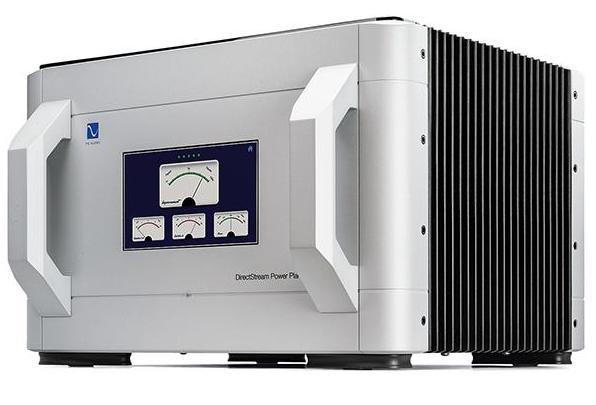
Changes in AC mains quality can play havoc with your listening enjoyment, says Steve Harris, which is why audiophile power conditioners and regenerators have become big business
I’ve always been fascinated by the ‘war of the currents’, fought out in late 1880s United States between the inventor Thomas Edison, committed to a system of direct-current mains supply, and entrepreneur George Westinghouse, who pushed the high-voltage alternating-current system.
At the height of the battle, Harold P Brown, acting for a New York investigative committee but perhaps in collusion with Edison, set out to prove that AC was more dangerous than DC with public demonstrations where dogs and larger animals were shown to survive severe DC shocks before being killed by an AC one. Finally, Edison supplied the equipment for the first execution by electric chair, but used AC to power it, ensuring further bad publicity.
Power to the people
The battle was soon over, though, as only high-voltage AC with transformers could solve the problem of power transmission over distance. Even so, DC systems were still widely used in industry, and DC was also still supplied to homes in some parts of the UK into the 1950s and even later.
Since then, we’ve depended ever more on the convenience of AC electricity. It made hi-fi possible, but by the same token, we’ve known for a long time that our systems are at the mercy of the mains.
For me, as for many others, realisation came with the discovery that the system didn’t always sound the same. Those disconcerting changes in listening enjoyment, from day to day, day to night or hour to hour, were not just due to my state of mind, health or temper. They were mainly caused by fluctuations in the quality of the mains.
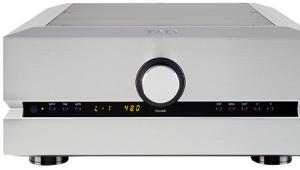
When Accuphase launched its PS-500 Clean Power Supply conditioner in 1996, there were already mains-treatment devices around. But this one was a substantial, beautifully built component, understated yet impressive in the best Japanese manner. Inside, ‘revolutionary waveform shaping technology’ compared the AC input to an ideal sine waveform and introduced ‘highly precise compensation’.
In the spring of 1997, Accuphase returned with the bigger PS-1200, giving 1200W instead of 500W and useable with moderate-sized power amplifiers as well as source components.
Regeneration game
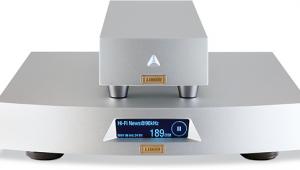
Also that year, PS Audio launched the first of its many Power Plants. Rather than trying to correct the incoming AC, this used a power amplifier to produce an AC power output that was independent of the original mains waveform. ‘When it comes to regenerated AC power we wrote the book’, says the brand.
Mains power products are big business for other leading companies too, like AudioQuest and Shunyata in the US, and IsoTek in the UK, supplying pro studio users as well as hi-fi and AV consumers. Few have followed PS Audio in offering a true mains regenerator.
Someone who has in this country is Nic Poulson, the former BBC engineer who introduced Trilogy amplifiers in the 1990s. He created the original IsoTek SubStation of 2001, but after a parting of the ways launched his Isol-8 brand in 2004.
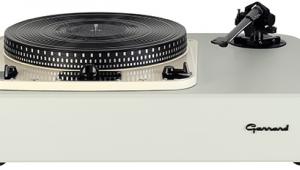
He then introduced the Isol-8 PowerStation, a regenerator using twin 100W amplifiers and intended to power source components but not power amplifiers. Like the PS Audio kit, it offered additional output frequency options, in this case up to 100Hz. As a fringe benefit, when set to 67.5Hz it could make a conventional synchronous-motor turntable run at 45rpm instead of 33.
The PowerStation is now discontinued but Isol-8 promises ‘more regenerators and PowerStations coming soon’. They’re awaited with interest.



















 SPONSORED VIDEO






| Equipment Reviews |  |
Music Reviews Awards | |
Latest News Features | |
Resources Newsletters | |
Subscriptions |
WHERE TECHNOLOGY BECOMES ENTERTAINMENT
 © 2026 Hi-Fi News
AVTech Media Ltd
All rights reserved