Communication breakdown
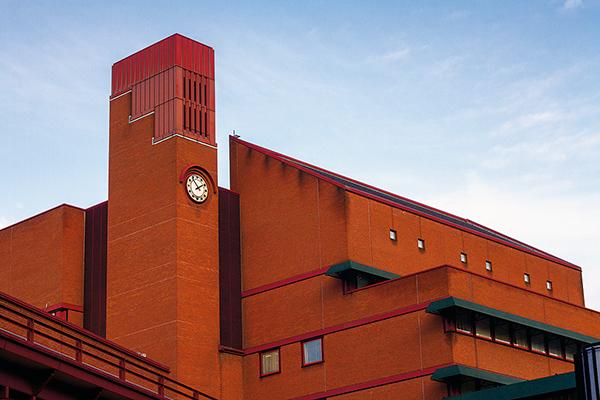
Jim Lesurf’s quest to unearth more information about the early days of UK hi-fi led him to the British Library. Then came a paradoxical situation straight out of the pages of Catch 22
A number of years ago I got together with a few other people who had either been involved with the early era of UK hi-fi design and manufacture, or were keenly interested in its history. The main visible result was the UKHHSoc website I built that gave free access to scans of various old documents – manuals, circuit diagrams, etc – related to many of the items designed and sold in the UK. You can find the collection at http://ukhhsoc.torrens.org/AudioDocs.html. This is provided as a free and open resource for anyone who may find the documentation useful. It contains everything from servicing sheets to marketing brochures to a copy of the teaching notes provided when people at Quad were advised in the early days of audio CD on ‘how it works’, to aid the development of their own CD player.
A search for more information continued for some years, and many people sent me documents or scans to add. During that time I also approached the British Library in London to investigate what documents it might have – so we could add info and context to our website. I already knew that it was possible to access material from the British Library via the Internet, but to do this you needed to be accepted as a valid ‘researcher’.
Access denied
Now, in principle, any UK adult can join the British Library and access its vast trove of documents, etc, via the Internet as well as in person. Given my background both as an – allegedly – ‘respectable’ retired university academic and someone who writes about technical topics, I assumed I’d have no problem. However, things didn’t go as I’d planned. Some readers may be aware of Joseph Heller’s classic novel Catch 22, and the eponymous military rule described in the book. In a nutshell, this says the only way to get transferred out of a warzone is to show that you are insane. However, it then defines insanity as the state in which you don’t recognise the danger that’s present. Wishing to get away proves you are sane – and thus not eligible for transfer.
This came to my mind when I asked the British Library if I could register and then be able to access documents held remotely. The reason being that it was impossible for me to travel to the location in person. The reply I got was, yes, I could – but I had to apply in person. An application via email or letter was not sufficient. Therefore, the fact I couldn’t physically reach the library to apply at the desk meant I wasn’t allowed remote access. The library is based in London, but is a UK resource. I am in Scotland. I did raise this with my MP, etc, and they inquired and agreed it was absurd. But it remained the situation.
I hope it changes for the sake of future researchers and enthusiasts. In theory the British Library should have every published document, but I can’t check for myself. For all I know, it has plenty which ideally would be on the web, but remains in filing cabinets or on bookshelves. I just need to move to London to find out!





















 SPONSORED VIDEO






| Equipment Reviews |  |
Music Reviews Awards | |
Latest News Features | |
Resources Newsletters | |
Subscriptions |
WHERE TECHNOLOGY BECOMES ENTERTAINMENT
 © 2026 Hi-Fi News
AVTech Media Ltd
All rights reserved