Made to match
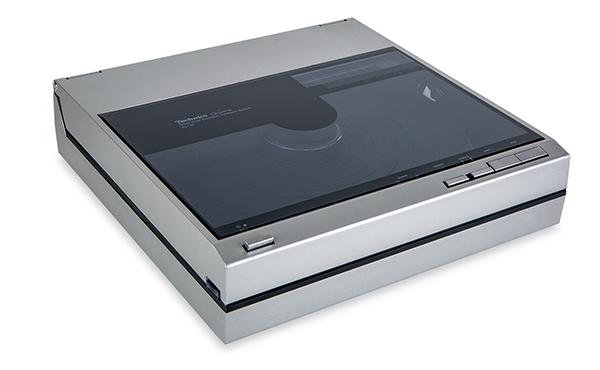
Steve Harris remembers when copywriters believed a hi-fi system came second only to a house in ‘a man’s life’, and Japanese manufacturers sold towering stacks to cover every audio base
Almost by definition, a hi-fi system has always consisted of a bunch of separate components, to go above and beyond the sound provided by a simple single box. When it all began, in the early 1950s, most people would be content with a radiogram that would play 78rpm records and bring in the BBC’s broadcasts on the wireless. But enthusiasts were starting to assemble systems that tried to do justice to the new LP records.
Boom time
Then came stereo. In the 1960s, pop music boomed and hi-fi would soon follow. As solid-state electronics took over from valves, hi-fi separates became more user friendly. But you still needed expertise to put them together. Japanese companies entered the UK market and soon dominated it. They could do it all – turntables, cartridges and cassette decks as well as amplifiers. Now hi-fi separates reached a much wider public. British-made electronics couldn’t compete on looks, facilities or build quality but claimed better sound.
For newcomers, the big issue was still compatibility. Will this cartridge work in this tonearm? Will this amplifier work with these loudspeakers, or might it blow up? Have I got the right cables?
All this came to mind recently when I ran across a classic Sony ad from the mid 1970s, proclaiming: ‘It’s a good thing people don’t buy cars the way they buy hi-fi’. Put together a system from different manufacturers, Sony’s ad suggested, and you’ll end up with a mess. To emphasise this, the ad featured an illustration of a ludicrous car, with a Rolls-Royce radiator sitting between the headlights of a Ford Corsair and above the massive chrome bumper of a ’57 Pontiac Chieftain. Behind all this was the cabin of a Citroën 2CV, giving way to a sporty tail and racing wheels.
‘If the average motorist put together his “perfect” car he’d wind up with a joke’, the ad went on. ‘For the same reason, the average music lover isn’t equipped to put together hi-fi.’ Of course, Japanese manufacturers were the ones that had made it easy to mix and match, because they followed their own industry standards. But they found they could package a set of relatively decent conventional-looking separates as a one-make ‘rack system’. Mock-veneered chipboard cabinets with a smoked glass door would have a turntable at the top and house an amp, tuner and cassette deck below.
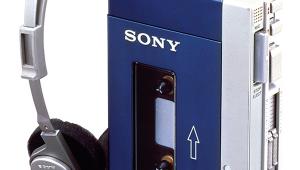
Then came cheaper versions. If amp, tuner and cassette were always going to be together, why did they all need their own mains transformer? Soon there were systems where all units were fed from the amplifier’s power supply and, ultimately, products where a single unit was just styled to look like separates. Most people wanted a neater, smaller stack, but where to put the turntable? Technics got the width down with its ‘jacket-size’ SL10 in 1979 [pictured above], but the advent of the midi-system had to wait until the arrival of CD allowed the industry to forget about vinyl for a while.All change
By then the mass-market hi-fi boom was over anyway. From 1976 on, consumers were spending their money on video recorders instead. Hi-fi was no longer the major status symbol it had been when Sony’s ad proclaimed, ‘A home, a car and hi-fi system are the three biggest purchases in a man’s life. And it’s a toss up for second place’. Perhaps that 1970s copywriter knew that one day in the future, a high-end system could cost as much as a house.






























 SPONSORED VIDEO






| Equipment Reviews |  |
Music Reviews Awards | |
Latest News Features | |
Resources Newsletters | |
Subscriptions |
WHERE TECHNOLOGY BECOMES ENTERTAINMENT
 © 2026 Hi-Fi News
AVTech Media Ltd
All rights reserved