The state of radio
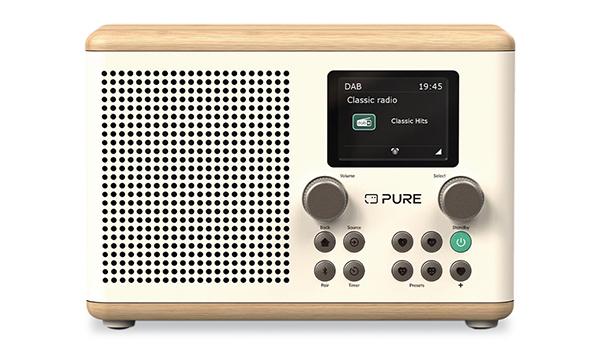
The birth of DAB soon brought rumours of FM’s demise, but decades on UK radio has become the hodge podge of services that Ofcom once warned us about. Is that a problem? asks Steve Harris
Back in 2010, it was thought that analogue radio could be switched off by 2015. But here we are, 15 years later, almost 30 years on from the BBC’s first DAB test transmissions, and the end of FM still looks to be at least five years away.
Regular DAB broadcasting in the UK began in 1998. But only in 2007 did the general public become aware that FM broadcasting could be switched off in the foreseeable future, thanks to a speech by Ed Richards, chief executive of the recently established radio and telecoms regulator Ofcom. Richards emphasised the need for consultation and the danger of acting too hastily but, conversely, pointed to the danger of ending up with ‘a hodge podge of analogue and digital for decades to come’. Ofcom, he revealed, had proposed a review of the FM situation for 2012. Scary newspaper headlines followed, with The Times telling its readers that ‘150m radios face being switched off for good’.
Switch-off switch off
In 2009 the Government published its white paper Digital Britain which proposed that national radio stations should be DAB-only from 2015, and this was enshrined in the Digital Economy Bill of 2010. Prerequisites for FM switchoff were that there had to be DAB coverage for 90% of the UK population, and the proportion of radio listening being ‘digital’ must have reached 50%.
Once these conditions were met, national FM broadcasting should cease within two years. If they were met in three years, FM could switch off in 2015. But it didn’t.
In 2017, Norway became the first country to switch off national FM radio. In the UK, the 50% digital listening milestone was reached by 2018, but in May that year the BBC announced that it was scrapping plans to switch off FM for the time being.
Lost in transmission
Addressing a radio conference in Vienna, the BBC’s director of radio and music Bob Shennan said: ‘We all once thought that DAB was the only digital future of radio, but audiences want choice... We now know DAB is important, but only part of the story, along with FM and the Internet. We need to do more before we consider a switchover in the UK’.
Then came the Covid pandemic and by 2021 Government policy had shifted. A future in which FM analogue and DAB digital radio would co-exist was now welcomed as a ‘mixed economy’.
Since then the analogue component has shrunk further. But in RAJAR’s figures for the last quarter of 2024, FM/AM listening actually increased slightly year-on-year to 27.8% of the total, while DAB dipped a little to 42.7%, with online listening accounting for 27%.
Online listening is important, both for the commercial stations and the BBC. In February 2024, to the annoyance of commercial broadcasters, the BBC announced four new spinoff stations, initially to be online only. As well as a Radio 2 derivative that was quickly blocked by Ofcom, the plan included a Radio 3 spinoff that would echo Classic FM’s cloying mantra of classical-for-relaxation.
In September 2024, though, Classic FM got in first with its own presenter-less Classic FM Calm, launched online – and on DAB+ in Greater London – with the slogan ‘Unwind with Calm’ and claiming 238,000 listeners. The BBC’s Radio 3 Unwind launched two months later, mixing trendy new presenters with a roster of R3 stalwarts.
Mixed economy
Today we still have FM and even AM, as well as multiple digital delivery options, many stations now on the upgraded DAB+, others still the original DAB.
It’s a ‘hodge podge’ or a ‘mixed economy’, depending on your point of view. But at least live radio is wide awake and kicking. Even if some stations aim to make you just relax and go to sleep.














 SPONSORED VIDEO






| Equipment Reviews |  |
Music Reviews Awards | |
Latest News Features | |
Resources Newsletters | |
Subscriptions |
WHERE TECHNOLOGY BECOMES ENTERTAINMENT
 © 2026 Hi-Fi News
AVTech Media Ltd
All rights reserved