Midrange magic
The peaks and dips in any loudspeaker’s frequency response may contribute to its musical signature, say Barry Willis – which is why he prefers to trust his ears over his calibration toolbox
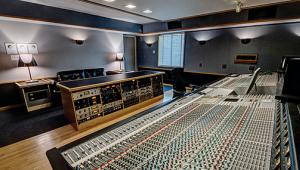
Decades ago, when I was first plunging into audio in a big way, I worked for a retailer that sold and installed upscale equipment. My fellow techs and I spent lots of time putting loudspeakers and electronics into fancy homes and condominiums, as elegantly as possible – minimum exposed cables, equipment placed to harmonise with the decor.
Our employer offered an optional calibration service as an upgrade for the systems we installed. This was before the advent of flatscreen TVs and cost-no-object home theatre systems. ‘Calibration service’ meant showing up at clients’ homes with a real-time analyser, a calibrated microphone, and a professional studio-grade multiband equaliser.
Less is more
We spent many long afternoons tweaking systems to yield, as nearly as possible, a flat frequency response – the industry ideal. When we were done, some of us privately remarked how lifeless it all sounded. We didn’t say that to clients or our employer, of course, but the fact was that untreated systems generally sounded more engaging, more dynamic, and more musical than those that had been ‘calibrated’. By flattening the response of the system, we had squashed all the vitality out of the music.
A flat frequency response is a technical necessity with electronics such as amps, preamps, and recording devices. Everything in the audio chain needs to be reliable that way for compatibility’s sake. And cinema systems must be calibrated for the proper placement in space of sound effects, especially in the age of Dolby Atmos and what sound engineers call ‘object-based programming’. But forgive the heresy here: I don’t think that a flat frequency response benefits loudspeakers intended primarily for music. If anything, it can suck the life from otherwise compelling recordings.
Every device in the audio chain – from the microphones and mixing console in a recording studio to amplifiers and loudspeakers in playback systems – exhibits some nonlinearities or departures from the ideal flat response. Contributing to colourations or other sonic signatures, such nonlinearities are an unavoidable fact of life. Savvy recording engineers know the colourations of each microphone in their stable, and know which is best for each vocalist or instrument. In that sense, there’s no such thing as a truly accurate recording. They’re all impressions of performances. Musical instruments have individual colourations, too. That’s why musicians prefer one brand or model over another.
In the playback realm – mine and your field of interest – loudspeakers have the widest variance. Individual drivers have varying impedances over their usable range, and resonances that make them favour some tones over others. Speaker designers approach this problem in disparate ways, sometimes trying to minimise impedance and resonance issues, and sometimes leveraging them to produce a distinct sound.
Vive la différence
Each approach has potential benefits, but flattening a musical performance defeats the whole purpose of music – most of which is in the midrange, where our hearing is most acute. A glorious midrange is why Quad electrostatic loudspeakers have enjoyed such enduring popularity, despite never having a sizzling treble or earthshaking bass.
Thirty years ago, the THX certification movement sought to impose strict performance standards on all sorts of audio gear. Doing so with loudspeakers would substantially reduce their perceptible differences and their marketability, which would then be based not on sonic appeal but on fit-and-finish. A technical obsession with a ruler-flat response isn’t appropriate for music and shouldn’t be imposed on it.























 SPONSORED VIDEO






| Equipment Reviews |  |
Music Reviews Awards | |
Latest News Features | |
Resources Newsletters | |
Subscriptions |
WHERE TECHNOLOGY BECOMES ENTERTAINMENT
 © 2026 Hi-Fi News
AVTech Media Ltd
All rights reserved