Marantz PM-94 integrated amplifier
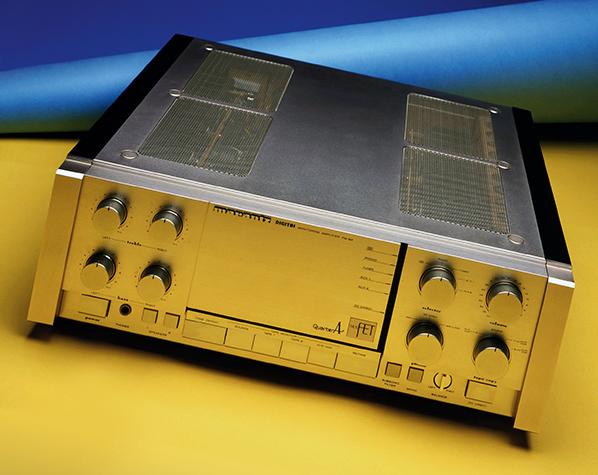

When Marantz's Ken Ishiwata suggested that we try the new PM-94 through the Apogee Scintillas [HFN Sep '85], I managed to stifle thoughts of 'Oh, no, here we go again'. Ken's confidence in a product is vastly removed from the kind of bravado I expect of British amplifier manufacturers, with pipe-dream tales about driving Krell into the sea. What Ken promised is an amplifier that would deliver the best of both possible worlds: sound quality (and bypassable facilities) for audiophile credibility, alongside ergonomics, styling, and perceived value to make it appealing to more than lunatic-fringe-type consumers.
Passive aggressive
On the surface, the PM-94 is easy to dismiss as yet another flagship integrated amp from a Japanese manufacturer. With nine knobs and a dozen press-buttons, it doesn't inspire the kind of reaction you'd get out of an audiophile when he espies an amplifier with fewer controls than an electric razor. To get around this, Marantz has included a 'CD/Phono Direct' switch which does a lot more than merely neutralise the separate left/right tone controls. (There's a separate tone defeat switch, too, in case you want the tone controls out but don't wish to use CD/Phono Direct.)
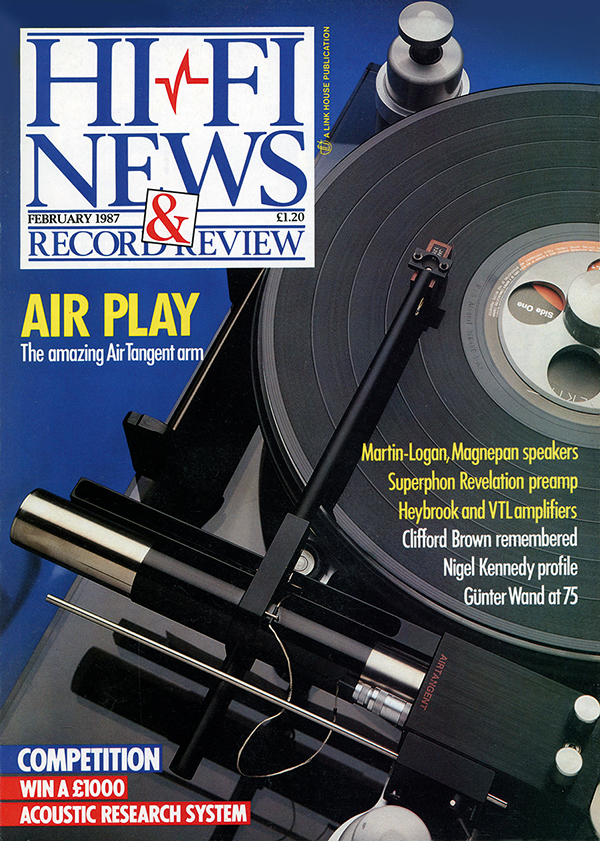
Above: Cover of HFN February 1987 issue featuring the Air Tangent tonearm
This switch takes the signal straight to the volume control, effectively turning the preamp section into a passive control unit. The effect is dramatic, far more so than tone defeat on its own, and only a pedant would complain about the presence of the redundant circuitry when this mode is used.
The rest of the PM-94's controls read like the typical all-singing/all-dancing unit which this product does not resemble in bypass operation. In the lower left-hand corner, below the separate left/right bass and treble controls, are a headphone socket, and buttons for speaker 1 or 2 selection. Next to these is a row of press-buttons for tone defeat, tape monitoring configurations (source, two tape decks, VCR), and muting, followed by further controls for subsonic filter, mono/stereo, and balance.
Terminal velocity
The upper right-hand quadrant contains the volume control, tape dubbing selector, phono select (MM, MC-high, MC-low), and primary source selector for CD, phono, tuner, or two auxiliary inputs. The latter control and CD Direct benefit from illuminated indication to show operating status.
For all the seeming clutter, this hefty unit – and I do mean hefty – is stylish and attractive, the wooden side cheeks adding a touch of luxury to distinguish it from other products of the 'Big Jap Amp' persuasion.
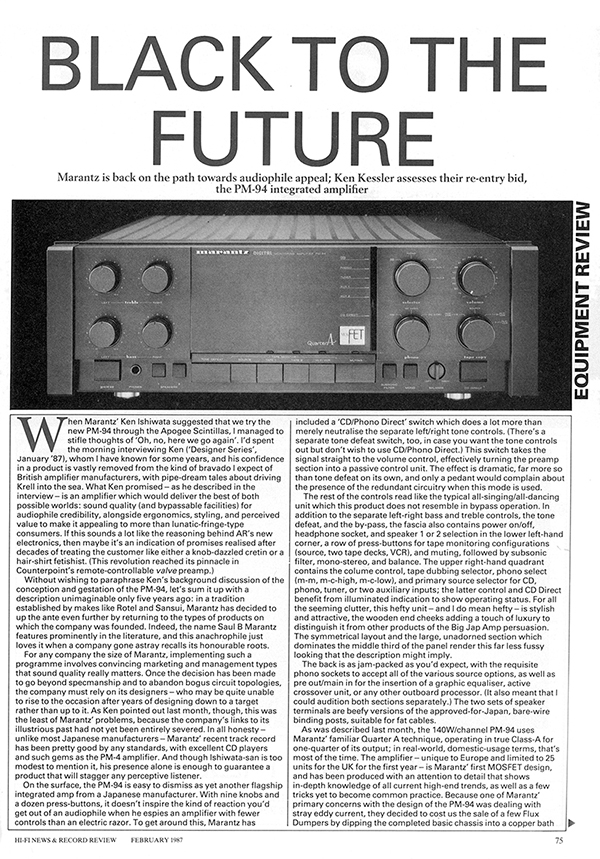
Above: Original review of the PM-94 integrated amplifier from HFN Feb '87. It cost £850 when launched in the UK
The back is as jam-packed as you'd expect, with the requisite phono sockets to accept all of the various source options, as well as pre out/main in for the insertion of a graphic equaliser, active crossover unit, or any other outboard processor. (It also meant that I could audition both sections separately.) The two sets of speaker terminals are beefy versions of the approved-for-Japan, bare-wire binding posts, suitable for fat cables.
Copper stopper
The 140W/ch PM-94 uses Marantz's familiar 'Quarter A' circuit, operating in true Class A for a claimed 25% of its output; in domestic-usage terms, that's most of the time. The amplifier – unique to Europe and limited to 25 units for the UK for the first year – is Marantz's first MOSFET design, and has been produced with an attention to detail that shows in-depth knowledge of all current high-end trends, as well as a few tricks yet to become common practice. Because one of Marantz's primary concerns with the design of the PM-94 was dealing with stray eddy currents, it decided to cost us the sale of a few Flux Dumpers by dipping the completed basic chassis into a copper bath to create a superior ground path. Also, to minimise vibrations wherever possible, the company specified power supply capacitors damped with ceramic powders. Double thickness copper was used throughout the PCBs to lower signal path resistance, and crosstalk has been minimised by devising independent signal earths from input to output.


Above: Also from the Hi-Fi News archive, these pictures taken in 1986 show the late engineer Ken Ishiwata before he was better known as Marantz's global product ambassador. Note the copy of HFN Nov '86 by his side
Everything seems overspecified, from the massive heatsinks to the 90,000µF capacitance of the power supply reservoir. Ken told me how the design team auditioned different types of cable for every stage, how they spent hundreds of hours subjectively assessing passive components, and how they rejected off-the-shelf offerings in favour of custom-made items. The result is a joyously schizophrenic product, mass-market Japanese on the outside and tweak heaven on the inside.
 Muscle manners
I figured that £850-worth of integrated amplifier would sit nicely between an AR Legend turntable and tonearm, and Celestion SL600 speakers. I tested all three of the phono settings with a variety of cartridges, including high- and low-output Ortofon MCs, and MMs from Linn, RATA and Ortofon, and used Philips and AR CD players and a Denon cassette deck to sample the line inputs. To test the two stages on their own, I used the preamp section to drive Lumley monoblocks, and the Croft Micro to drive the power amp section. Programme material included the Telarc Sampler CDs, some original Atlantic pressings of vintage Wilson Pickett and my own recording of Who's Blues Band.
Once warmed up, the PM-94 acts like a valve amp in its lack of edginess. It is refined, less coarse than I'd ever expect of an integrated amp of this price, and on a par with some of the current fave British offerings which do battle at under a grand. It's not the first Japanese amplifier to do this, but it is the first to my knowledge to up the power envelope to a point where the lower reaches of the US high-end amps should start paying attention.
HFN%20Feb%2087_Marantz%20PM-94_HFN%20Inside%20Shot_cmyk_sml_0.jpg -->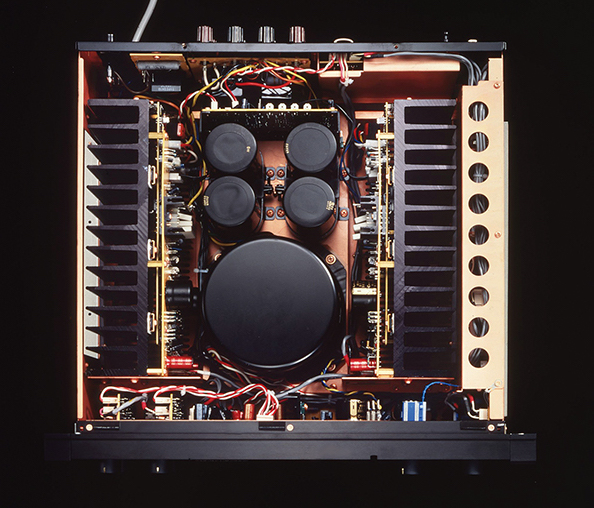
Above: Lid-off shot shows the PM-94's copper-plated chassis housing a large central transformer, four reservoir capacitors and twin heatsinks for its high-current output stage
It is ghostly quiet, with only the slightest traces of grain (or 'texture') to the background, discernible only on the decay of notes recorded in a hall with a 'live' character. Examining the preamp and power stages on their own pointed to the former as the source for this minor flaw, but it was no worse than some fabulous preamps I've used which sell for more than the cost of the PM-94 as a whole. If that sounds like I'm describing the PM-94 as a fine preamp with a 140W/channel amp thrown in for free, well, so be it. I used this almost exclusively in the bypass mode, and found every section of the preamp to be good. If any part shone, it was the MM stage, but the two MC stages were far better than merely adequate. The line stages were hard to fault, and the preamp as a whole was exceptionally neutral, uncoloured, and free from dynamic restriction.
Third dimension
The slight grain is insignificant when price is taken into consideration. Where it loses out to separate preamps of, say, the £300-£600 variety, is in absolute tonal coherence. I couldn't fault, for example, the three-dimensional properties or the amplifier's transient capabilities relative to price, but I'd say that the lowest bass up to the upper midrange was of a more controlled, more accurate calibre than the uppermost frequencies. Transient capability was superb regardless of frequency, but a slight haze robbed the upper frequencies of some 'air'.
Fortunately, the all-important midrange suffered none of this, so it should only be an issue in systems with an over-emphasised top end.
The power amp stage was exactly the opposite, with the lowest registers showing a very slight thickening compared to the clear and unsullied lower-midrange up through the extreme treble. Put the two together, and there's a natural synergy which balances out the whole frequency range. Used as an all-in amplifier, the Marantz PM-94 behaves like a £1500 pre/power package – it's that good.
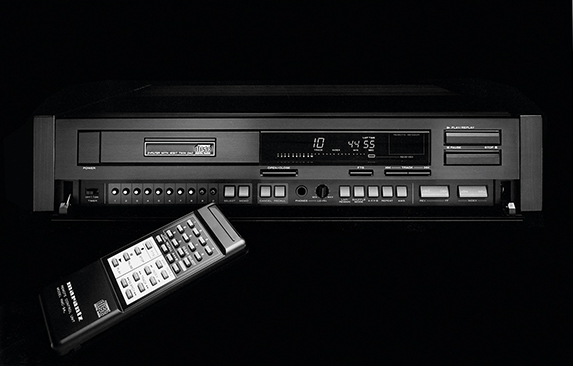
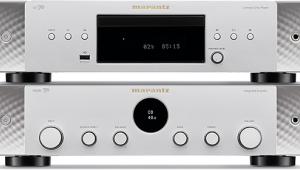
Above: The PM-94 integrated was joined by the CD-94 CD player [Vintage Review, HFN Dec '25] in 1986. This flagship SAA7220/TDA1541A-based 16-bit model leveraged much of its internal circuitry from the Philips CD960 [Vintage Review, HFN Jul '20]
Yet it's the PM-94's sheer power that stands out as reason enough for buying one. With the SL600s, I just could not get it to clip or squash the music; with sensible speakers, you would have to be an animal to make this product misbehave.
Cake walk
Which leads me back to the opening paragraph. Yes, we tried the PM-94 with the Apogee Scintillas, and it generated enough current to produce sensible levels. When we whacked it up too far, it simply shut down. Even so, I did enough listening through these widest of windows to discover that the PM-94 is an amp of which Marantz can be proud. No apologies have to be made for any aspect of either its performance, appearance, or flexibility, especially not at the price.
The limited production and the tweak mystique are mere sales fodder here, and aren't needed. The PM-94 will find its rightful owners, people torn between high-end performance with its inherent masochism, and real-world usability with its sonic sacrifices. If there are only 25 people who have access to this product, they'll be envied by friends who'd give anything just to have the option of switching out the tone controls or dubbing from tape to tape. Marantz thought this new one through with a thoroughness that has to be admired, proving that cake owners can be cake eaters.










 SPONSORED VIDEO







| Equipment Reviews |  |
Music Reviews Awards | |
Latest News Features | |
Resources Newsletters | |
Subscriptions |
WHERE TECHNOLOGY BECOMES ENTERTAINMENT
 © 2026 Hi-Fi News
AVTech Media Ltd
All rights reserved