
Review: Tim Jarman

Review: Tim Jarman,  |  Apr 08, 2026  |  Published: May 01, 2026  |  0 comments
hfnvintageIt’s the mid-’90s and French brand Micromega launches a range of CD players that are upgradable, one to the other. It also incorporated a new hybrid DAC from Philips...

Although at the time of writing Micromega seems not to be available in the UK, it was once a well-known ambassador for French hi-fi, its CD players and DACs having a strong following in the 1990s. Micromega had a similar strategy to Meridian and others with its early models, utilising standard Philips parts and assemblies before making detail improvements – a popular approach with audiophiles looking for something more esoteric than the mainstream offerings.

Review: Tim Jarman,  |  Mar 11, 2026  |  Published: Apr 01, 2026  |  0 comments
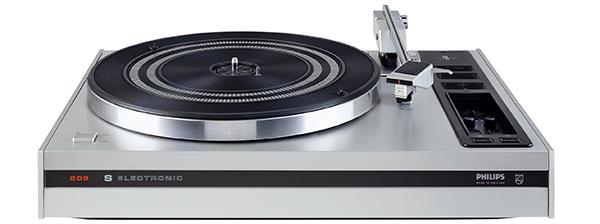
hfnvintage‘The only thing it doesn’t do is take the record out of its sleeve’, said Philips of its mid-1970s fully automatic turntable. With no fewer than three motors, how does it fare?

There is always some kind of surprise in store when reviewing vintage Philips products. Whether a new way of doing things or an extra feature you never knew you needed, Philips always had a knack for this sort of thing. The GA 209S seen here was an attempt to completely automate a high-quality turntable. Introduced in 1973, it entered a market where the grinding gears, clicking cams and greasy levers found in the mechanisms of some BSR and Garrard decks were still very much the norm. The Philips approach was quite different; it made extensive use of electronics to control and sequence the mechanism.

Review: Tim Jarman,  |  Feb 11, 2026  |  Published: Mar 01, 2026  |  0 comments
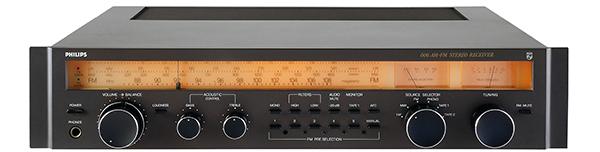
hfnvintageTop dog in a five-strong, pre-CD range of stereo amplifiers and receivers from Philips, the AH 606 also marked a turning point in the brand’s aesthetic design language

In its hi-fi heyday, Philips was one of those audio brands that seemed to delight in being unconventional. Be it in styling or engineering, its products were usually distinctive, which delighted some but confused just as many. Neither is it necessarily an advantage when the equipment has to be combined with units from other brands to form a system. Philips receivers in the early 1970s, often made in the firm’s factories in Finland, were difficult to build a system around if you wanted to use anything other than Philips source components and loudspeakers.

Review: Tim Jarman,  |  Feb 02, 2026  |  Published: Feb 01, 2026  |  0 comments
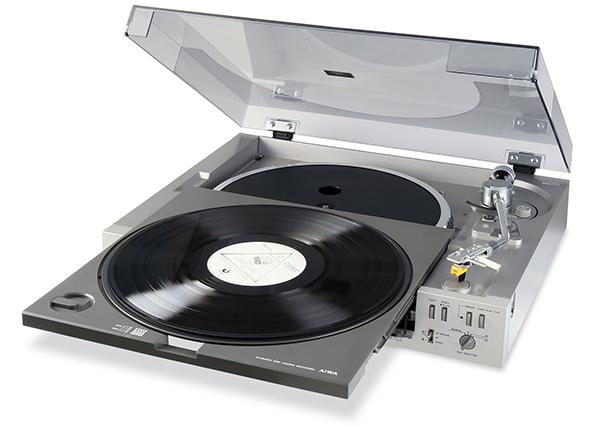
hfnvintageLaunched two years before the advent of CD, Aiwa’s AP-D50 was the world’s first automatic front-loading turntable with photoelectric auto-return mechanism

Aiwa’s 30 series micro system [HFN Dec ’24] was a fine example of the Japanese urge to miniaturise familiar objects to make them even more desirable to the consumer. It was part of the Micro Systems craze that swept through the hi-fi industry in the late 1970s and early ’80s, in which most of the major manufacturers got involved. Amplifiers, tuners and tape decks were shrunk to an impressive degree, but one key part of the hi-fi chain presented more of a challenge. The turntable, effectively dimensioned by the size of the records it played, was difficult to make any smaller without losing functionality and quality.

Review: Tim Jarman,  |  Oct 12, 2025  |  Published: Oct 01, 2025  |  0 comments
hfnvintage

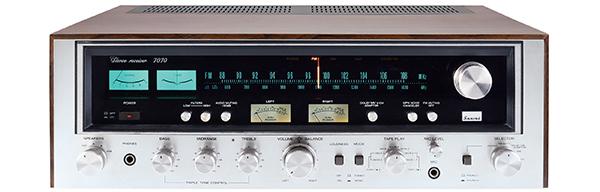
The 1970s was a bumper decade for massive integrated amps and receivers although these big beasts of the audio jungle often remained something of a rarity in the UK

Big stereo receivers never made much of an impact in the UK, but this did not stop the importers servicing the large Japanese manufacturers from offering them from time to time. Pioneer, Marantz and Kenwood all boasted full-fat machines with colossal power output ratings stretching into hundreds of watts per channel – these numbers far in excess of British audiophiles’ experience. Add to this list Sansui, a brand that always had heavyweight models at the top of its ranges. The 7070 model seen here is typical of the breed – it was introduced in 1976 and remained in the catalogue until 1978.

Review: Tim Jarman,  |  Sep 14, 2025  |  Published: Sep 01, 2025  |  0 comments
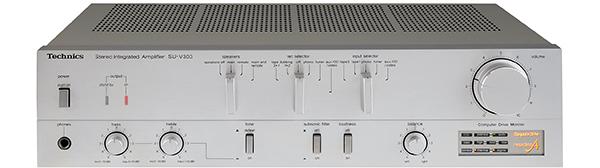
hfnvintageThe 1980s saw the pursuit of low-distortion amplifiers reach its peak. The big brands all had skin in the game but Technics was vying to be market leader with its ‘New Class A’

Consumer Electronics products are traditionally marketed on the basis of progress and technological improvement, and the hi-fi scene is no exception. Amplifiers were already a mature technology in the early 1980s, following big advances in low noise circuitry, robust complementary power transistors, DC coupling and high-speed operation. With these fundamentals in place the larger manufacturers turned their attention to exotic power supplies, remote controls and system integration, equalisers and frequency spectrum displays, special inputs for CD players and, of course, ever more output power to entice customers to upgrade.

Review: Tim Jarman,  |  Jul 26, 2025  |  Published: Aug 01, 2025  |  0 comments
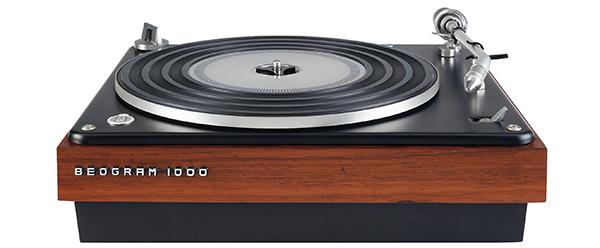
hfnvintageLaunched in 1967, and updated five times over the next five years, the ’1000 was B&O’s first ‘Beogram’ turntable, equipped with custom tonearm and plug-in cartridge

B&O’s Beogram 1000 was one of those turntables that seemed to be everywhere in the late ’60s and early ’70s. Combining simplicity with careful design, for many years it was one of the most popular high-quality decks on the market. As ubiquitous as a Garrard SP 25 [HFN Jun ’25] or a Pioneer PL-12D [HFN Jun ’25], the inexpensive Beogram 1000 made great sound available to listeners of all levels of experience.

Review: Tim Jarman,  |  Jul 20, 2025  |  Published: Jul 01, 2025  |  0 comments
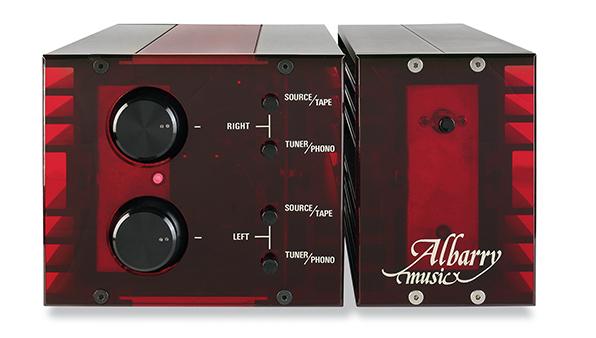
hfnvintageThe genius combination of red Perspex and black alloy heatsinking ensured the late Neil Burnett’s Albarry Music brand brought a welcome splash of colour to the ’80s hi-fi scene

Whatever else can be said about Albarry Music’s amplifiers, they looked fantastic – products that proudly had their works on show, but done with consummate grace and restraint. The M408 was the first amplifier from Albarry, one of many boutique firms that sprang up in the early 1980s in reaction to the mass-produced ranges from Europe and Japan.

Review: Tim Jarman,  |  Jun 26, 2025  |  Published: Jun 01, 2025  |  0 comments
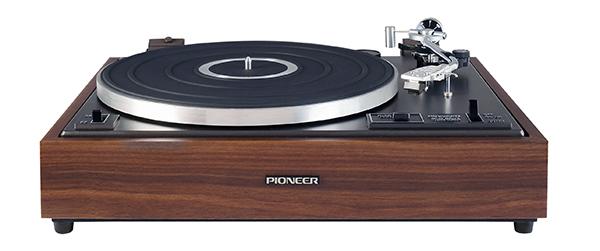
hfnvintageWith its floating suspension, decent tonearm and hassle-free two-speed operation, Pioneer’s PL-12D was the deck of choice for budding audiophiles in the early/mid-’70s

Many Hi-Fi News readers will have fond memories of Pioneer’s PL-12D turntable. A best seller when new and one of the models that has enjoyed a resurgence in popularity with the vinyl revival, generations of audiophiles have, at one time or another, had one of these decks in their systems. Introduced in 1973, it came at just the right time to benefit from the rapidly increasing growth in affordable hi-fi, setting music lovers on a path to better and (usually) more expensive things.

Review: Tim Jarman,  |  Jun 06, 2025  |  Published: May 01, 2025  |  0 comments
hfnvintageIn an age of bulky carousel and multi-disc cartridge-loading solutions, this Pioneer player combined a single laser mech with dual trays for many hours of uninterrupted listening

Once CD players had become established it did not take long for hi-fi manufacturers to come up with new features and facilities to offer. Of these, the ability to play more than one disc at a time was perhaps the most intriguing and visually obvious. Toshiba was the first to produce a practical machine with the XR-V22 [HFN Jun ’24]. This could take two discs, but it was fellow Japanese brand Pioneer which led the field, coming up shortly afterwards with a six-disc cartridge player. This ‘universal’ cartridge system was common to all Pioneer’s multi-play models, allowing collections of discs to be rapidly swapped between systems at home and in-car.

Pages

X