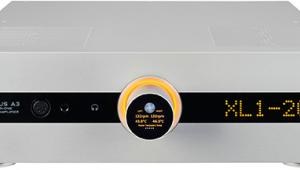
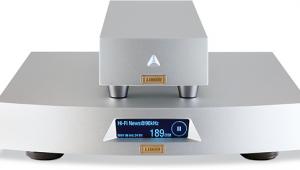
Canor Virtus A3 integrated amp with DAC Current dumping
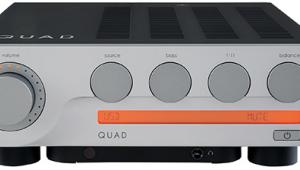
Canor defines its Virtus A3 as a ‘Current Dumping Class A Tube Hybrid Power Amplifier’, but this is neither a plain vanilla ‘tube/transistor’ hybrid nor a classical ‘Current Dumping’ amplifier. First published in 1975 [see picture below], Peter Walker’s ‘Current Dumping’ or ‘feed forward’ output stage topology would go on to define Quad’s famous 405 power amp [HFN Apr ’76]. The goal was simple – enjoy the efficiency of a Class B amplifier with the linearity of a Class A amplifier. In the original circuit, Quad combined a pair of unbiased high-current output devices (the current dumpers) with a high-quality, low-power Class A amplifier, and a passive bridge so both could contribute to the output. Distortion was reduced by a feedback loop around both the Class A voltage amp and Class B current dumpers, and improved still further by delivering a portion of this signal directly to the output (hence ‘feed forward’) via the bridge network.
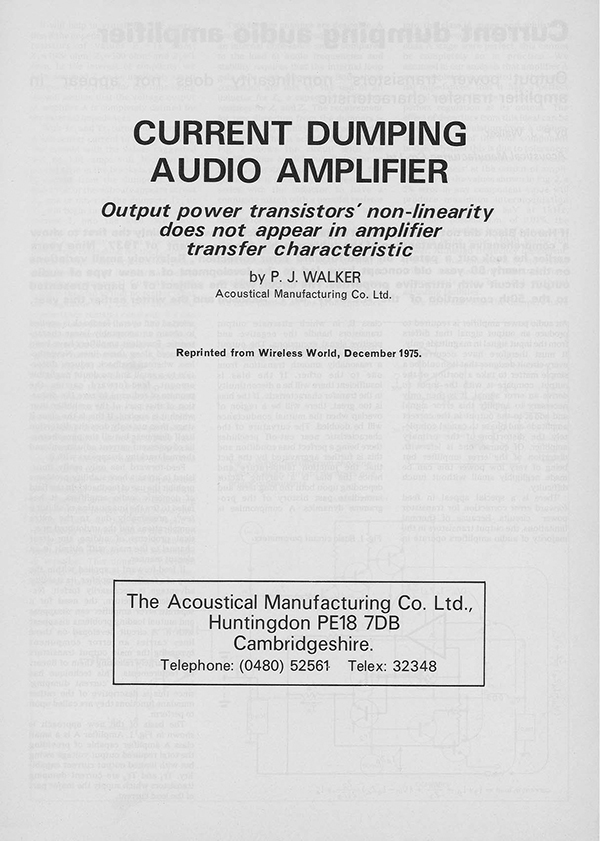
The ‘feed forward’ concept was also used by Sansui in the 1980s while Devialet boasts a very modern twist on ‘Current Dumping’ in its ADH (Analogue Digital Hybrid) Astra amplifier [HFN Aug ’25]. Canor’s own take has a differential triode tube stage for the very linear voltage amplifier combined with two pairs of Onsemi power transistors, per channel, as the current dumpers. However, in the Virtus A3 there’s clearly no attempt at leveraging the high efficiency of Class B – its Class AB dumpers are generously biased (power consumption is over 100W at idle), requiring a fan-assisted heatsink for cooling. Nevertheless, while the Virtus A3 is no ‘green amplifier’, Canor has still achieved Peter Walker’s original ambitions for very low distortion [see PM's Lab Report]. PM
 | |||||||||||

|
|
| |||||||||










 SPONSORED VIDEO






| Equipment Reviews | |
Music Reviews Awards | |
Latest News Features | |
Resources Newsletters | |
Subscriptions |
WHERE TECHNOLOGY BECOMES ENTERTAINMENT
 © 2026 Hi-Fi News
AVTech Media Ltd
All rights reserved