Let’s get physical
Mark Craven on why he has no favourite amplifier technology, why music fans have it better than cinephiles when it comes to streaming quality, and listening to songs in the right order
In his review of Grimm Audio’s PW1 phono amp [HFN Oct ’25], Ken Kessler discussed the hi-fi debate around valve versus solid-state. ‘Grown-ups use both, the deliberately argumentative choose sides’, was KK’s verdict, which cheered me up. I have never been described as a grown-up before.
Different strokes
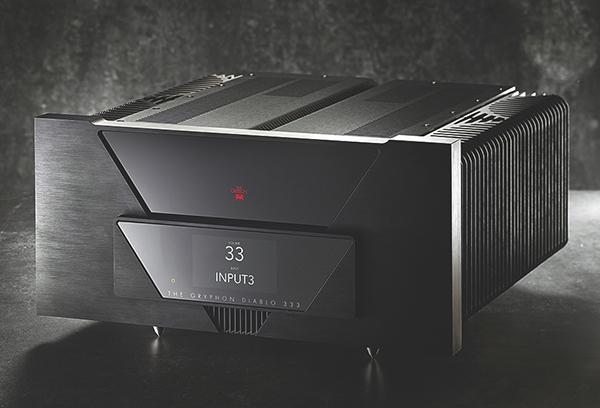
Over the years, I’ve come to realise that I don’t really have a ‘favourite’ of the two technologies. This is because, unsurprisingly, whether an amplifier makes use of valves or transistors isn’t the be-all-and-end-all when it comes to its sonic signature. Ask me to name some of my favourite recent amplifiers and I will reel off the likes of Audia Flight’s FLS 9, a solid-state design with a wonderfully smooth character [HFN Feb ’21], the all-transistor, dynamic diva that is Gryphon Audio’s Diablo 333 [HFN Dec ’24], Unison Research’s well-priced, and gloriously tube-y Triode 20 Black Edition [HFN Jul ’25], Primare’s bridgeable, eight-channel Class D-based A35.8 power amp [HFN May ’22], and Pass Labs’ ostensibly ‘2x25W’ Int25 [HFN Dec ’20]. All sound different because all are different.
So, for me, the valve vs. solid-state discourse seems a bit disingenuous (either that or I am just guilty of being a fence-sitter). And it is more or less the same when it comes to arguments over physical media vs. streaming.
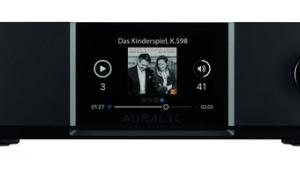
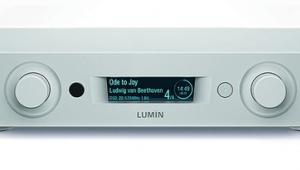
Music streaming technology is, in 2025, not a new idea, but it is still likely to cause pitch-forks to be raised in some quarters of the audiophile community. I understand why some advocate physical media, most often vinyl, over anything delivered over a network. But I’ve had perfectly acceptable listening experiences using Bluetooth, let alone DSD marshalled via a Roon Nucleus Titan server [HFN Jun ’25]. In subjective terms, any gap in sound quality between a digital stream and its physical media equivalent is not as vast as some hi-fi enthusiasts make out.
I know this because the situation could be much worse. In my previous role as editor of Home Cinema Choice magazine, I was firmly on the side of physical media. Why? Because a 4K Blu-ray (or even a standard 1080p Blu-ray) is so blatantly far ahead of a Netflix or Prime Video stream, or a satellite TV broadcast, that anyone can see it. Compare the maximum 128Mbps bitrate of the 4K Blu-ray specification, which is often near fully exploited by high-quality encodes, to the adaptive bitrate technology of Netflix, which varies between 10-25Mbps for 4K HDR video, and you can understand why.
Order! Order!
This is not to say that I don’t subscribe to video streaming services. I use Netflix, Prime Video, Disney+ and Paramount+, but I am aware of the compromise in quality compared to my 4K discs. The same isn’t always true when A/B-ing a 44.1kHz/16-bit stream with a silver CD, not least because of the much-reduced bit rates of this audio-only format.
That said, I grew up in the era of physical music formats, so while the majority of my listening these days is through Qobuz and Roon, I haven’t given up on discs. The usual reasons apply: pride of ownership, not wanting to get rid of a collection, the thrill of holding and using a tangible object.
And there’s one other aspect of playing a CD or LP that isn’t talked about enough, and that’s the very idea of listening to music in the correct order. This is something that has been buried in the Spotify era, as playlists and algorithms encourage users to flit from artist to artist, track to track. And if we consider music to be art, it becomes like going to the Louvre and only looking at one corner of The Mona Lisa.
A good album takes you on a journey, with tracks sequenced deliberately. Classic album openers like Michael Jackson’s ‘Bad’ and AC/DC’s ‘Hells Bells’, and classic album closers like Lynyrd Skynyrd’s ‘Freebird’, Guns N’ Roses ‘Rocket Queen’ and The Rolling Stones’ ‘You Can’t Always Get What You Want’ are where they are in the running order for a reason. And sometimes, when I’m streaming music, I forget that.























 SPONSORED VIDEO






| Equipment Reviews |  |
Music Reviews Awards | |
Latest News Features | |
Resources Newsletters | |
Subscriptions |
WHERE TECHNOLOGY BECOMES ENTERTAINMENT
 © 2026 Hi-Fi News
AVTech Media Ltd
All rights reserved