Drop the mic
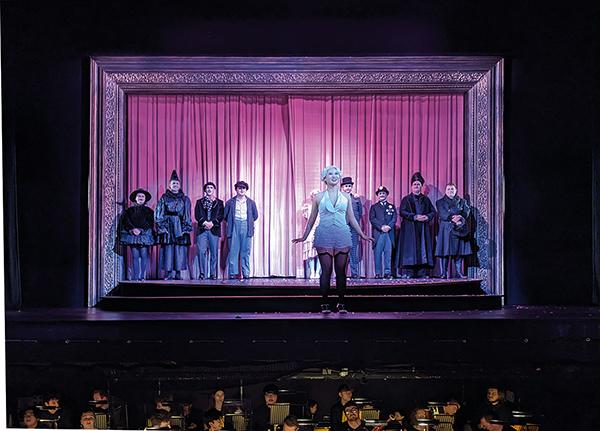
Hearing singers perform without the benefit of amplification is a must for any hi-fi enthusiast, says Barry Fox, so the use of a microphone at the opera means he feels obliged to speak out
Human beings come with a built-in, hard-wired audio test system. It’s called ‘voice’. We hear voices from the day we are born and become extremely clever at discerning them and identifying changes.
We instantly recognise a friend on a low-fi phone call, after hearing just one word. We immediately hear when a low-budget television commercial changes level and tone between scenes. This is why audio engineers try hard not to stitch together different takes made on different days, and certainly not with different microphones.
Listen and learn
So hearing live singers helps us when judging the quality of a hi-fi system. Unfortunately, when we hear live singing it’s often via mics and amps and speakers, of widely varying quality. We expect this from pop, rock and jazz. We also expect it at a ‘sound-reinforced’ Raymond Gubbay classical event at the Albert Hall. Where we don’t expect to hear electronic assistance is at the ‘real’ opera. Singers train for years to make themselves heard over a large orchestra in a big, fully packed house.
This is why I go to live operas, even though I am not a keen opera fan. Because I refuse to pay the silly prices asked by champagne venues like the Covent Garden Royal Opera House, I go to affordable shows at the London music colleges, notably the Royal College of Music nearby the Albert Hall. The standard of musicianship is frighteningly high and the RCM puts on mostly fun stuff, colourfully updated. Recent shows have included Jonathan Dove’s Flight and Ravel’s L’heure Espagnole.
Late last year the RCM staged Kurt Weill’s Chansons des Quais (Songs of the Waterfront). But what was that stuck on the lead singer’s face? It was a boom mic, reinforcing her voice because the volume level varied clumsily from low at rear stage to high as she moved to the front.
After the show the RCM staff and students working in the theatre foyer said they were surprised. Musicians from the pit orchestra were talking about ‘technical problems’. When I emailed the RCM, the Marketing Officer (Events) replied, ‘I’m afraid I do not know the details of any miking in this term’s Opera, but I will pass on your comment to the team’.
I never heard more, nor did I get a reply from the College Director asking whether miking was new RCM policy or there had been special circumstances. Fortunately I was able to make direct contact with Nick Sears, Head of Vocal & Opera.
Sears explained the decision to use a microphone was taken for both ‘musical and practical’ reasons. ‘While we did not initially intend to use amplification, when the musicians were in situ both on stage and in the pit, subsequent rehearsals did not enable the performers to reach a satisfactory balance due to the instrumentation used in these specific arrangements. At that stage we decided to use amplification for the Weill and were grateful to colleagues in Studios for providing us with a practical solution within tight budgetary constraints.’
Where do I go now?
Sears also pointed to Kurt Weill’s ‘musical idiom’ and the ‘rather chequered and unconventional history’ of the source material. It’s true that Weill’s Chansons derives from other works including the 1934 play Marie Galante, and it was not performed as a finished work until a premiere in Dessau, Germany in 2017.
But the music, as published by Schott, is for soprano, male quartet, and chamber orchestra – which is hardly a particularly challenging musical mix. And it wasn’t that the singer (who took off the mic for the curtain call) was suffering from something debilitating, like a sore throat, because the RCM changed the cast from night to night and confirmed the mic was used ‘all week, and in both casts’.
Are we teaching tomorrow’s opera singers to rely on face mics, even with small bands and in small halls like the RCM’s Britten Theatre? If so, where do I now go to get my regular reminders of how human voices sound singing live?























 SPONSORED VIDEO






| Equipment Reviews |  |
Music Reviews Awards | |
Latest News Features | |
Resources Newsletters | |
Subscriptions |
WHERE TECHNOLOGY BECOMES ENTERTAINMENT
 © 2026 Hi-Fi News
AVTech Media Ltd
All rights reserved